

Yellow Cake Mix Stays Moist After Baking When You Use This Easy Method
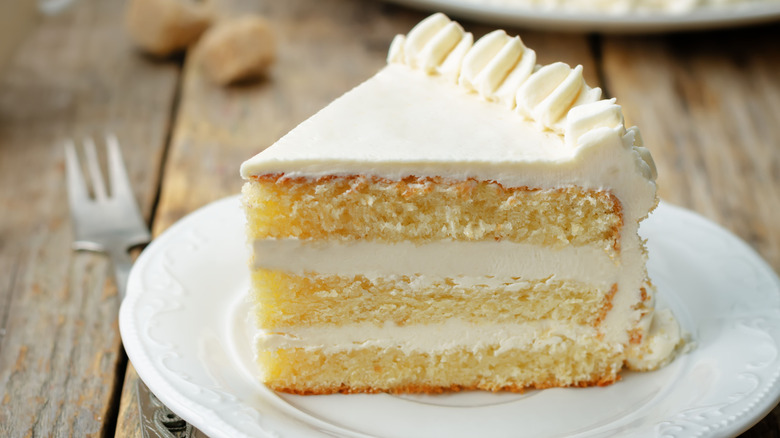
They say cooking is an art and baking is a science. The ratios of ingredients, oven temperatures, and proper technique all have to come together just right to produce successfully delicious sweet results. A small change can have a big impact, and sometimes that's all it takes to bring your bakes to the next level. So here's an insider tip for you: Next time you're using boxed yellow cake mix, ignore the instructions and instead employ the reverse creaming method for a cake that stays moist and tender.
Many recipes separate ingredients into wet (eggs, plus mixed butter and sugar) and dry (flour, leavening agents, salt) and have bakers work with each group individually before bringing them together. The reverse creaming method, however, turns that all on its head, having bakers beat butter into the dry ingredients, then add the wet ingredients to that fat-and-flour paste to make a batter.
Beating butter into dry flour sounds counter-intuitive, but it really works. This method prevents the formation of gluten in your cake batter by coating the flour (or cake mix) in fat so the flour can't stick to itself. Once the dry ingredients are coated, you can add liquid ingredients with confidence, knowing it will be almost impossible to over-mix the cake batter. Over-mixing and the formation of gluten are what turn tender cakes tough, leading to an uneven structure — including those big air pockets you've likely spotted in boxed cakes before. Reverse creaming keeps the crumb tender, stabilizes the batter, and even helps prevent domed cakes so you can easily stack your layers.
Tips for using the reverse creaming method

Ready to leave rubbery boxed cakes in the past? Using the reverse creaming method is just as easy as following the steps on the back of the box. Simply add the boxed mix to your bowl first, then add the butter or oil — saving eggs and other liquids for later. Just be sure your butter is at room temperature, which will allow it to mix more thoroughly.
Boxed cake mix already has some fat incorporated with the dry ingredients (often in the form of palm oil), so employing the reverse creaming method builds upon that gluten-prevention. Mix the fat into the dry ingredients until you form a uniform sandy mixture, checking for clumps of flour before you move on. Next, add the liquid (water or milk), followed by the eggs. By the end, you'll have a smooth and velvety batter that's ready to bake.
There is, however, a time when reverse creaming is not your friend. Namely, skip this method if you're making a cake that depends on creaming or beating eggs to provide lift. If you're making a chiffon cake, angel food cake, or genoise sponge, for example, stick to the methods outlined in the recipe for the lightest, fluffiest results.