

11 Classic School Lunches Everyone Ate In The '70s
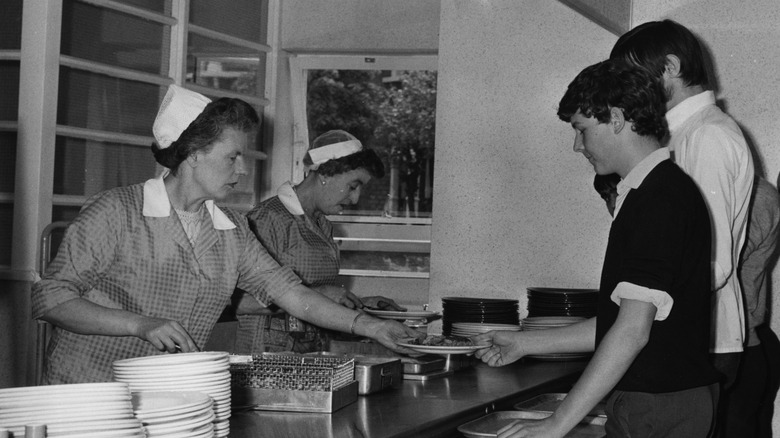
Taking a look at the classic school lunches of the 1970s is like opening up a time capsule. While some may be similar to what's available today, others are definitely a product of another time. There were rumors of mystery meat, and everyone had dishes they dreaded, but there were favorites, too.
The USDA has been providing standard recipes for school cafeterias to use since the 1920s, which is why there's a collective memory across the U.S. of people remembering the same school meals. There were certainly regional lunches, like gumbo and grilled cheese in Louisiana. However, using the latest USDA recipe books ensured student lunches met all the government's nutritional requirements. Starting in the 1930s, during the Great Depression, the government also began donating certain commodities to school cafeterias. Thus, in the 1970s, many of the foods students experienced were the same across the country, since schools received similar base ingredients, such as commodity cheese.
While school lunch menus varied from district to district, some of the most common ones people still remember and talk about on social media largely include fast-food-style options and comfort meals. Whether you're waxing nostalgic for the school lunches of your childhood or you're just curious about what school children were eating in other decades, we think this list of 11 classic school lunches from the 1970s is fairly intriguing.
Rectangular pizza
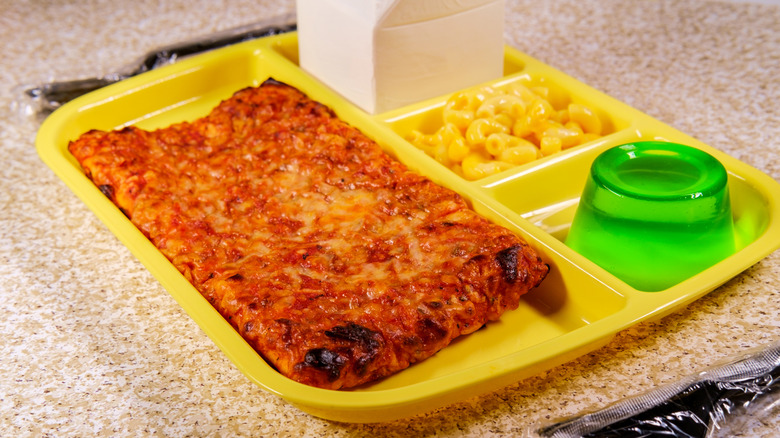
No school cafeteria meal from the 1970s is remembered with as much adoration and longing as the beloved rectangular pizza. It was cut to fit perfectly into the large section of the school cafeteria tray. So, some people remember square pizza slices rather than rectangular ones. The shape was also because the pizzas were baked on large, rectangular 18x26-inch sheet pans rather than round ones that would yield triangular pieces.
For many, pizza day was the best day in the cafeteria, especially since it wasn't as easy to come by in some towns that didn't have a pizza parlor yet. So, the smell of pizza wafting through the school before lunch could be absolutely distracting. Some picky kids would just peel the melted cheese off the top and use the part they didn't eat as food currency, while others would gobble down the whole thing with gusto.
The rectangular pizza wasn't just a phenomenon of the 1970s, as we've seen people talking about enjoying it as far back as the 1950s and into the 1990s. We found a USDA school cheese pizza recipe dating back to 1971. The yeasty pizza dough would have been made in-house. So was the sauce, which contained ingredients like tomato paste, oregano, garlic powder, and sugar. Shredded cheese was a given, and some schools even added meat, like ground pork or beef.
Sloppy Joes
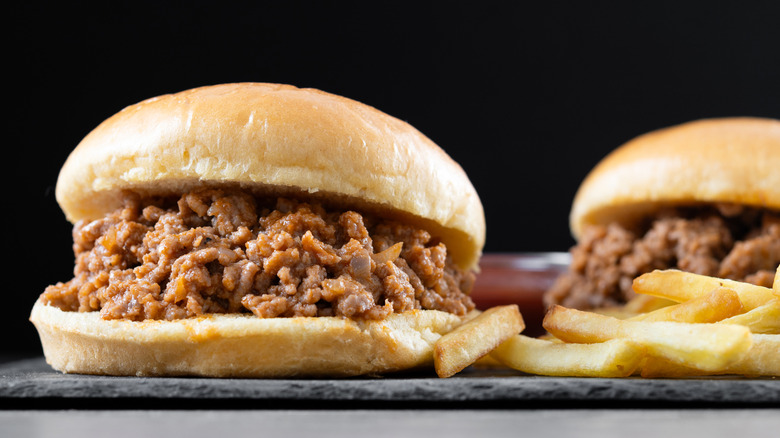
The combination of tangy tomato sauce and ground beef on a bun was a crowd pleaser from the time Sloppy Joes became popular in the 1940s. Not surprisingly, they showed up often on 1970s school cafeteria menus. In schools that offered them, they tended to be among the more popular menu items, making a bright spot among the more questionable ones.
As the name suggests, Sloppy Joes are a messy affair that could end up ruining school clothes, especially for elementary kiddos still working on perfecting their eating skills. Those little hamburger pieces and diced onions had a mind of their own and liked to escape the confines of their bun. While there were a few liquid ingredients in it, like vinegar and water, most of the other ingredients were dry, like dry mustard, pepper, garlic powder, and brown sugar. It also included tomato paste and ketchup, which helped thicken the sauce and make it less runny.
School cafeterias today can still serve Sloppy Joes, but the USDA's current standardized recipe uses a combination of lean ground beef and ground turkey. It also specifies lower-fat meat than the older recipe, which allowed ground beef containing up to 24% fat. The modern version calls for beef with no more than 10% fat and turkey with no more than 15% fat.
Hamburgers

Hamburgers are an American classic that showed up often in school cafeteria menus in the 1970s. In some schools, it would be the main attraction on the menu at least once a week. Fairly often, it would appear alongside french fries, just like it does on fast food restaurant menus. Some schools even offered it with milkshakes, making it feel even more like eating at McDonald's.
The quality of the hamburger seems to have varied from school to school. Some schools offered veggie toppings, like tomatoes, lettuce, pickles, and onions. Some hamburgers even came with cheese. However, in other schools, you just got a few condiments like mustard and ketchup.
The unique texture and flavor of the hamburgers often led to rumors that the hamburgers they were eating weren't pure beef. Some suspected that the beef might have been mixed with soy in their school. This is likely true in some cases, since the National School Lunch Program actually did approve adding soy protein to cafeteria meat dishes in 1971. Don't get us wrong; kids did enjoy these burgers enough to wish they could find the recipe now that they're adults. In fact, some people swear that the soy Boca burgers that came out in 1979 reminded them a lot of the burgers they used to get in their school lunches.
Salisbury steak
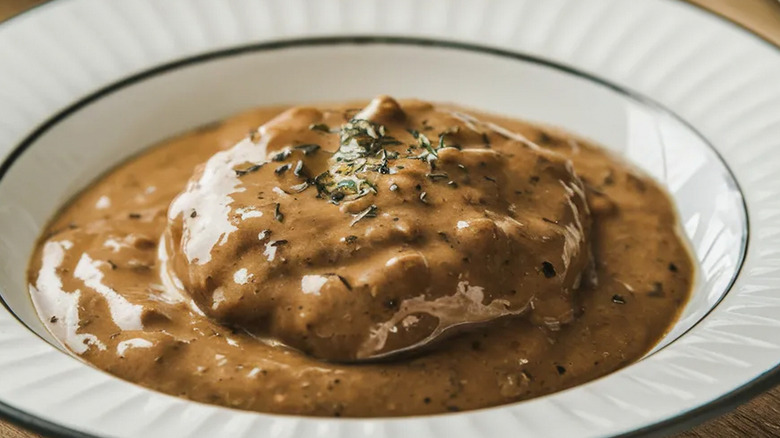
For students whose parents didn't cook Salisbury steak at home, their first exposure to it might have happened in a 1970s school cafeteria, whereas others might have first had it in a 1970s TV dinner. This comfort food dish includes a meat patty that's smothered in brown gravy. Many school cafeterias also served mashed potatoes on Salisbury steak day, which gave students another place to enjoy the gravy. Granted, some schools did better at turning it into a dish that students actually enjoyed than others did.
Interestingly enough, Salisbury steak began as a health food in the Civil War. The man who created it, James Salisbury, suggested that soldiers or others who were sick with anything should try eating a diet of lean beef until they felt better. One of the meats he recommended starting with was a broiled, chopped lean beef patty with minimal seasonings that eventually turned into the dish we know as Salisbury steak.
We're not really sure if Salisbury steak qualifies as a health food today, but school cafeterias did make it from scratch in the '70s. Plus, it contains protein and fiber, as USDA school recipes for this dish show that the beef patty was made from a mixture of ground beef, eggs, and rolled oats. Sometimes, it included onions. The gravy was made with a mixture of beef stock, butter or margarine, flour, and spices like onion powder.
Chili
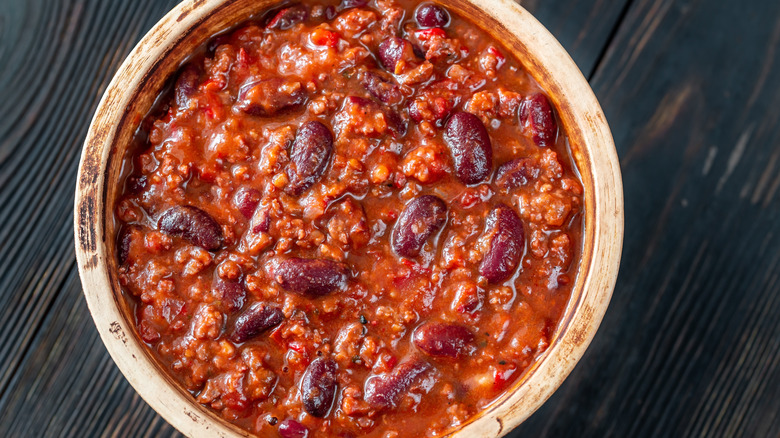
Chili is a delightful dish to enjoy on a cold or rainy day, and it was one that students were enjoying in their school cafeterias in the 1970s. However, it's often the chili pairings that students from the '70s remember more than the chili itself.
While chili styles vary around the U.S., the USDA School Lunch recipe for chili con carne with beans from 1971 somewhat standardized what students were experiencing in various school cafeterias across the U.S. It featured both ground beef and either pinto or kidney beans simmered in a tomato sauce that included salt, chili powder, flour, and onions.
The curious thing is what different school cafeterias served with their chili in the 1970s. Some students just got crackers. Others always got a peanut butter sandwich with it, sometimes leading to a lifelong pairing of these two items. Still others got chili with specific dessert items, like donuts or cinnamon rolls. The chili and cinnamon roll pairing is a surprisingly delightful combo, and we've seen it mentioned as being a part of the school lunch landscape everywhere from Kansas to Oregon to the Midwest. Some students even dipped their cinnamon rolls into their chili, which actually isn't too surprising since some chili recipes, like Cincinnati chili, include cinnamon in the first place.
Fish sticks
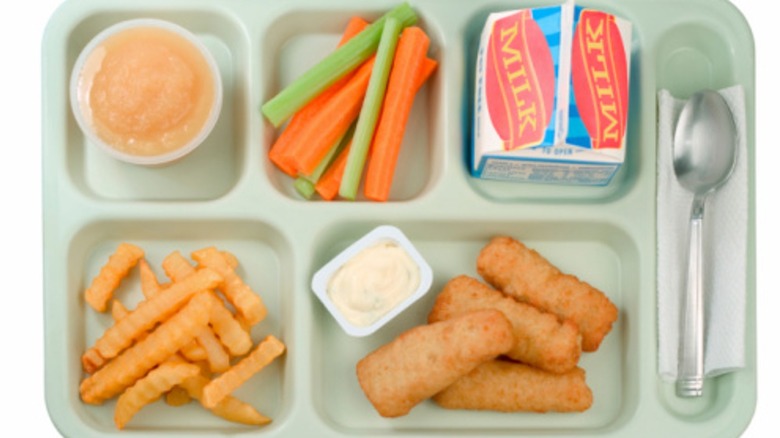
Another classic school lunch from the 1970s was fish sticks. Fish sticks first came out in the 1950s, and they were a food that many kids enjoyed. So, it wasn't long before they made their way to the school lunchroom, as it was something easy to feed a crowd. Some schools had specific side items that they'd always serve with the fish, like mac and cheese, stewed tomatoes, or slaw. They also commonly provided tartar sauce for dipping.
Fish sticks could hit the menu any day of the week. However, lots of students from the 1970s remember them showing up on the menu on Fridays. If the school also had hamburgers on the menu at least one day each week, that would be only three days out of the week when the school lunch menu needed more thought. Having fish sticks on Friday was certainly more common in school districts with larger numbers of Catholics, who observe meatless Fridays during Lent and on Good Friday every year. Over the years, it became common for Catholics to replace meat with fish, and school cafeterias often took note of this trend when creating their school menus.
Salads and salad bars
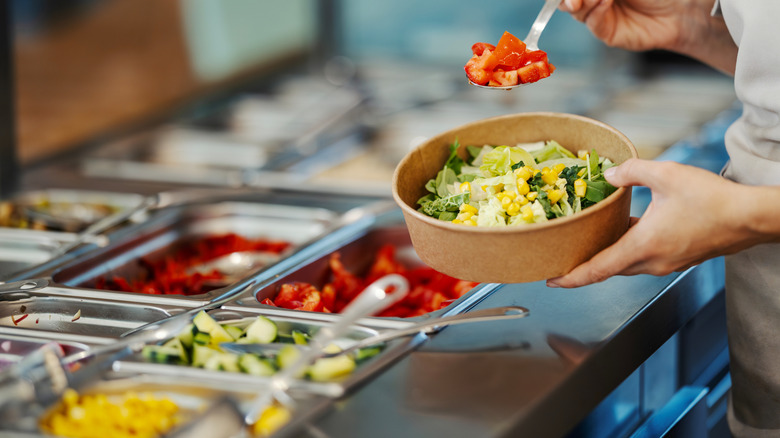
Salads and salad bars were also among the offerings for students in cafeterias in the 1970s. The availability of a salad bar or fruit bar provided more fresh, nutritious food options, as well as giving students the freedom to choose something other than what was available on the standard school menu.
Premade salads were one option, served as salad combos that included vegetables like tomatoes, lettuce, and carrots, along with proteins such as meat and cheese. Then, there might be bread offered on the side to cover all the food groups. There were also side salads that accompanied the meal, such as Popeye salad, which the USDA included in its school lunch recipes in 1971. The dressing included as much sugar as vinegar and oil, which we guess is one way to get kids to eat their spinach.
Something that was completely new for some school districts in the 1970s was the introduction of a salad bar for students. Salad bars were new in general, only just beginning to appear sporadically in restaurants in the 1950s and 1960s. It was a trend that took decades to hit some schools, with some not getting them until the 1980s, or even not until the 2010s, through the Salad Bars to Schools initiative.
Spaghetti and meat sauce
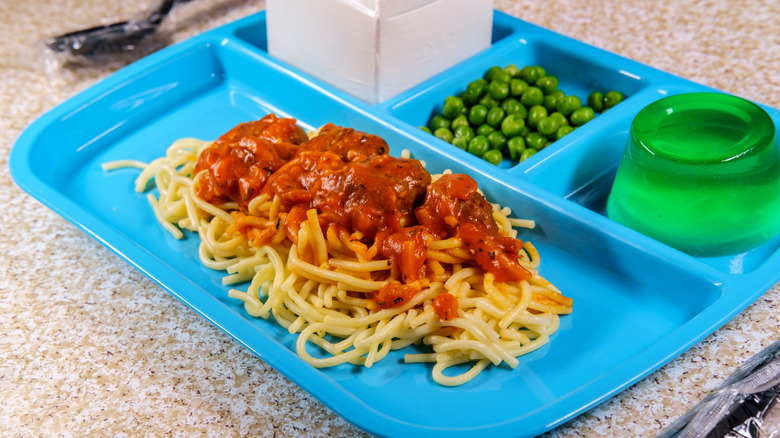
Spaghetti and meat sauce is another one of those meals that seems like a no-brainer when making a menu that includes dishes school kids are likely to enjoy. So, it was certainly a popular dish to offer in school cafeterias in the 1970s. Granted, there were some questionable spaghetti recipes floating around school cafeterias that decade.
Spaghetti came over to the U.S. with Italian immigrants in the late 1800s and early 1900s. Since then, it has certainly seen its fair share of Americanization. The spaghetti recipe that the USDA offered schools in 1971 was simple and highly Americanized. It featured browned ground beef and cooked onions mixed with shredded cheese, spaghetti, and a tomato sauce that was only seasoned with sugar and salt. Thankfully, we found another USDA school lunch recipe for spaghetti and meat sauce from the 1970s that includes more seasonings to get it back to its roots, like onions, garlic, pepper, basil, oregano, marjoram, and thyme. Plus, it didn't require mixing cheese into the tomato sauce. Though the fact that the recipe asks cafeteria workers to break the dry spaghetti into thirds before boiling might scandalize some pasta purists.
Hot dogs
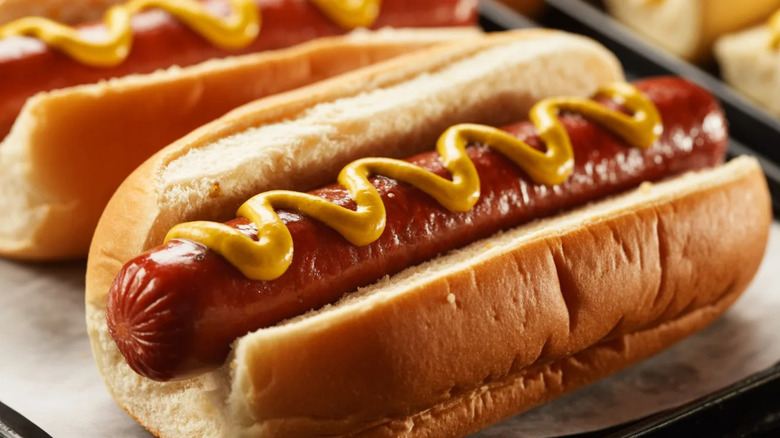
Even schools that didn't offer a variety of options on the school menu seemed to have hot dogs on rotation, along with other classic kid favorites, like burgers and pizza. Unless a kid didn't like meat, it was a pretty good gamble that they would look forward to hot dog day, no matter what form the hot dog took. Granted, the quality of the meat itself varied, as some people on social media remember the dye from their red hot dogs turning their buns red.
Schools did different things with their hot dogs. While some just served hot dogs in buns with basic toppings like mustard and ketchup, others took more creative routes. Interestingly, buns weren't always part of the equation for school cafeteria hot dogs. The USDA also put out recipes for school cafeterias to offer pigs in a blanket, with the cafeteria wrapping hot dogs in rectangles of yeast dough before baking. Some schools would even include mustard or cheese inside the hot dogs for added flavor. The yeasty smells of "pigs" baking inside their "blankets" would be absolutely irresistible as they wafted through the school campus before lunch. Other people on social media remember getting hot dog burritos in the 1970s, featuring hot dogs and chili, or wrapped up in tortillas. These seemed to be just as well-liked as the others.
American goulash and American chopped suey
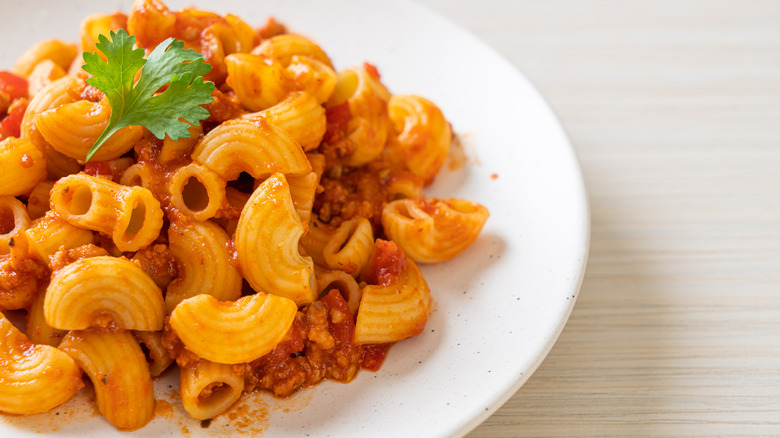
Two very similar dishes that appeared on the menus of many 1970s school cafeterias are American goulash and American chopped suey (not to be confused with Hungarian goulash and Chinese chopped suey). Calling it "goulash" instead of "American chopped suey" feels like fighting words since those who grew up calling it one rather than the other are usually ready to correct you when you misname it. Some schools had these dishes pretty often — even weekly. They tended to be a fairly popular meal that got students excited for a school cafeteria lunch.
If you didn't grow up eating either one of these dishes, their names aren't giving you any hints about what they contain. The basic recipe for American chop suey is fairly simple, combining browned ground beef and cooked macaroni noodles with tomato sauce. Some cooks add ingredients like onions and a variety of spices. American Goulash is a Midwestern comfort food that has evolved to become similar to chop suey. Since the original version of the dish originated with Hungarian immigrants, the tomato sauce in the Americanized version is sometimes infused with paprika. Cooks tend to play loose with recipes, adding seasonings they feel like or making them according to regional traditions. We've seen recreations of school cafeteria versions of these dishes that feature spice combinations like chili powder and garlic powder, and ones that sometimes add in cumin, paprika, and onion powder. We've also seen shredded cheese as a topping.
Mac and cheese
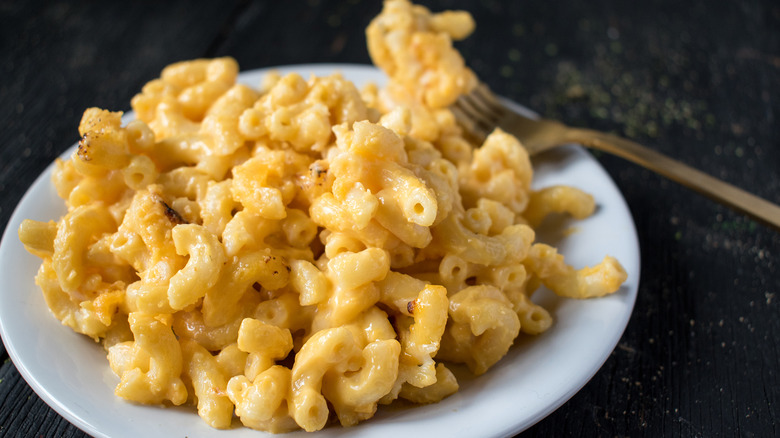
For kids who were used to eating Kraft macaroni and cheese out of a box, the baked school cafeteria mac and cheese of the 1970s might have been initially unfamiliar. However, now as adults far removed from their school cafeteria days, they find themselves continuously tweaking their baked macaroni recipes to try to achieve the same flavor they remember from school. We think the secret probably lies in one elusive ingredient, though: the cheese.
The USDA's basic mac and cheese recipe for schools from 1971 starts with cooked macaroni noodles mixed together with a mornay sauce made with butter (or margarine), flour, salt, hot milk, shredded cheese, and dry mustard. Then, the mixture would bake in the oven for nearly an hour until the top browned. There were also variations that added chopped dried beef or ham.
The recipe is simple enough. Unfortunately for those trying to track down mac and cheese that tastes like the one their school cafeteria used to make, the recipe doesn't specify what type of cheese to use. It's likely that, for most schools, it was commodity cheese, which the government began distributing to public schools in the 1950s. It's a processed American cheese that tasted similar to Velveeta while looking more like cheddar. While it doesn't exist anymore, that doesn't stop people from still trying to find taste-alikes.