

Boiled Eggs Vs Fried Eggs: Which Is Actually Healthier?
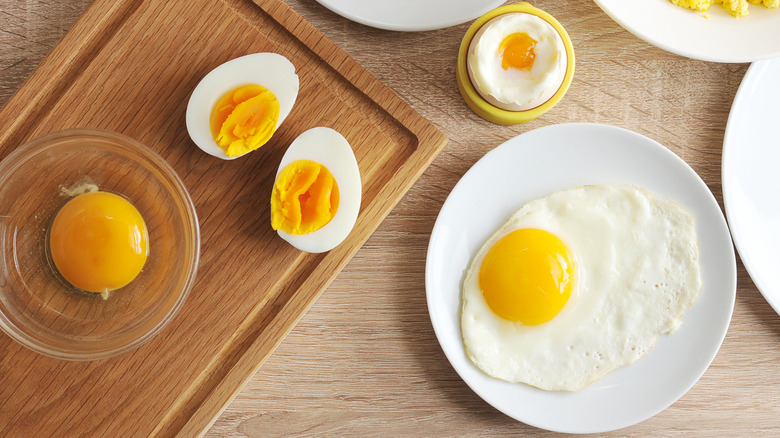
Despite the negative reputation they held in the '70s and '80s, eggs are widely considered a healthy food choice. First and foremost, they are a fantastic protein source, containing all of the essential amino acids. They're also rich in vitamins D, E, and B12, as well as iron and omega-3 fatty acids. With many different ways of preparing eggs, however, the nutritional profiles can start to diverge. For example, boiled eggs and fried eggs both have a place in a healthy, balanced diet — but looking at nutrition alone, boiled eggs tend to be the healthier choice.
One boiled egg comes with approximately 77 calories, six grams of protein, five grams of fat, and 186 milligrams of cholesterol. An egg that's fried in oil, on the other hand, has around 106 calories, six grams of protein, nine grams of fat, and 211 milligrams of cholesterol. So, while the protein content remains the same, the addition of oil that's needed to properly fry an egg adds more fat, calories, and cholesterol to the meal. We tried 10 methods to cook fried eggs, and most of them involve using some type of fat. Fat is absolutely not a bad thing by itself, but overconsumption of it has been connected with heart disease, diabetes, and obesity. If you're eating fried eggs every day, that's just something to be mindful of.
Boiled eggs are generally healthier than fried eggs
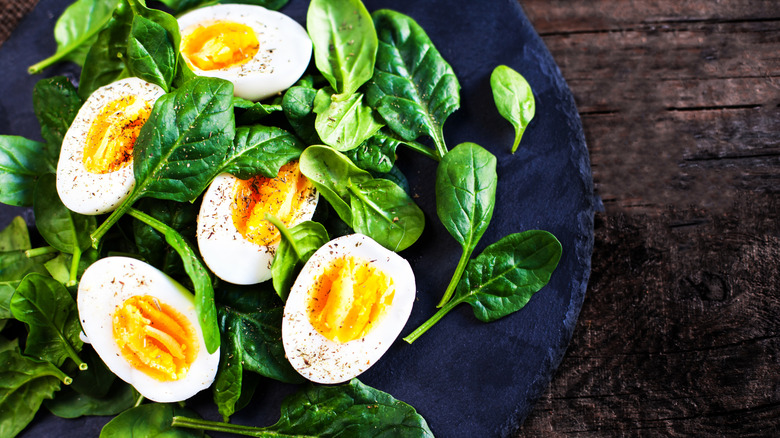
The reason why boiled eggs are healthier comes down to the cooking method. We tried (almost) every way to cook a hard-boiled egg, and none called for any extra oil. Boiled eggs really only need water, which allows for the egg's nutritional composition to remain as-is, barring the few nutrients lost because of the heat — although they're considered the winner in this parameter as well, since fried eggs usually reach higher temperatures.
In concrete numbers, this is the nutritional difference between eating two fried eggs versus two boiled eggs: You're consuming 58 calories, eight grams of fat, and 50 milligrams of cholesterol more with fried eggs. Depending on your dietary and health goals, this difference can play a significant role. If your aim is to lose weight or manage high cholesterol, boiled eggs are definitely the better choice. But if you're living a very active lifestyle and need lots of energy, fried eggs could be the superior pick.
For similar reasons, boiled eggs are also considered healthier than scrambled eggs — they simply don't need any high-fat additions. Yet the simplicity of a boiled egg doesn't have to mean that its flavor needs to be bland and unseasoned. You can pickle the eggs, marinate them in soy sauce, or cook them in bone broth, which is the best way to give boiled eggs a flavor boost. Just keep in mind that any modification will change the nutrition ever so slightly.