

7 Foods Pony Express Riders Relied On In The American West
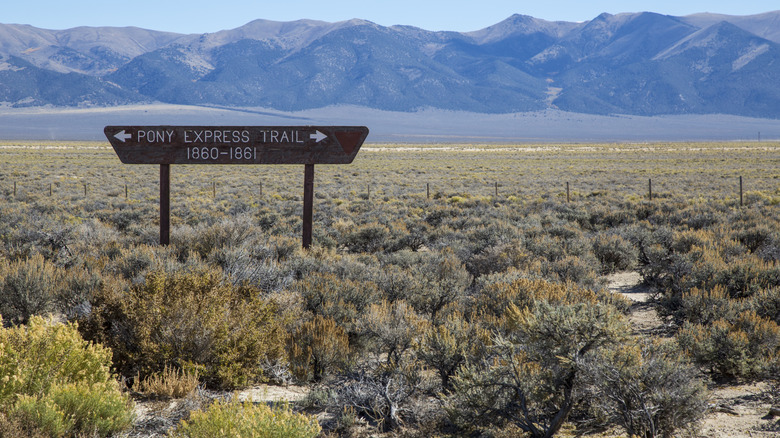
Despite its brief lifespan, the Pony Express holds an enduring, almost mythical place in American lore. It is often mentioned in popular culture, but not everyone knows that it only operated between April 1860 and October 1861 — not even two years. It also didn't cover the whole country: It counted about 165 stations, some 11-15 miles apart from each other, between St. Joseph, Missouri and Sacramento, California. Amenities like warm meals were hard to come by in this large swatch of American West.
Yet the Pony Express riders had to eat, and they could not bring food with them, as they were subject to severe weight restrictions (largely taken up by the mail) to ensure speed. According to Dr. Christina Corfield, visiting assistant professor at the University of Buffalo, "what riders ate was mostly determined by where they were stationed along the 2,000-mile route," with the eastern end of the route, and larger cities, being generally better equipped with fresh ingredients and a wider variety of options.
Almost aside from the availability of ingredients, the best luck any Pony Express rider could hope for was to find a station kept by someone with good cooking skills. To get a better idea of what all this means, we decided to make a list of foods Pony Express riders relied on when delivering mail in the American West, whether they liked those foods or not.
Mystery meat
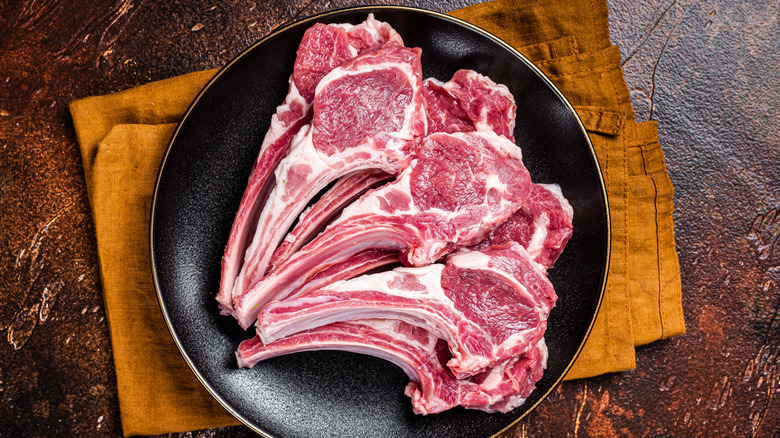
Mutton, which is basically older lamb, is not such a common meat consumed in America these days, but it is frequently mentioned as a staple of certain Pony Express stations. Other meats included something called bull beef, which according to Dr. Christina Corfield was probably buffalo meat, and something a traveler called wolf mutton, a mysterious as yet to be identified meat that was served with some kind of boiled grain.
According to Dr. Corefield, historical reports indicate that antelope steaks were served at several Pony Express stations, though, "it is not clear where this meat came from or who supplied it." Pony Express riders themselves had a very physically demanding job and time was short, so they would have been unlikely to have had the opportunity to go out and hunt. People running the stations were tasked with keeping them supplied with food, so one can only assume they were the ones who sourced such delicacies.
Bread
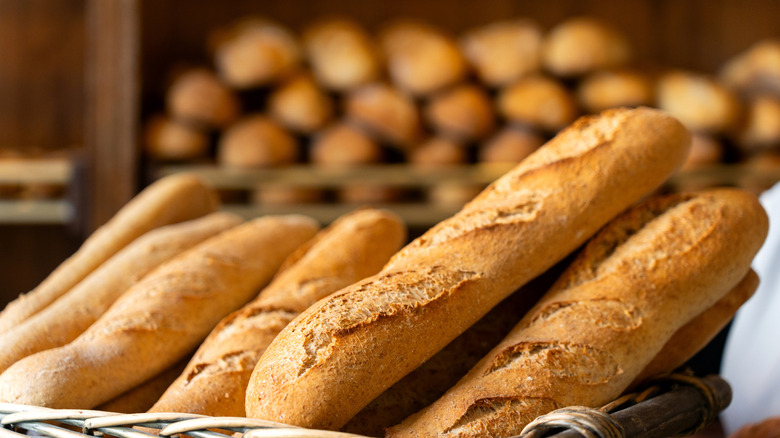
As with most ingredients, bread would have been fresher toward the eastern side of the Pony Express route and closer to larger settlements and cities. Freshly baked bread was available in some stations, but other places might simply provide flour so riders could bake bread then and there over an open flame.
Whatever the case, some of the worst stations — such as Cold Springs and Rock Creek in the east — had no good options in terms of bread. According to Dr. Christina Corfield, bread here "had a harsh alkaline taste making it difficult to consume except out of necessity."
One traveler, Richard Burton, in notes reported by FrontierLife, suggested the bread had not even been cooked before it was served, and that the taste had been negatively affected by the rising method used: "done by means of a little sour milk, or more generally by the deleterious yeast." Many stations also dealt with unsanitary conditions that led to contaminated water, which was also used to make bread, and hordes of flies.
Anchovies
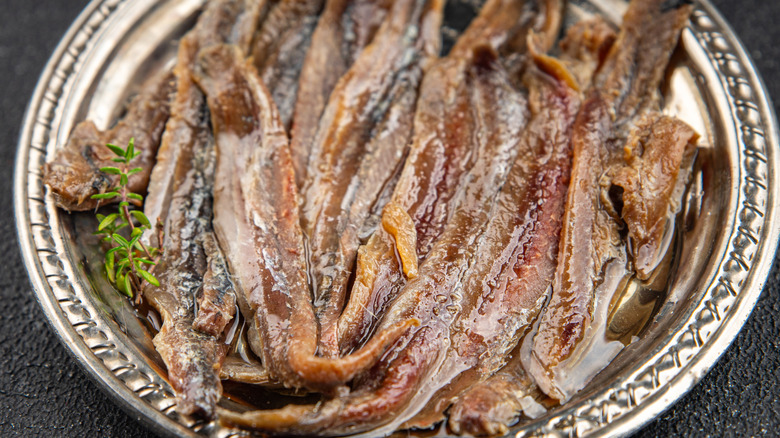
According to Dr. Christina Corfield, some Pony Express relay stations did have some positive ingredients to offer in some locations. One such ingredient was anchovies, which were available in California, along with sausage and cheese. Indeed, the northern anchovy is typically harvested off the coast of California, and may have been used as an easy and readily available way to flavor food, something we still do today by using anchovy paste to give dishes a salty flavor.
Indeed, one dining option involving anchovies in California, around the days of the Pony Express, was an anchovy sauce served over baked trout. This dish was served at a fine dining establishment that likely would have been out of reach for most Pony Express riders, though they were known to have also frequented some larger stations that also acted as stagecoach stops for other types of travelers, and that were therefore better provisioned.
Saleratus doughnuts
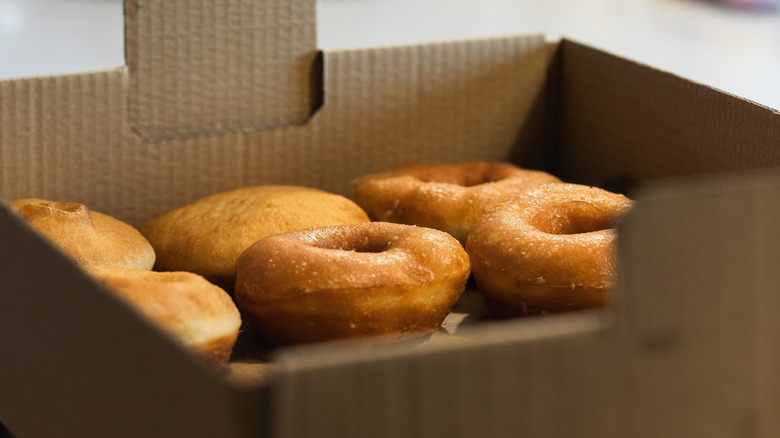
Doughnuts these days are generally seen as a treat that is hard to mess up. Yet back in the days of the Pony Express, bad doughnuts were not so hard to come by. Indeed, one traveler who kept a written account of the foods and other experiences he had while traveling along the Pony Express route noted that on at least one occasion, "myriads of flies disputed with us a dinner consisting of doughnuts, green and poisonous with saleratus."
Saleratus is used in vintage recipes as a leavening agent in doughnuts and other baked goods. It was a form of pearl ash that is similar to modern baking soda, but comprises bicarbonate of potassium instead of bicarbonate of sodium. Doughnuts made with this leavening agent, it seems, were generally not well-liked among the populace, including, perhaps, Pony Express riders. But although the doughnut is widely believed to have been invented by Dutch settlers in Manhattan, legend has it that a particular doughnut-maker living along the Pony Express route can be credited with inventing the modern shape with a central hole, which she did so she could supposedly toss the doughnut at her Pony Express rider paramour, who would catch it with the barrel of his gun.
Eggs
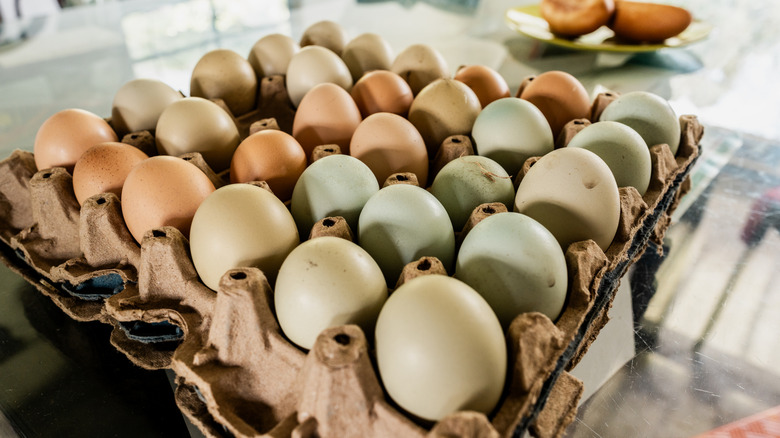
Eggs were a mainstay at some Pony Express stations, especially at the ones that were better provisioned with fresh foods. They were often served with ham or sausage and bread rolls, according to Dr. Christina Corfield. Eggs were also available at the some remote stations where provisions were not restocked very frequently. Although there is no clear evidence to suggest that Pony Express stations were able to keep chickens, we can make an educated guess that they did, since it was precisely in the mid-1800s that chickens began to be bred all across America specifically for eggs rather than meat.
That said, Richard Burton, a traveler who journeyed the length of the Pony Express by stagecoach one year, noted that the eggs served at one station were suspicious, without elaborating. Other stations, however, had much fresher eggs — and other ingredients — to offer. As he noted in his diary as reported by FrontierLife, "the ham and eggs, the hot rolls and coffee, were fresh and good, and, although drought had killed the salad, we had abundance of peaches and cream."
Preserved foods
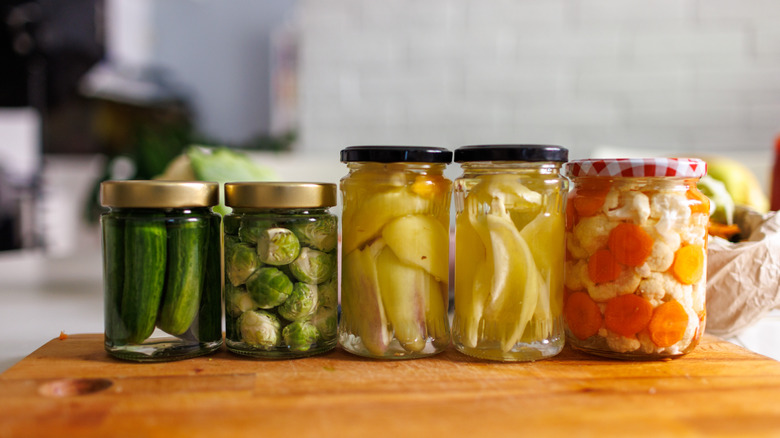
Because many of the Pony Express stations were not often able to be restocked with fresh foods on a regular basis, sometimes, preserved items like pickles, cured meats, and dried fruit were the only items available. Dr. Christina Corfield indicated that salted beef and buttermilk were also found at stations. Pickled items, for one, included not only cucumbers but also watermelon, other fruits and vegetables, and even eggs. Pickled foods were kept in bottles, as mason jars were not yet widespread.
Better provisioned stations might not have had to rely on preserved items. According to Dr. Corfield, military forts such as Fort Laramie would have had fresh beef, fruit, and vegetables, such as onions. Potatoes were also present closer to Salt Lake City. However, even there, times became tough for Pony Express stations after the company went bankrupt, and stations were not restocked as frequently as in its heyday.
Bacon
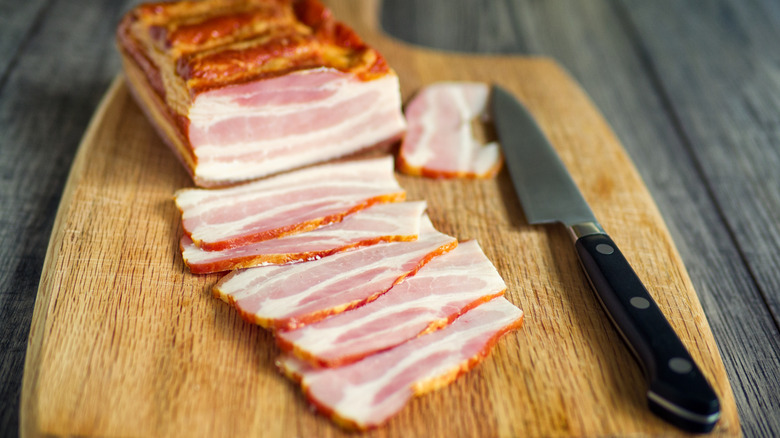
Bacon has long been a beloved American breakfast staple, one that given all its umami and fat, is hard to get wrong. Yet sometimes, at Pony Express stations, cooks did get it wrong. Richard Burton, the stagecoach traveler, once described bacon he'd been served as rusty. While this may seem like an unusual description for bacon, Burton did elaborate, saying, as reported by FrontierLife, "Then the rusty bacon, cut into thick slices, was thrown into the fry-pan: here the gridiron is unknown, and if known would be little appreciated, because it wastes the "drippings," which form with the staff of life a luxurious sop."
One can only wonder whether this bacon was in fact salt pork, a cowboy staple for most meals around the time of the Pony Express. Salt pork is made from the belly or back of the pig, then dried and cured with salt, unlike bacon, which also involves smoking.