

The Other 2 Cool-Weather Leafy Greens With More Potassium Than Spinach
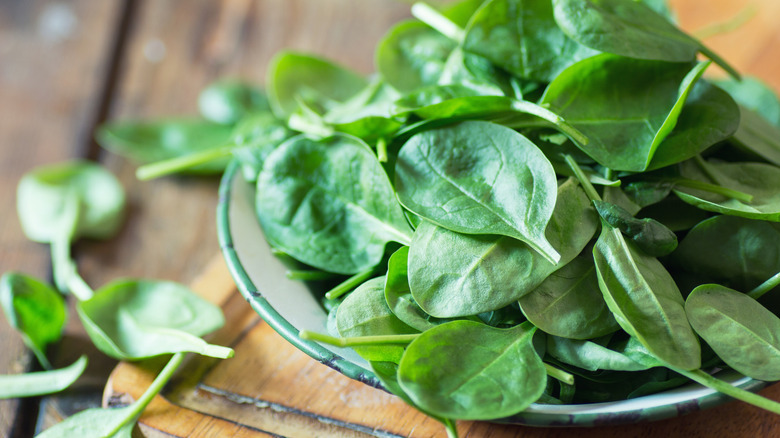
Spinach is one of the first green, leafy vegetables that comes to mind when people think of nutritious veggies. Its reputation is well deserved. When it comes to potassium, there are two more, slightly lesser-known, cool-weather greens that top the charts: beet greens and Swiss chard. Both are versatile in the kitchen, and their impressive mineral content makes them useful additions to the usual rotation of spinach, kale, and collards.
Potassium is an essential mineral. As an electrolyte, it's involved in regulating the balance of fluids throughout your body, transmitting nerve signals, and supporting normal muscle contractions. It also plays a role in maintaining healthy blood pressure, in part by helping the body manage and excrete sodium. Although bananas tend to dominate conversations about potassium rich foods, leafy vegetables can provide substantial amounts, particularly when cooked down into concentrated servings.
According to USDA nutritional data, 100 grams of boiled, drained beet greens contains approximately 909 milligrams of potassium. The same amount of cooked Swiss chard provides 549 milligrams, compared with 466 milligrams of cooked spinach. Beet greens, therefore, contain nearly twice as much potassium as spinach by weight, and Swiss chard supplies approximately 18 percent more.
All three figures refer to vegetables boiled and drained without salt, to allow for a direct comparison. Leafy greens lose considerable volume as they wilt — a cup of cooked greens contains far more leaves than a cup of raw greens, so cooking is key in interpreting these numbers. Boiling also causes some water soluble minerals, including potassium, to leach into the cooking water. The USDA figures describe the nutrients remaining after the greens have been cooked and drained.
These greens have a lot on their plates
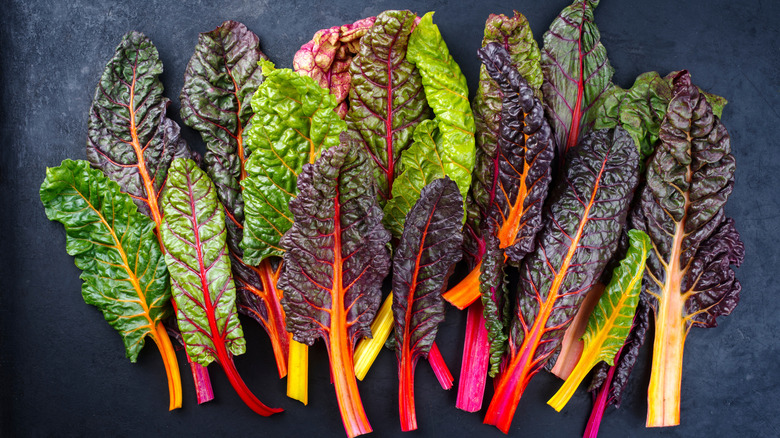
Beet greens and Swiss chard have more in common than their potassium content. Both belong to the species Beta vulgaris, although generations of cultivation have emphasized different parts of the plant. Beets are grown primarily for their swollen roots, whereas Swiss chard has been selectively bred for its generous leaves and substantial, sometimes colorful stalks. Their botanical relationship explains why their greens have similar, strong, salty-earthy flavors, and respond well to many of the same cooking techniques. Both vegetables can grow in colder temperatures, as low as 40 degrees for beet greens, and down to 28 degrees for chard.
Beet greens are a delicious, nutritious vegetable that sometimes ends up in the compost bin at home because of lack of familiarity. When buying fresh beets with their tops attached, the leaves can be removed, washed thoroughly to dislodge any soil, and prepared much the same as spinach. Younger leaves are small and tender enough to be eaten raw, in salads, while older ones are wonderful sautéed simply, in olive oil and garlic. Their flavor is mildly earthy. A quick squeeze of lemon or a splash of vinegar toward the end of cooking can brighten them up.
Swiss chard is recognizable by its broad, often crinkled, dark green leaves and thick stems, which come in a vivid rainbow of colors, from white, yellow, pink, or vivid red. Chard can be sautéed, added to soups with beans or sausage, or incorporated into savory pies and gratins.
Both vegetables offer an easy way to introduce variety into recipes that ordinarily call for spinach. Both are seriously nutrient dense. Anyone managing kidney disease or following a potassium-restricted diet should check with their doctor before substantially increasing their intake of potassium-rich greens.