

The Essential Final Step For A Clean Glass Stovetop That Shines Like New
We may receive a commission on purchases made from links.
Glass stovetops look modern and elegant, so it's easy to understand why they are such a popular choice in kitchens. A shiny stovetop makes the whole space look expertly cleaned, especially when you can see your reflection on the surface. But after you've owned the glass top for a little while, you might notice that the shine is disappearing, even with regular cleaning. It's not that the stove is dirty or ruined; it's just that you might have been skipping the final step of the cleaning routine: polishing.
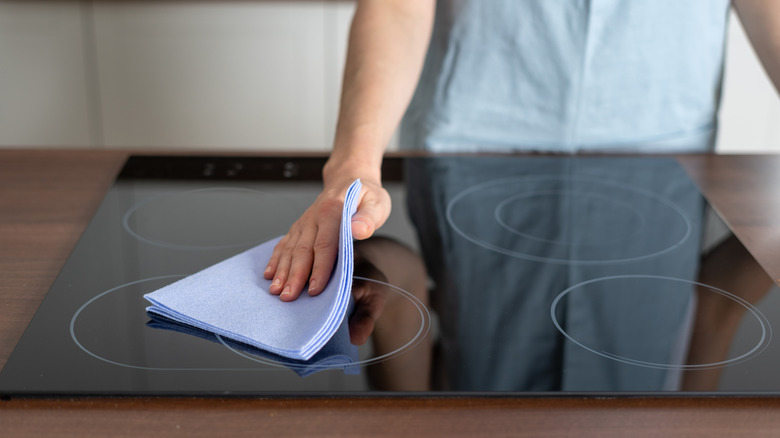
The routine for cleaning your glass stovetop involves some necessary steps — scraping off the burnt food bits, spraying the surface with an appropriate cleaner, wiping off the grime, and drying the glass. If that's where you stop, you'll still have a clean stove, but the surface will probably look streaky and dull. For a stovetop that sparkles, take an extra step about once a week, and polish the glass surface after it's completely clean and dry.
The stovetop sees a lot of traffic, and polishing ensures that it remains glossy despite constantly being in use. Take a soft, dry cloth and rub it across the entire surface of your stove by moving your hand in controlled, small circles — not swiping left and right. This will ensure the shine is even and that there are no steaks left behind. It's very important that the cloth you're using is completely dry, so if it gets wet from any leftover moisture, replace it with a new one.
The best supplies for polishing a glass stovetop
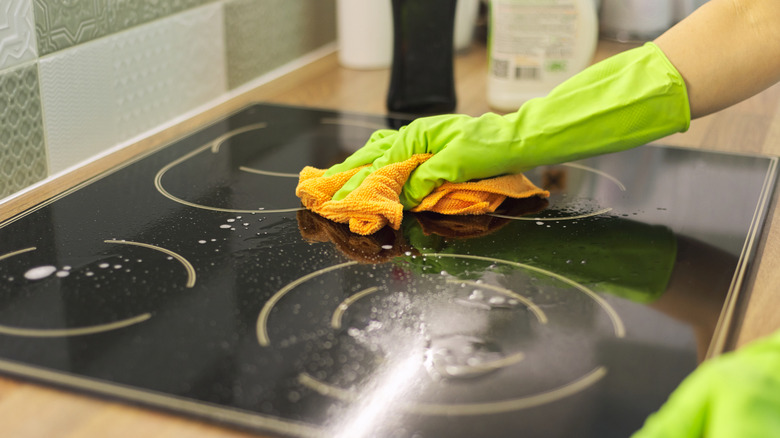
Polishing should always be done with a soft material. Steel wool and other abrasive sponges are a big no-no for glass stovetops, as they will damage the surface and no amount of buffing will get those scratches out. Instead, the ideal textile for polishing is a simple microfiber cloth. Microfiber cloths have many uses in the kitchen, but they're especially perfect for polishing because the fibers are small and static, which makes nearly invisible particles such as dust easily cling to them, leaving behind a shiny surface. They also don't have to be wet to clean effectively, so if you missed a spot during the initial deep clean of the stove, that final polish with a microfiber cloth will take care of it.
In general, no special products are needed for polishing; a dry buff is usually effective enough. But if you do want to go a step further or are working with a surface that has seen better days, a special stovetop polish could be worth adding to your cleaning routine. Its benefit is that it can restore smaller imperfections on the stove while also protecting it for future use. Most glass stovetop products actually combine the cleaner and the polish, like the AWEASROY Glass Stove Top Cleaner Kit that's available on Amazon for $17.