

5 Store-Bought Pie Crust Mixes, Ranked Worst To Best
We may receive a commission on purchases made from links.
Few things rival freshly baked pie. It doesn't matter whether it's an autumn-spiced apple, classic pumpkin pie, or one heaped with cherries, homemade pie is comforting. The foundation of any respectable pie is its crust, which should be golden, light, and flaky. Making a pie crust from scratch isn't necessarily complicated, but it requires a bit of precision to guarantee a successful outcome. For that reason, pie crust mixes can be truly helpful, as long as they're good.
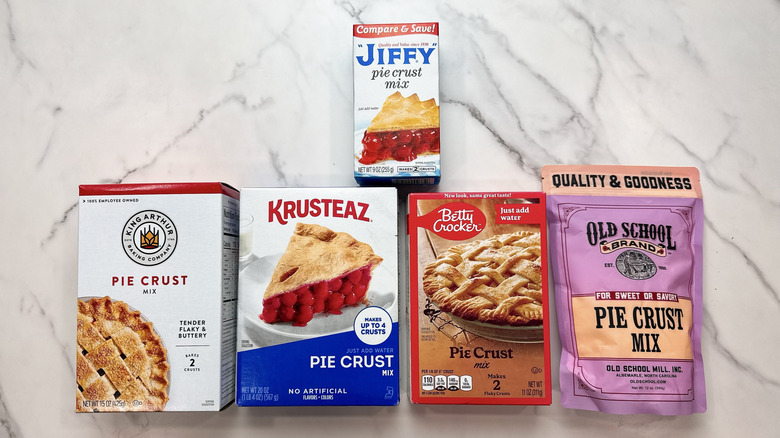
To determine which brand makes the best pie crust mix, I decided to put every brand I could find to the test. I purchased the mixes, transformed them into doughs, rolled them out, nestled them into pie plates, fluted the edges, and baked as instructed. I judged each crust on several factors, including ease of working with the dough, aroma while baking, and taste and texture of the crust once baked. The victors of the group were mixes that transformed into layered, golden crusts that were analogous to a flaky homemade version.
A traditional pie crust is basically flour, fat (shortening or butter), water, and a pinch of salt. Before this ranking, I considered this short ingredient list and pondered, "How dissimilar could they be?" They were quite different, and each one had something notable to observe. None of these mixes were awful, but there were definitive winners in the category.
Prices are as of the date of publication and may vary based on region.
5. Betty Crocker
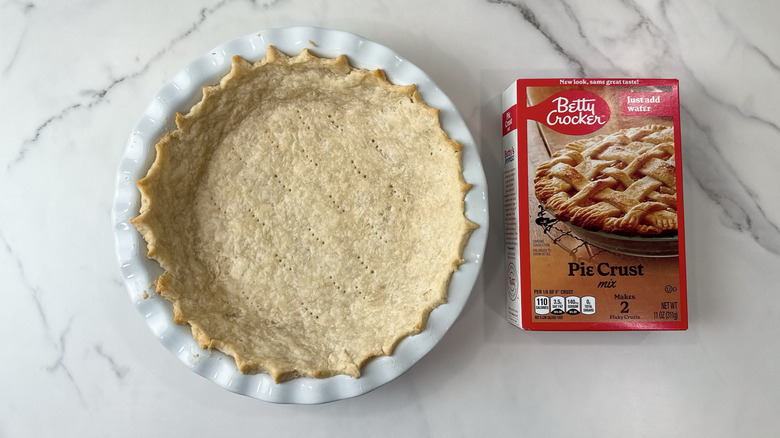
I've had great success with Betty Crocker cake mixes in the past, so I had high expectations for the brand's pie crust mix. Sadly, I was disappointed. When making the crust, I was encouraged by the clumps of shortening, because that typically means the crust will be light and airy. However, since this pie crust mix contains palm oil, not butter, it didn't create the flaky lofty layers I was expecting.
Palm oil also doesn't have any flavor (especially when compared to butter), and it felt greasy on my palate. I also detected a mild sweetness, which was likely due to the added corn syrup solids.
While baking, the aroma wasn't that of pie crust; it smelled like I was baking the box, not the contents inside. The color was different from the others, too. Perhaps it was the "added color" listed on the label. I'm not certain why color is needed for a pie crust, and I wanted to know what exact colorant was used, as it's not labeled.
The Betty Crocker pie crust mix was $3.99. It only required water, and the package made two crusts. I ranked this product last because it wasn't flaky, the color was slightly unappealing, and I didn't enjoy the flavor.
4. Jiffy
In 1930, the Chelsea Milling Company created Jiffy, the first pre-made baking mix sold to the public. What started as a biscuit mix has evolved into an impressive line of mixes for cornbread, cakes, brownies, pizza dough, pancakes, and muffins. Since Jiffy has been helping home bakers for almost 100 years, I had high hopes for its pie crust mix.
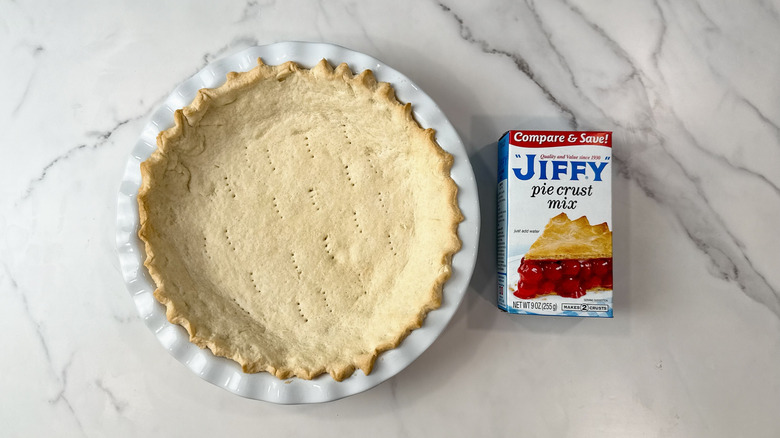
When I poured the mix into a bowl, I was surprised by how powdery it was; there were no discernible bits of shortening. Like Betty Crocker's mix, I just needed water, which was both good and bad. I appreciated that no other ingredients were required, making it a true money- and time-saver, but it used lard as shortening – or more precisely, hydrogenated animal fat with BHT and citric acid as preservatives. Not only did the lard offer zero buttery flavor, but I wasn't thrilled with the addition of BHT since its link to potential toxicity and risk to human health is under question.
Once rolled out, this crust was incredibly thin and hard to work with. While baking, the aroma was akin to cardboard, not a cozy pie crust. Once baked, the crust was dense and crumbly, not light and flaky. One box of Jiffy pie crust mix was $1.29, and it made two crusts. Although it was the least expensive option on this list, and the flavor was slightly better than the Betty Crocker product, I'll be sticking to the brand's other mixes moving forward.
3. Old School Brand
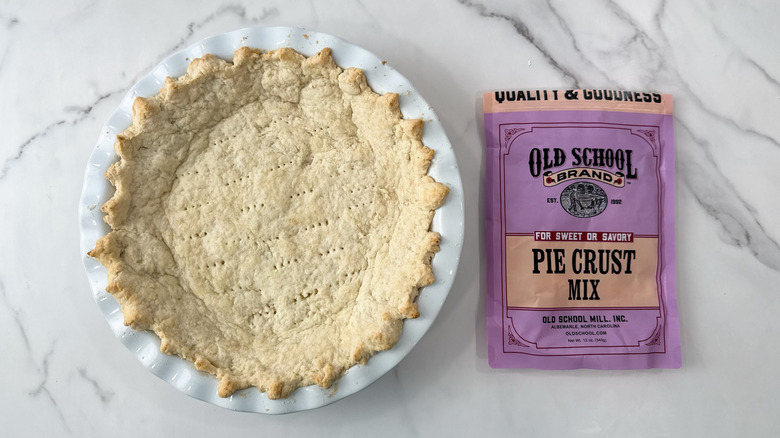
I was excited to try Old School Brand pie crust mix because the company promises quality, goodness, and products made the old-fashioned way. This mix was one of the two products that required butter and, once I added ½ cup, I was impressed by how smooth and workable the dough was. It was a joy to work with, and fluting (pinching) the edge was a breeze. I also liked that this crust was thicker than the lower-ranked brands.
I baked this crust the same way I baked the others, but the results were not the same — this crust puffed up considerably in the oven. I assume the lift came from baking powder, and my results may have been different if I blind-baked the crust with pie weights, but I baked all crusts similarly for consistency. In terms of taste, there was a hint of sweetness from evaporated cane sugar, which I liked. I also liked the flavor of the butter as it tasted more authentic and homey. Unfortunately, I wasn't a fan of the lumpy, bumpy texture. I felt this crust was more reminiscent of buttermilk biscuits than pie crust.
The Old School Brand pie crust mix was $7.99, and the package makes two crusts. I ranked this product higher than the previous mixes because the flavor was better, but the texture wasn't my favorite. Next time, I'll use pie weights, or prepare a filled pie; I'm confident that will yield a better outcome.
2. Krusteaz
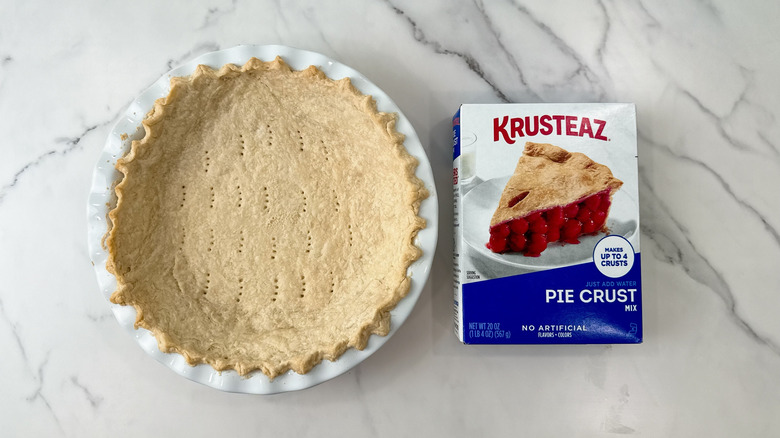
I'm a fan of Krusteaz pancake and muffin mixes, so I was thrilled to try the brand's pie crust mix. I was especially eager when I opened the package and found a generous amount of shortening bits in the flour mixture. As mentioned, noticeable lumps of shortening often equate to a flaky pie crust. I also appreciated the simple ingredient list of flour, palm and soybean oil, and salt — no leavening, added color, BHT, or corn syrup.
The mix simply needed water and, while baking, it delivered the aroma of a homemade crust. The only issue I had with this crust was how thin it was. For a single crust, the package recommends mixing 1 cup of the mix with 2 to 3 tablespoons of water. Once rolled out, the crust was exceedingly thin and very difficult to work with. It tore when transferred to the pie plate, and ripped frequently when I tried to make a decorative edge.
I liked the taste and texture of this crust; it was toasty and flavorful and had a nice, flaky texture. I placed it second because it was too thin, but I can remedy that by using 1½ cups of the mix next time. One four-pack of Krusteaz pie crust mix is $19.76, and each box makes four pie crusts (retailers also sell two-packs and single boxes when available). I ranked this brand second because it was tasty and easy to prepare, but it couldn't compete with the best of the lineup.
1. King Arthur
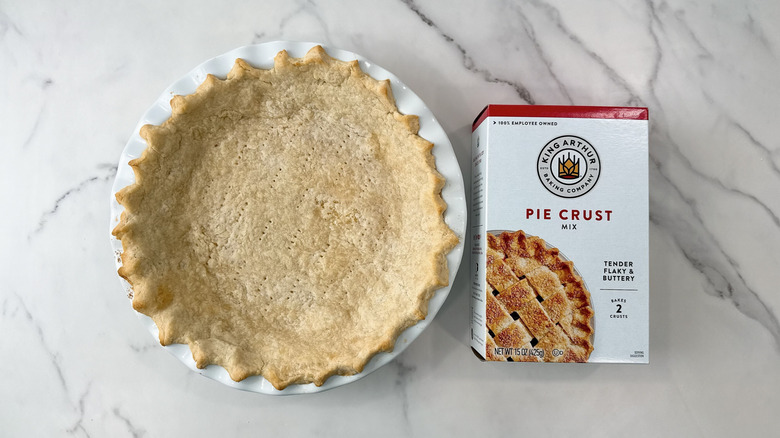
King Arthur was the first flour company in the United States and the first food company in New England. The brand has been supplying American bakers for over two centuries, so I had a good feeling about its pie crust mix. My inclinations were correct; this was the best pie crust mix of the bunch. I'll be honest, it won by a huge margin.
King Arthur's pie crust mix required butter (11 tablespoons), and I didn't have an issue with that for the reasons stated above — butter contains water, so when it melts, it produces steam and creates light, flaky layers. This isn't always the case with other shortenings. While rolling out the dough, I was enamored by how thick it was, particularly after struggling with the thinner crusts on this list. I transferred the dough to the pie plate with ease and fluted the edge without difficulty. During baking, the aroma took me back to childhood because it was buttery and welcoming.
Once baked, the crust was perfectly golden-brown, airy, flaky, and buttery without being greasy. According to the package, I could have achieved an even flakier result by refrigerating the crust for 30 minutes before baking. I also loved the hint of buttermilk; it added complexity without making it taste like buttermilk biscuits. King Arthur pie crust mix was $7.95 and made two crusts. My final verdict: King Arthur outshined the others on this list in every possible way.
Methodology
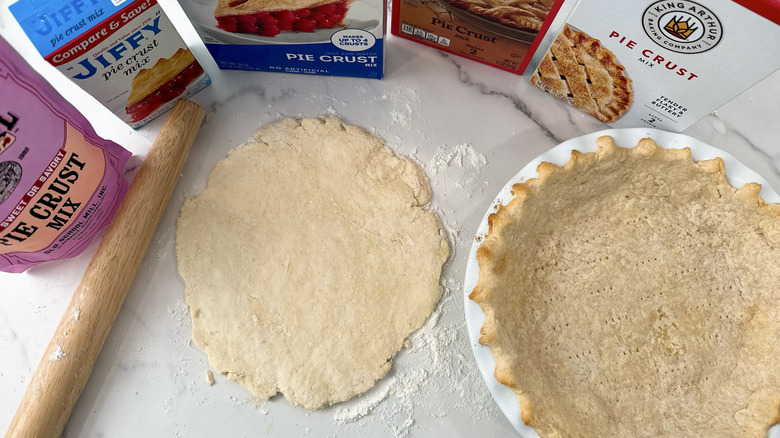
For this ranking, I purchased every available pie crust mix I could find and compared them side-by-side. I was eager to try the mixes because I anticipated that they would be more homestyle than a ready-made, store-bought pie crust. I followed package directions and added the necessary ingredients, whether it was just water or water and butter.
I rolled out each crust, placed it in the same pie plate, and pinched around the rim to create a decorative edge (as best I could). I pricked the bottom of the dough with a fork to prevent rising and baked in a 450-degree Fahrenheit oven for about 10 minutes (again, following package instructions when available). King Arthur and Old School Brand didn't provide instructions for an unfilled, baked pie crust, so I used the guidelines of the brands that did. I did not add pie weights to any crust for uniformity. I'm not a professional baker and I assume most people buying pie crust mixes won't be either, so I took that into consideration when evaluating each crust.
To determine which crust was best, I assessed the ease of working with the dough, the amount of dough, and the way it baked into a crust. The brands that offered workable, ample, flavorful, and flaky dough ranked the highest, while those that were thin, dense, and unremarkable taste-wise ranked the lowest. I was pleased to learn that it's possible to achieve a homemade-tasting pie crust with the help of a boxed mix.