

5 Foods You Would Have Definitely Eaten In Mister Rogers' Neighborhood
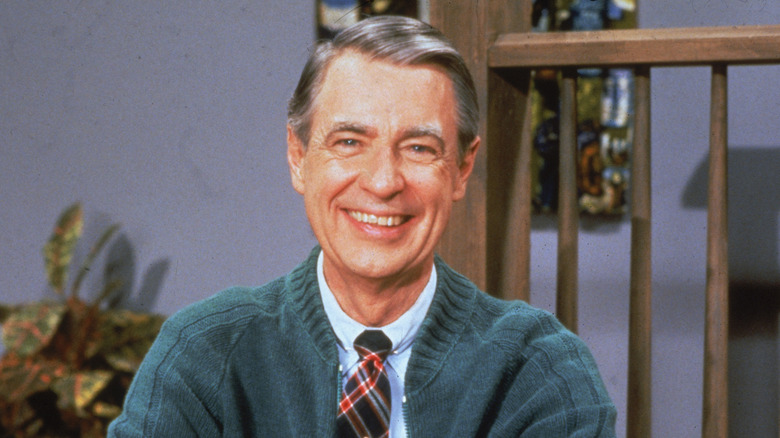
Fred Rogers recognized that even the smallest questions deserved thoughtful answers, and that helping children understand the world around them could give them confidence about their place in it. Food is a natural subject for this exercise in curiosity. Throughout the 33-year long run of his PBS show, "Mister Rogers' Neighborhood," he invited young viewers to investigate new and familiar things, introducing them to new foods and the folks who made them, explored in all sorts of joyful and gently educational ways.
Rogers understood that food is one of the first ways children learn to interact with and trust the world around them. Before they can explain what hunger means, they feel the comfort of someone feeding them. In a letter introducing a children's cooking book that was part of the "Grow and Learn with Mister Rogers" series, Rogers reflected on this connection. "Food is at the core of every stage of human development," he explained (via The Neighborhood Archive). "Relationships and food become intertwined."
That said, Rogers also understood the limits of his medium. "Of course, as a television friend, I can't offer food through the television set," he wrote. Still, he invited his young audience to explore where their food came from, observe how it's made, and discover the pleasure of gracious hospitality through visits to Chef Brockett's workplace. There, they explored family recipes and invented whimsically unconventional snacks such as these food you would have eaten with Mr. Rogers in the neighborhood.
Peanut butter and jelly sandwich with popcorn
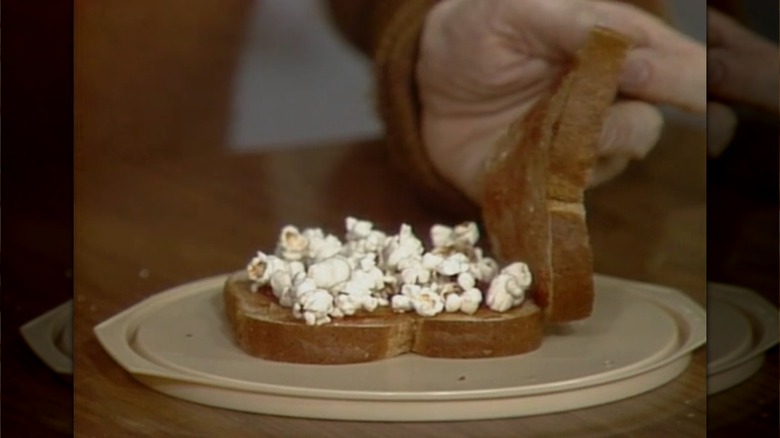
A peanut butter and jelly sandwich is a classic childhood meal, but Mr. Rogers had the fun idea to add a little bit of textural intrigue: popcorn. In a 1982 episode, Rogers receives a popcorn popper as a gift and shows how it works for his "television friends." After singing a song to watch the kernels pop, he puts the finished popcorn into a peanut butter and jelly sandwich.
The combination sounds unusual (and a little silly), which probably made some kids laugh, but there's something genuinely appealing about adding an unexpected, salty little crunch to the soft bread and sticky filling. The popcorn became a theme threaded throughout the episode. In the "Neighborhood of Make-Believe" segment, Chef Brockett (Don Brockett) hands out popcorn balls, a kind of old-fashioned snack you don't see folks eat as much these days, and King Friday (Rogers) declared that popcorn shall have a place in the upcoming opera.
There's something beautifully democratic about Rogers' approach: A child didn't need an official recipe or approval to wonder whether two things might taste good together. The popcorn sandwich is an invitation to follow the impulse of curiosity into playful experimentation. In Rogers' world, even from the lunchbox could be a place to exercise imagination.
Banana with cheese
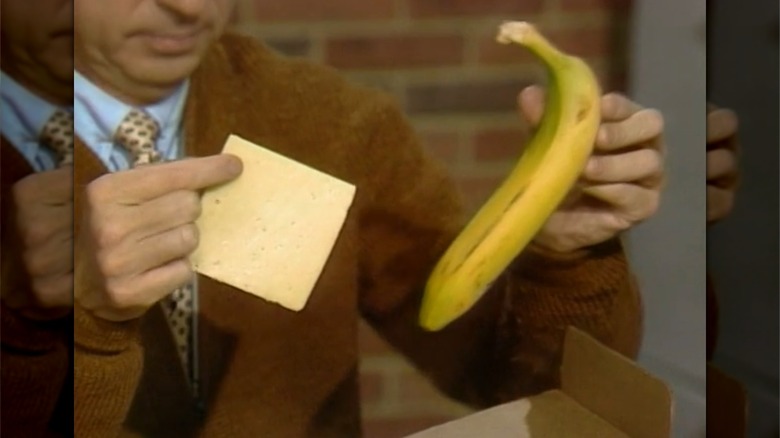
A banana wrapped in a slice of cheese sounds like the sort of snack a child might invent. In another episode that aired in 1982, Chef Brockett sends Mister Rogers a box containing a banana, a slice of American cheese, and a note instructing him to "wrap the cheese around the peeled banana and eat right away." And he does! Like the aforementioned sandwich, this is quite an unconventional combination. But the sweet-creamy fruit and salty-creamy cheese are a more plausible pairing than it seems. After all, apples and cheese are a timeless classic.
It's easy to imagine why a kid would find enjoyment in watching an adult presented with an unusual idea and seeing them engage with genuine interest. Rogers worked closely with child psychologists, whose understanding of emotional development helped shape the program. Attentive to the uncertainty that comes with new experiences, Rogers allowed food to be a low-stakes opportunity to explore sensation, feelings, and reactions.
The banana-and-cheese snack embodies the freedom and bravery that Rogers often encouraged. This was an opportunity to take a new idea seriously, even if it seems silly or strange to someone else. That said, this combo is not as uncommon as one might think. As one Redditor revealed, "I saw Mr. Rogers do it when I was a kid, and there's no stronger stamp of approval as far as I'm concerned."
Homemade granola
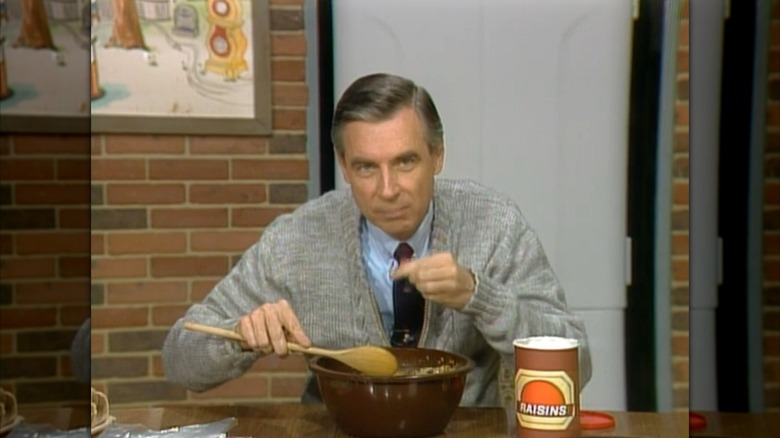
Two years later, in a 1984 episode, Mr. Rogers made a batch of homemade granola. He adds raisins to the mix before dividing it into individual bags and distributing it to his neighborhood friends. Crunchy, homemade granola is a very accessible kitchen project, even for young children with less refined motor skills, since much of the work involves measuring and mixing ingredients. There is plenty of room for both mistakes and adjustments to accommodate personal taste.
Making a batch of homemade granola also offers an introduction to the satisfaction of seeing separate but still-identifiable ingredients become something you can eat. Rogers' little gift bags demonstrated a practical example of something children could do for someone else, and an opportunity to contribute, and practice caring for others. In fact, the episode explores food from several angles.
At one point, Rogers discusses how being hungry or having to wait to eat can cause angry feelings. He also shows a film about how tofu is made, and the Neighborhood of Make-Believe plot explores how one can provide food for those in need. These subjects share a complex theme of how food affects people's lives, and it all began with Rogers' homemade granola.
Noodle pudding
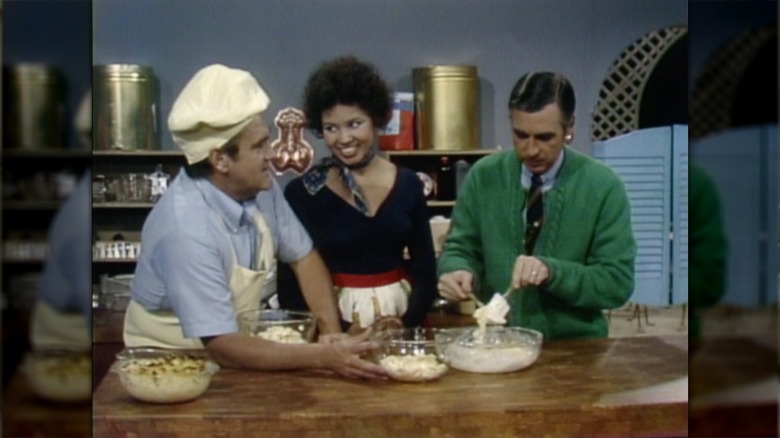
In an episode that aired in 1975, Mr. Rogers visits Brockett's Bakery as Chef Brockett and Maggie Stewart prepare a batch of noodle pudding. Before adding each ingredient, they pantomime the action involved, inviting young viewers at home to follow the recipe through a series of recognizable gestures. It was a cooking demonstration that made room for imagination, allowing viewers to picture themselves taking part in the process.
Although you may not have heard of it, noodle pudding is also the English name for lokshen kugel, a Jewish casserole with centuries of history — although the origin of noodle pudding is highly debated. Traditionally served on holidays and made with egg noodles, it can be savory or sweet. Many American versions often incorporate cottage cheese, raisins, or cinnamon.
Rogers' interest in the preparation of the recipe reflects his deep appreciation for those whose work makes everyday life possible. As quoted on the official Mister Rogers website, he once said, "I like children to know that people can take pride in their work and that everyone's job is important." Chef Brockett's bakery gave that value system a practical setting, culminating with some tasty results.
Grandmother Rogers' corn pudding
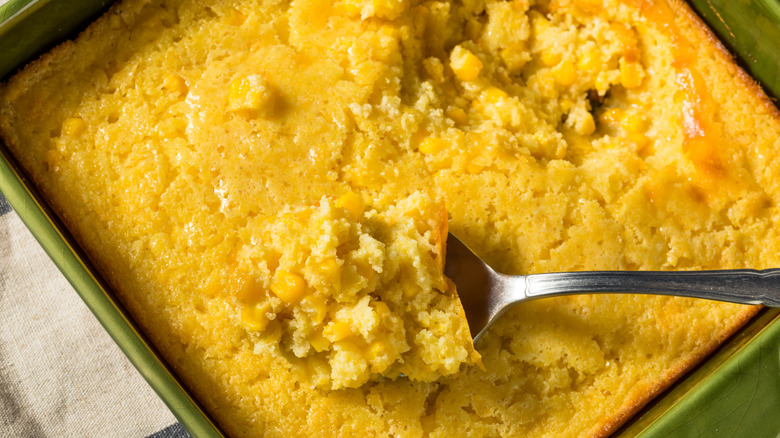
Not every food that Fred Rogers adored made it to the television screen. Corn pudding was a dish that Rogers' grandmother made for him when he was a boy, and it stuck with him throughout his life. In the family recipe, published by PBS, the dish calls for just six ingredients, including cream-style corn, milk, and eggs. Baked until set, the pudding has a soft, custardy texture and gentle sweetness. It's an unassuming American classic, the kind of customizable dish that might have a place on a family dinner table for generations.
Rogers was only six years old when his grandmother died, but her corn pudding lived on through his memory. In fact, he was still talking about it more than five decades after her death, revealing that he loved eating anything that even remotely resembled it. Rogers' attachment to the dish suggests how strongly the experience of being cared for can be associated with a particular food, even when our memories of the person who made it have grown distant.
It's fitting, then, that Rogers would eventually become part of other children's memories in much the same way. Millions grew up watching him, sharing songs, delighting in imagination, and making everyday discoveries and experiences feel worthy of wonder. Just like the sound of his voice or the sight of that familiar cardigan may summon a whole world of childhood memories, so too might these foods the next time you try them.