

Swap Coffee For This Roasted Japanese Tea In Your Next Tiramisu
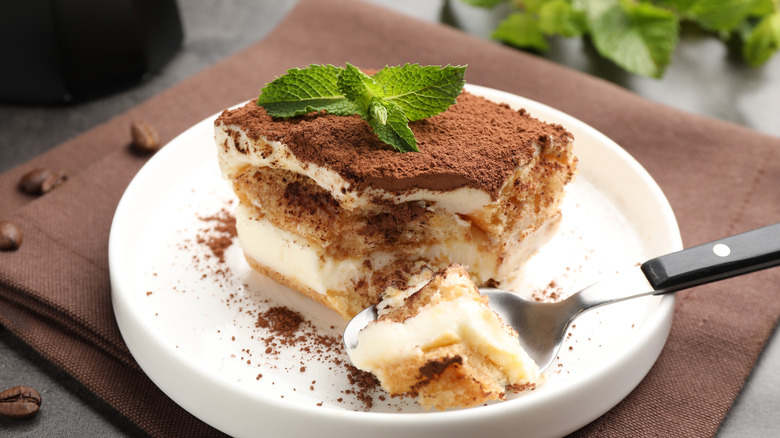
Tiramisu is one of the most recognizable desserts in the world. The beloved Italian specialty, which comes from the Treviso region, is traditionally made with a few simple ingredients: mascarpone, egg yolks, sugar, cocoa powder, lady fingers, and coffee. As with most European recipes, purists do not encourage experimentation, but it's always fun to play with the classics. If you feel like breaking the rules, there are plenty of ways to give the dessert a new twist, like swapping the coffee for hojicha.
Japanese hojicha is a type of green tea that's been soaring in popularity across the world. What makes hojicha unique is the fact that it is slow-roasted, giving it a toasted, almost nutty flavor. The heat also eliminates any bitterness and creates a well-rounded, toasty finish that tastes completely unique yet slightly familiar. All of this makes hojicha perfect for tiramisu, despite the fact that it originates from an entirely different part of the globe.
Mascarpone really complements the earthy flavor of hojicha and it helps to enhance its caramel notes. Also, hojicha delivers a much softer and less acidic punch than strong, bitter coffee. The sweetness of a classic tiramisu recipe will still be there, but the result will be something totally new. Plus, hojicha is naturally very low in caffeine, so it can also be enjoyed by those watching their caffeine intake.
Making and upgrading hojicha tiramisu
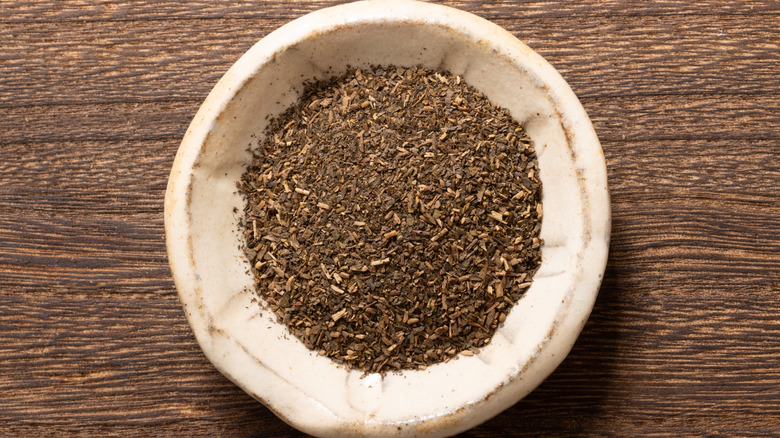
Hojicha is typically sold as a powder or loose leaves, and you need some hot water to make the soak that you'll use for ladyfingers. If you have tea leaves, you can always grind them to get a fine powder. If you're using hojicha powder, you'll start by whisking in just a splash of water into the powder before adding the rest. The result should be less clumpy, but matcha whisk can also help. Keep the amount of hojicha you use to a few tablespoons to avoid a particularly strong flavor. Boiling water can sometimes turn hojicha bitter, so make sure to avoid a temperature that's too hot. Optionally, you can also whisk some hojicha powder into the mascarpone mix. Just make sure to use a high-quality, micro-ground powder for the best results.
If you like a sweeter tiramisu, add sugar to the soak or use a few drops of vanilla extract for extra flavor. A little orange or cinnamon can also add warmth, while rum will amp up the mascarpone mixture. The flavor of black sesame or tahini also works really well in this combination.
To give the dessert a different Japanese upgrade, swap the hojicha for matcha powder. The flavor will be entirely different but this matcha strawberry tiramisu proves how well it can work. Another flavor idea is a decadent pistachio tiramisu, as well as a lighter summer-inspired berry version. Just maybe think twice before serving any of these to an Italian.