

Ditch The Tile: This Rustic Backsplash Alternative Adds 10X The Charm
We may receive a commission on purchases made from links.
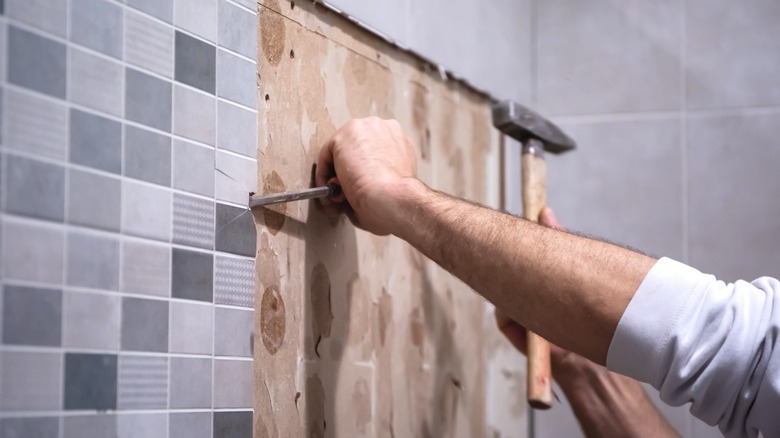
Ceramic tiles are generally the most popular choice for a kitchen backsplash, so much so that it might not cross your mind to consider anything else. With so many shapes, colors, and designs, it's often about which option to choose rather than deciding if tile is really the right choice. While there is a lot to love about tile, when it comes to creating a rustic feel in the kitchen, a brick backsplash can be a much better option.
Brick has a natural texture and character that instantly adds warmth to a room, as well as a timeworn, authentic feel that's hard to achieve with a new tile installation. It's the ideal choice when you're working with a lot of other natural materials in the home, such as exposed wooden beams, stone floors, or butcher block counters, but can work just as well if you want to mix materials and textures in an otherwise modern home. The look of brick can be more versatile than you might think, too. The earthy red tones of classic brick provide a strong look for a country or rustic-style kitchen, but this can be softened with a whitewash for a fresh coastal vibe in a home, or given a mortar wash to create a feel of weathered, antique bricks.
Beyond the aesthetics, brick has some practical benefits that makes it worth considering over tile. Bricks are incredibly durable, able to withstand day to day use without cracking, and are resistant to heat, making them perfect for use behind the stovetop. If they do develop chips or other minor marks, these are often disguised by the natural texture of the brick, or they can even be painted over to freshen the look. Unlike ceramic tiles that tend to look dated once they chip or crack, bricks will age more gracefully. When cared for correctly, a brick backsplash can last upwards of 50 years.
What to know before you install a brick backsplash
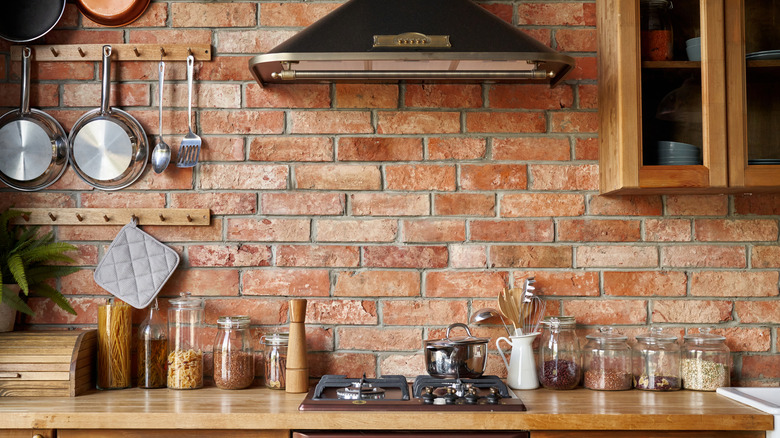
Installing a brick backsplash is something that can be taken on as a DIY project, but it does require some consideration before you get started. The first and possibly most important decision is whether you plan to use full bricks or brick veneer. While full bricks are the most solid choice, they are very thick and heavy. This can be the best option if you are incorporating a brick backsplash from the start of a kitchen build, but isn't really practical to add later.
Brick veneer (also known as thin brick or brick slip) is the more popular choice, particularly if you're simply updating the look of an existing kitchen. This is real brick, but made in slices just ¾-inch thick, so it can be applied over an existing wall, as you would with tiles. Brick veneer also has the advantage of being cheaper than solid brick, making this one of the more affordable-yet-stunning kitchen backsplash ideas. Both solid brick and brick veneer can be laid in a wide range of patterns, such as herringbone and basketweave, or installed vertically for a more modern look.
Whether you want the rustic appeal of red brick or plan to whitewash the surface, you will need to seal your backsplash. Although brick is impervious to heat, it is very porous and can easily absorb oil or other food stains from cooking. If you're concerned about how this will affect the look of your bricks, choose a matte finish option like this Classic Coatings Water-Based Sealer to maintain that lived-in feel.