

The 87-Year-Old Copper-Bottom Pans To Look Out For At The Thrift Store
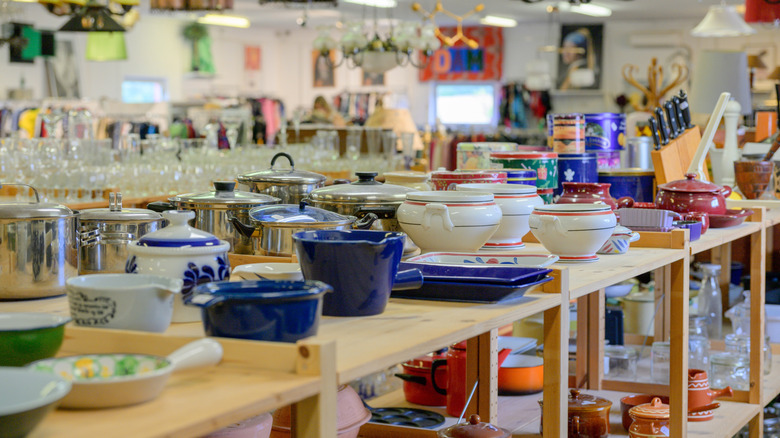
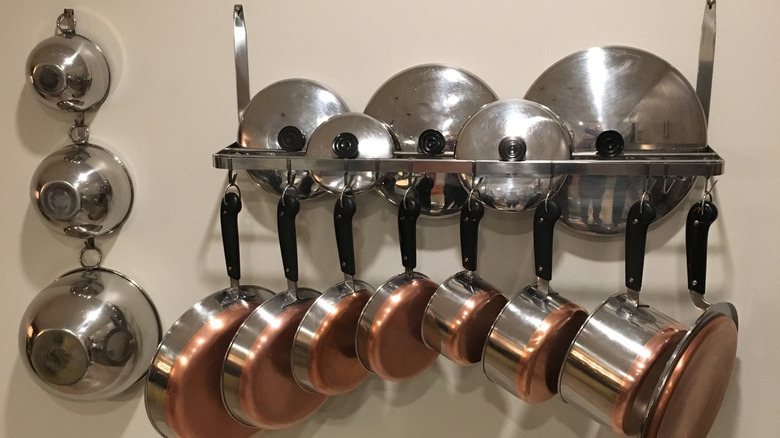
The next time you're sleuthing around the cookware aisle at your local thrift store, keep an eye out for certain stainless steel pots and pans with shiny copper bottoms and curved black handles. These vintage kitchen staples are Revere Ware, a once-ubiquitous American cookware brand now considered an ultimate thrift store find. Introduced at the 1939 Chicago Housewares Show, Revere Ware became an instant success and thrived for decades. No longer in production, it remains popular on the secondhand market because of its high-quality materials, practical design, and surprising affordability.
Revere Ware's design combined the best of two metals' properties: the stainless-steel cooking surface was durable and resistant to corrosion, and the copper-clad base helped distribute heat more evenly. The original design was especially stylish, featuring heat-resistant Bakelite handles and rounded interiors that were easier to clean. Today, the key, of course, is finding the right vintage pieces, which is why it pays to brush up on the history of vintage cookware before buying. And Revere Ware has plenty of history to explain why collectors and cookware enthusiasts particularly prize it, especially pieces made before 1968. Back then, the company used thicker copper cladding and heavier stainless-steel construction than it did in later models. After 1968, the company tragically reduced the thickness of these materials as part of a cost-cutting shift. While that doesn't mean later models aren't worth consideration, it's good to keep in mind when you're hunting around online or at an estate sale.
Vintage Revere Ware can be less expensive than new stainless steel cookware
To determine the age of Revere Ware pieces, look for the most telling clue: the distinctive maker's mark on the bottom of each pot. The most desirable pieces, according to collectors, were made from 1946 to 1968, and typically feature a left-facing profile of Paul Revere inside a double circle, with wording below, like "Pat. Pend," "Process Patent," or "Made Under Process Patent." Post-1968 pieces do not include any patent references.
Next, inspect the cookware's condition. A little tarnish on the copper is normal and often polishes away — in fact, you can even use beer to polish your copper pots and pans. Make sure the base hasn't separated from the pan, it has a flat bottom that sits securely on the stove, and handles that aren't loose or cracked. A useful saucepan or skillet in good condition is arguably a better find than a complete but damaged set.
Vintage Revere Ware can sometimes be found for around $10 to $20 at estate sales or thrift stores, but collectible pieces and full sets can often go into the low hundreds. Even then, its prices are certainly lower than new sets from brands like All-Clad or Calphalon. Sure, Revere Ware isn't the most advanced cookware available today — we've covered plenty of highly rated stainless steel pans out there — but its vintage construction, retro appearance, and sentimental pull make it a fun and worthwhile thrift store find.