

What A 'Well-Balanced' Meal Looked Like In America During World War I
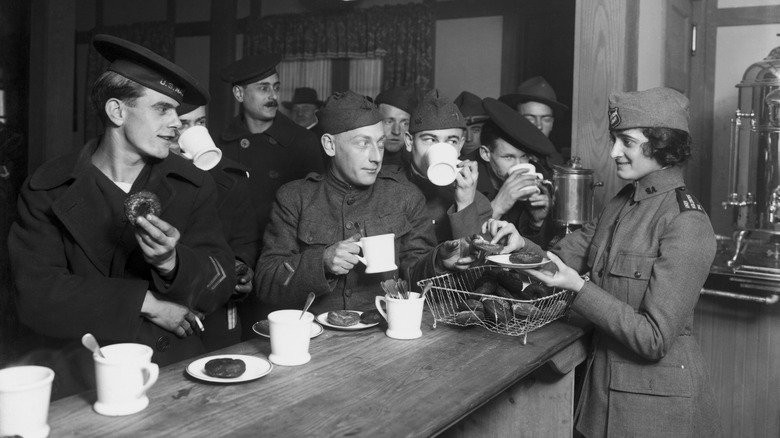
Meals in America during World War I looked a little bit different than they do today: Americans changed their daily eating habits for the war effort. The U.S. was responsible for sending food to troops and allies overseas, and during the years that the United States was involved in the conflict, the newly created U.S. Food Administration hoped to avoid forced rationing. Instead, they promoted the idea that Americans could voluntarily consume less food, especially wheat, in order to support distribution efforts. American grain mills exported 50% of their output to U.S. soldiers and allies, but the war effort for everyday Americans included finding creative food substitutions and cutting back on meat and sugar.
Herbert Hoover, director of the U.S. Food Administration, encouraged food conservation by designating certain days of the week to be meat-free, sweetless, wheat-free, and pork-free, changing the way people ate every day. President Woodrow Wilson led the campaign for Americans to plant victory gardens, turning their yards, vacant lots, and even schoolyards into vegetable gardens to support both their families and to send supplies to troops. Because of the reduced availability of wheat, Americans were encouraged to eat other grains as alternatives. In fact, one gluten-free WWI trend asked Americans, "Are you eating your five bushels?" – urging people to eat bushels of potatoes as well as oats, corn, and rice.
Food conservation efforts during the war led to creative cooking
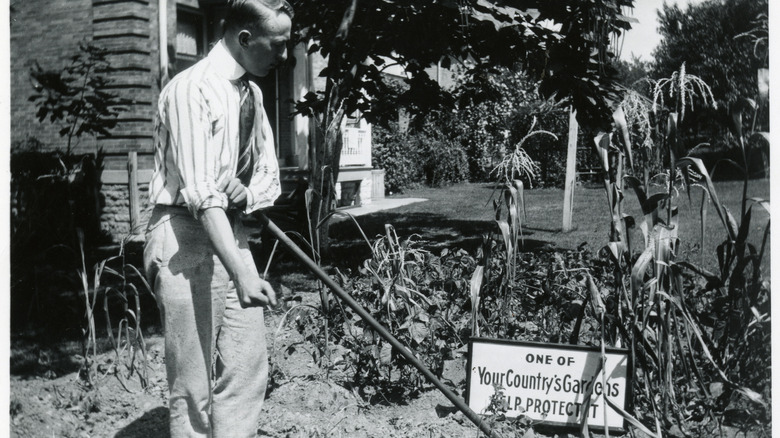
"American Cookery," an illustrated magazine published from 1914 to 1946, focused on recipes, food, and housekeeping topics. A 1918 edition included menu ideas for families who were working on conserving food for the war effort. The publication offered a wide variety of "well-balanced family menus" with suggestions for dishes made with substitutes that reflect the era's shortage of wheat and other ingredients.
For breakfast, some dishes are things we'd still eat, like oatmeal, puffed rice, and cornmeal mush, while others are more unusual, like potato doughnuts and even mackerel (believe it or not, Americans ate more fish during WWI instead of other meats). For dinner and supper, while some dishes, like lamb stew or chicken pot pie, seem common to us today, the biscuits with it or its crust would be made with barley and rice flour. In fact, wheat doesn't appear at all on the suggested menus, substituting breads for items like oatmeal bannock (oatcakes), wheatless crackers, cornmeal muffins, and war bread, which used barley or rye instead of wheat and baking powder instead of yeast. The WWI era also employed unusual names for some dishes, like "snappy cheese rabbit" (which is really just melted cheese on toast), or they called coffee a cup of "George" instead of Joe. Meals would be paired with fresh fruits and vegetables, too, which makes them similar to what we think of as balanced meals today.