

The Gluten-Free WWI Trend That Asked Americans: 'Are You Eating Your 5 Bushels?'
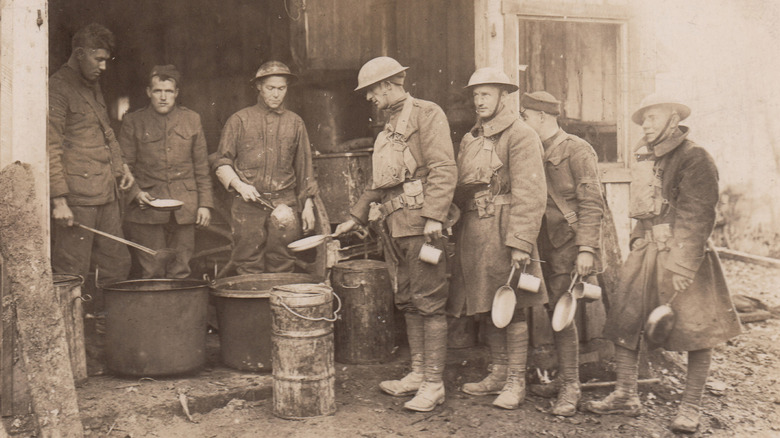
Turns out that eating gluten-free was also popular during World War I. Wartime in the United States meant that certain supplies, including food, were temporarily in short order. For instance, the origins of canned cheese began on the battlefield! During World War I, crops were donated to help feed troops and others involved in the conflict abroad. In this conflict, wheat was one of those crops that became scarce stateside. As a response to the shortage, the U.S. government encouraged people to eat lots and lots of potatoes instead — five bushels, in fact, and each bushel is about 60 pounds — in addition to gluten-free flour substitutes, like oats, rice, corn, and buckwheat.
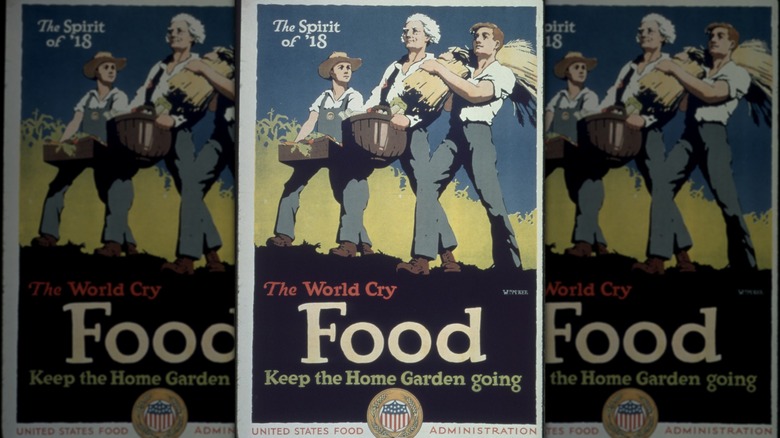
"When in doubt, eat potatoes" and "Are you eating your five bushels?" became part of campaigns for the U.S. Food Administration, which was created toward the end of the war in 1917. There were plenty of posters encouraging Americans to eat less wheat, consume more corn, and clean their plates, all in an effort to support the troops abroad. Potatoes were particularly appealing as a stand-in for wheat because regular people were able to grow them in their home gardens — you didn't need a giant field for these crops, like you do with wheat.
"American Cookery," a 1914 cookbook with a whole chapter called, "Potatoes to the Rescue" explains that wheat must be sent to the Allies, and those on the homefront must find a suitable alternative. "One of the most practical substitutes in the world for a slice of bread is a potato," the cookbook reads. We and our gluten intolerance are here from 2026 to say "Amen!" to that century-old statement.
How Americans ate their five bushels of potatoes
The "American Cookery" chapter about potatoes goes on to provide recipes for potato-based dishes like potato balls, stuffed potatoes, potato souffle, shepherd's pie, potato fish loaf, and, of course, the potato peanut loaf, which is basically a savory peanut butter bread made with mashed potatoes instead of flour.
On top of eating this global staple and replacing wheat with other substitutes, Americans were told to limit their use of meat, rely on fish and beans, and instead, use "just enough" fat in their cooking. Ther were also to opt for syrups like honey and molasses instead of sugar. People were incentivized to start liberty gardens in order to grow their own food and rely less on the supplies that the United States' four million troops needed to continue fighting.
These diet and lifestyle changes, which also took the form of reduction efforts like Meatless Mondays and Wheatless Wednesdays, were framed as the patriotic thing to do. But some of those recipes certainly weren't the most exciting or nutritious foods you could imagine. Going gluten free wasn't a health choice per se, but it just goes to show you that the concept isn't new!