

10 Store-Bought Rye Breads, Ranked
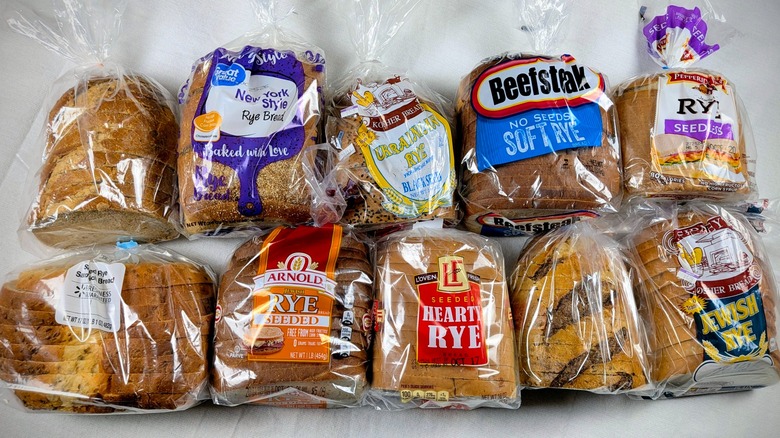
In the age of sourdough supremacy, I'm going to attempt to make a case for rye bread. In America, it's not uncommon to associate a humble loaf of rye with a visit to your grandparents house or an absolutely stacked corned beef reuben from a New York City Jewish deli. But despite being put on the back burner to let more trendy types of bread shine, rye will always hold a special place in American and European food traditions.
Chances are good you've tried rye bread at one point or another, so you're probably familiar with the famously tangy, anise-like taste that has kind of a love-it-or-hate-it reputation. If you're a rye hater, you shouldn't let a lackluster loaf alienate you from the food as a whole. To find a bread that restores rye's good name, I tried a wide variety of options from popular grocery stores and ranked them worst to best based on freshness, flavor, and texture. If you've spent years despising rye, or if you never really gave it much of a chance to begin with, let the top picks on this list steer you in a rye-loving direction.
10. Beefsteak no seeds soft rye
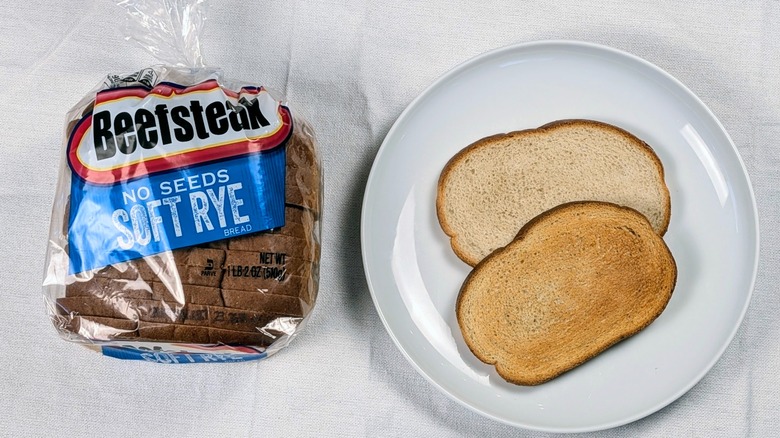
I had never heard of the Beefsteak brand before this ranking, and I don't think I'll be reaching for more Beefsteak loaves after my experience with its rye. As soon as I opened the bag, I was hit with a musty, rank smell; think neglected basement or a muddy river bank right after some heavy rain. I checked the expiration date — the loaf still had the better part of two weeks left of alleged freshness.
The slices of the Beefsteak seedless loaf were thin, roughly 10 millimeters thick (yes, I actually measured). The bread had an airy, dry texture that had me triple-checking the expiration date. Nope, still almost two weeks to go. It had a rye flavor that leaned more earthy and mellow rather than sweet and sharp. The slice toasted extremely fast, and with a little salted butter, the subtle rye taste faded into the background. With a smear of Russian dressing and a slice of melted swiss the rye flavor was all but nonexistent.
The mellow flavor of this bread wasn't ideal for my personal taste, but it could be favorable to those looking for something to change up their usual white or wheat bread routine. However, the texture and smell was where Beefsteak really lost me. It was a seemingly impossible mix of too soft but also weirdly crunchy, ostensibly due to being a little stale. Even if you could look past that, the mothball-like basement smell will be enough to ruin your appetite and cement its fate in the last-place spot.
9. Pepperidge Farm seedless rye
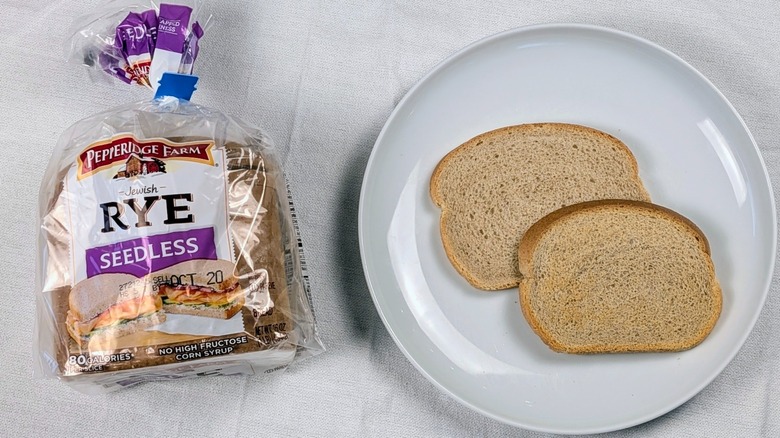
I really appreciated that Pepperidge Farm's rye was wrapped in cellophane before it was stored in the plastic sleeve to guarantee freshness (Beefsteak should take notes). Although it was far from stale, it didn't have a soft cakeiness or moist, fresh-baked characteristic. Instead, it was like a little bit of everything; spongey, dry, airy, dense, like the all-encompassing omniverse of grocery stores breads. I wasn't a huge fan of this trait — it made the loaf pretty boring.
Pepperidge Farm's rye had a flavor that was a perfect match for its everything-and-therefore-nothing texture. I could barely detect any rye taste, and what little flavor it had was purely savory and in need of a little salt to bring all the ingredients to life. This bread felt like a white sandwich loaf that someone infused with just the idea of rye flour.
Toasted with butter, Pepperidge Farm's seedless rye felt even more like white bread, and with some cheese and Russian dressing, I could tell it could never hold its own as a major component of a classic reuben. After switching over to only bakery bread in my house, this was a loaf that reminded me why I avoid the bread aisle. Maybe Pepperidge Farm should stick to cookies.
8. Arnold Jewish rye
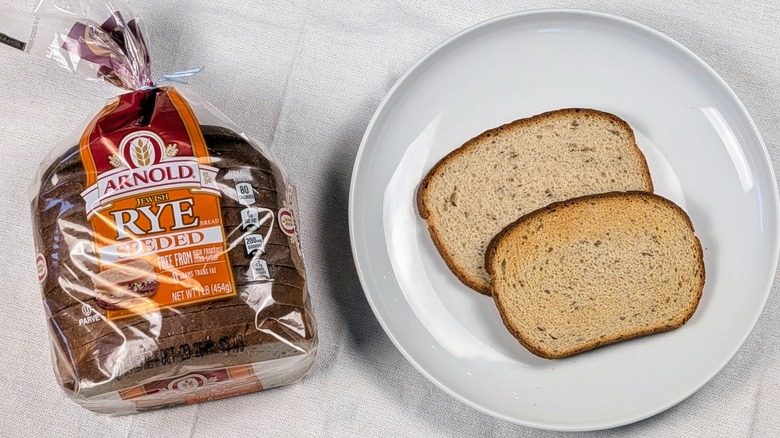
The Arnold Jewish-style seeded rye was the quintessential American grocery store rye, in my eyes. That being said, it wasn't anything remarkable, and it had all the qualities of a cheap bread-aisle loaf. Still, for a simple slice alongside eggs or a humble homemade reuben, it could get the job done.
The Arnold loaf was sliced thin and it had a spongey, slightly moist mouthfeel. I almost forgot that it was seeded after my first few bites; the dill, sesame, and caraway seeds are ground pretty fine and minimal, so all they really do is lend a nearly imperceptible grittiness to the soft loaf. The dill was a unique touch that gave the bread a subtle floral, bright quality.
A couple minutes in the toaster oven gave a slice of the Arnold rye the delicate crunch that it needed without ruining its pleasant sponginess. A little time in the toaster oven also enhanced the flavor. Despite the dill flavor, bread was a little too bland overall, with the bulk of the flavor showing up in the aftertaste. The punch of rye was contrasted nicely with a hint of molasses and savory alliums, and the toaster really helped those flavors develop. I enjoyed this bread more with just some salted butter over zesty dressing and cheese, which drowned out the mellow rye essence.
7. L'Oven Hearty Rye
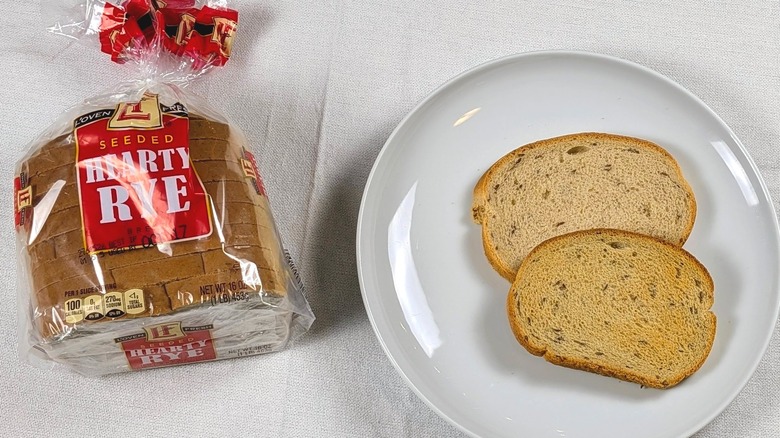
L'Oven's rye bread comes to us from Aldi, and nine times out of 10 I'm a big fan of Aldi products, so I had high hopes for this rye dotted with seeds. It turned out that the only seeds found in this loaf were caraway seeds. No matter. For some, these seeds are non-negotiable; caraway seeds are what give rye bread the bulk of its unique flavor, adding depth to the rye flour with the seed's complex earthy, nutty, anise-like flavor. That being said, if a loaf of seeded rye is only going to have one kind of seed, it should be caraway.
This Aldi loaf was a nice all-purpose rye bread that was tough enough to hold up to sandwiches (although the slices were on the thin side), but soft enough to mop up runny eggs. Its flavor was mild and it had almost none of the brown sugar sweetness that I normally look for in rye bread, so it could work in applications that call for a strictly savory profile. The speckling of caraway seeds were a welcome touch to break up the monotony of the spongy texture and mild flavor. Toasted with butter, the bread felt almost too savory, but with a little Russian dressing and tangy Swiss, it had more potential.
6. Great Value New York-style
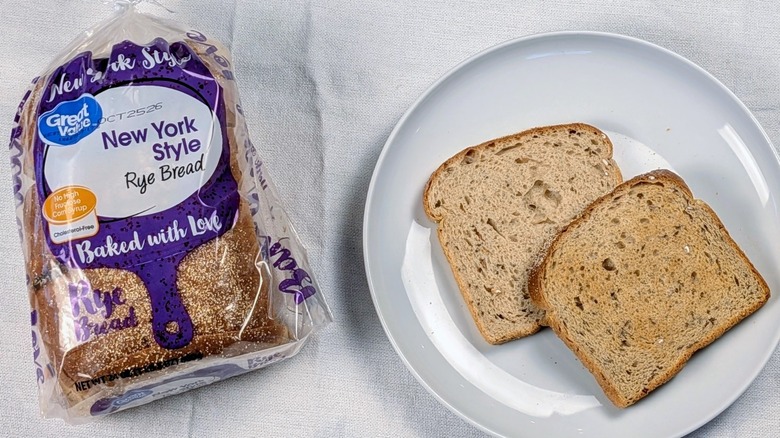
I didn't expect a solid bread to come from Great Value, Walmart's main house brand, yet here we are. I was pretty impressed with GV's New York-style rye, although I don't know if I'd compare it to a real NYC deli bread. Really, it was more along the lines of a decent, generic seeded rye.
This bread was by far the lightest and airiest of all the loaves I tried — to a fault. It was extremely delicate, albeit tender and fresh-tasting. If you told me that the loaf had been baked that morning, I probably would have believed you. The chunky seeds offered a nice contrast with the fluffy bread, but where this Great Value loaf really shined was in its flavor. There was a bright burst of sugary sweetness that was tamed by earthy rye and umami seasonings. I credit some of the sweetness to the dusting of cornmeal on the outside of the loaf, which gave it a bakery-fresh vibe despite coming from Walmart's bread aisle.
As a sandwich bread, this loaf might crumble in your hands, although I noticed that some melted swiss helped keep the toast intact and it tasted delicious with Russian dressing. Still, I'd prefer this bread toasted with some salted European-style butter next to an omelet or some over-easy eggs. The spongeiness would be great for sopping up gooey yolk, and the bold flavor wouldn't get lost among the egg.
5. Sidney's Jewish rye
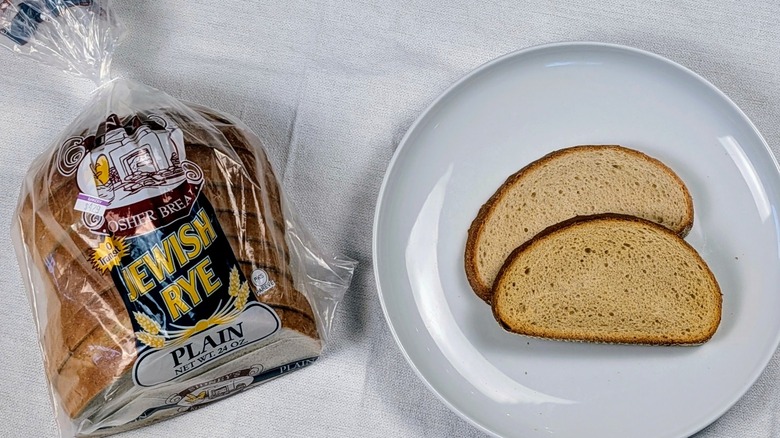
I picked up Sidney's Jewish rye from a small, family-owned grocery store (they still exist!) that favors Eastern European foods. I had high hopes for this seemingly authentic loaf. It didn't have any whole seeds, but ground caraway gave it a slightly robust taste complemented by just a tiny bit of sugar to anchor the flavor and make it taste more licorice-like. Other than that, the bread was mellow with some mild grassy and sour notes.
This is something you'd find at a real Jewish deli piled high with corned beef. It isn't springy and airy like most grocery-aisle Jewish ryes in America, but its density makes it lean more traditional European. Plus, it helps it stay intact even with a mountain of sliced deli meats stacked in between two slices. It was right at home with some reuben fixings, and toasted with plenty of butter, it was comforting and hearty enough to be breakfast all on its own.
This was a good quality grocery rye, but it didn't have the fresh-baked taste and wow factor. Its stodgy, muted flavor and dense texture make it a good choice if you're looking for a reuben bread that could please all palates, but I was looking for something with a little more rye oomph.
4. Freshness Guaranteed seeded sandwich rye
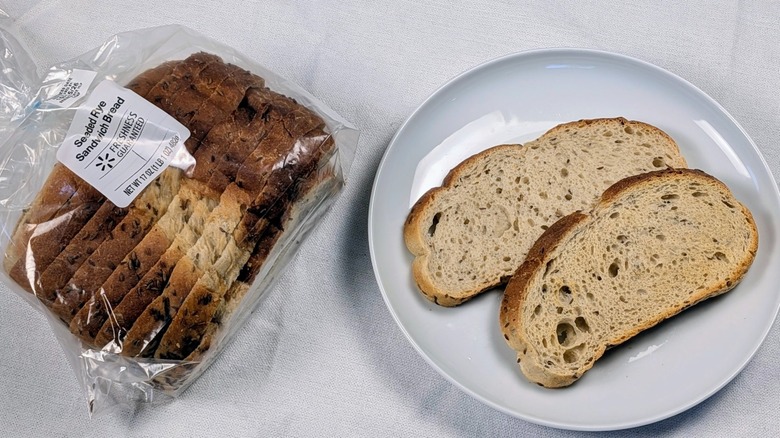
Unbeknownst to some (including myself, until I bought this bread), Freshness Guaranteed is Walmart's private label for its bakery items. I had never really explored Walmart's bakery. While I'd have normally glossed over it, I could tell just by looking at it that this loaf would be impressive.
This seeded rye had the look of a fresh-baked bakery loaf littered with seeds and sealed with a chewy crust. I detected a flowery punch of cumin and a subtle rich molasses taste, all accentuated by the unmistakable flavor of rye flour. The bread was loaded with a ton of seeds, but it didn't feel excessive at any point. Sesame gave it a complex nuttiness and caraway gave it the unmistakable essence of a classic rye. There was an explosion of sweet, earthy, and zesty flavor that brought to mind nostalgic memories of visiting New York City delis.
As far as flavor goes, this bread could have earned the top spot, but it was far too airy and delicate — not a great quality, especially for one dubbed "sandwich bread." Toasting the bread developed the flavor and made it more substantial, but it could barely hold up to a little cheese and a dollop of dressing, let alone a stack of corned beef. I could see it holding its own in a grilled cheese or purely for breakfast purposes, but I was looking for a rye that could do it all.
3. Wegman's soft rye
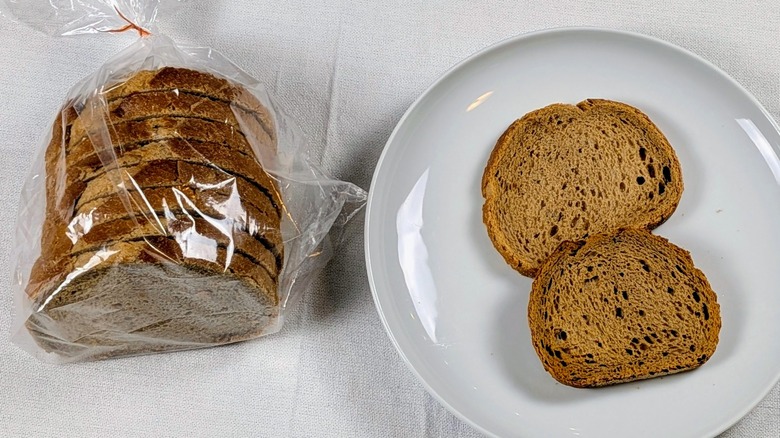
Wegman's is a beloved grocery chain here in the mid-Atlantic, and much like its cheese department, ready-to-eat meal section, and butcher shop, its bakery is a must-visit during every Wegman's run. I picked up a classic soft rye that I could tell had been baked that morning, but I didn't try it until late afternoon. Still, it was soft and tender yet hearty enough to pile the toppings sky-high.
This rye had a toasty, nutty flavor that reminded me of pumpernickel. I detected rich molasses and a hint of salt to balance everything out, although it could have used a little more sugar. Toasting it enhanced the nuttiness, but muted the complexities in its taste, while slathering on butter or some sandwich ingredients muted them even further.
Wegman's soft rye serves the function of a quintessential rye. I wouldn't think twice about biting into a reuben made with this bread, and I'd happily eat it with breakfast or alongside some tinned fish and pickles. However, it was just a little boring and unremarkable; I don't think I'd fondly recall this bread if I encountered it at a diner or deli, but I also wouldn't lament it.
2. Sidney's Ukrainian rye
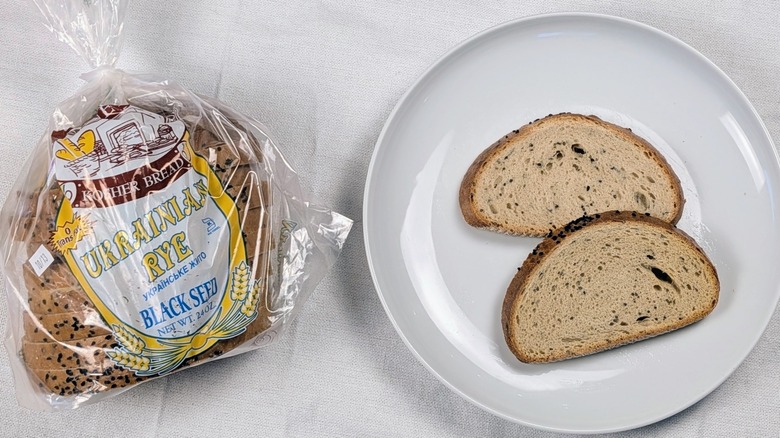
I've been through phases where I was infatuated with Eastern European food, so I've dabbled in Ukrainian-style rye before. This one, however, is different from a lot of Ukraine ryes, which are known to be dark and pumpernickel-like. I was intrigued, but assumed I'd be unimpressed with this seemingly American-ified loaf. Yet I ate my words (literally) when Sydney's Ukrainian rye ended up being my personal favorite in this ranking.
Like a lot of European breads, this loaf was very dense and compact — so much so that I audibly gasped when I picked it up in the grocery store and it weighed about three times more than I was expecting. Since it was so dense, with basically zero air pockets, it was tough to get a nice browning on a slice in the toaster oven. After about five minutes, it just got a bit of a crispy exterior.
What separates this loaf from the other breads in this ranking is the nigella, or black caraway seeds. They give the bread a uniquely complex flavor profile (not to mention a beautiful aesthetic) that highlights all the subtleties in good rye bread. There's brown sugar sweetness, a hint of umami alliums, and a warm butteriness layered with the savory-sweet, floral flavor of black caraway seeds. This rye is more of a toast-and-butter bread than a corned beef vessel. The only reason my favorite loaf didn't earn the top spot was due to its density; I was looking for a bread with more of a multifaceted texture.
1. Wegmans marbled rye
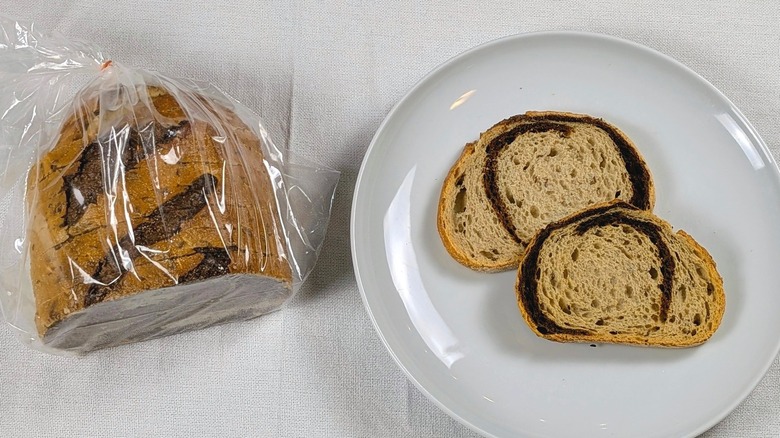
Finally, we come to the star of the bakery aisle: Wegman's marbled rye. For those not in the know, marble rye is a blend of regular rye and pumpernickel dough, giving it the iconic swirl. Wegman's version appeared to be a solid 50/50 split between rye and pumpernickel, and frankly, it looked beautiful and totally upstaged the other breads in the aesthetic department (which is only one of many reasons it earned the top spot).
Wegman's marbled rye had a woodsy, juniper-like flavor that separated it from the other loaves, with just the right amount of caraway seeds for a pungent, slightly bitter backbone. The robust molasses taste was more prevalent in bites that contained more pumpernickel, and I really appreciated this contrast from bite to bite — it kept things interesting. The brown sugar sweetness was hard to detect, but it became more apparent after toasting and with a little creamy salted butter.
Adding a little tangy dressing and Swiss didn't overpower the bread's taste, but more importantly, it stayed perfectly intact. This marbled rye could easily withstand plenty of shaved corned beef or pastrami, or anything you wanted to stack on a slice. Although it didn't have as complex of a flavor as the Ukraine rye, it earns the number-one spot for being fresh, soft, and tender but still hearty. Plus, it has a bold, classic rye taste that doesn't lean too floral, sweet, or savory — it has a little bit of everything.
Methodology
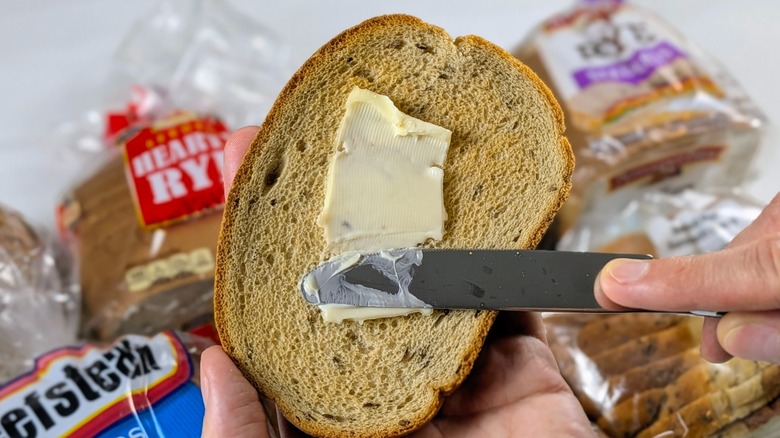
To test and rank these rye breads, I selected a variety of loaves from stores near me, in and around Scranton, Pennsylvania, including Walmart, Aldi, and Wegman's. I selected most from the bread aisle, but I also peppered in some options from the bakery sections of the popular chain grocers. I determined each bread's spot in the ranking based on objective factors like freshness, flavor, and texture rather than my personal opinion.
I based my judgments of each bread mostly on how it tasted plain and untoasted. But to aid in my judgments, I also tried a slice from each loaf toasted with Kerrygold salted butter and another slice with homemade Russian dressing and melted Swiss. I didn't construct an entire reuben out of each loaf because I didn't want to contaminate the flavor with too many ingredients. Still, I wanted to get an idea of how each would fare in a reuben, so the cheese and dressing helped me imagine the bread's possibilities and test its structure against something heavier than just butter.
The best breads were those that were tender, but not too delicate and flavorful, but not too overbearing. The lesser breads had a muted flavor or were pungent in an unpleasant way and were either too dense or too flakey and soft. I was looking for a bread that could act as a star component in an excellent reuben, but also hold its own as a plain, simple snack or quick breakfast.