

11 Foods People Cooked And Ate During Medieval Times
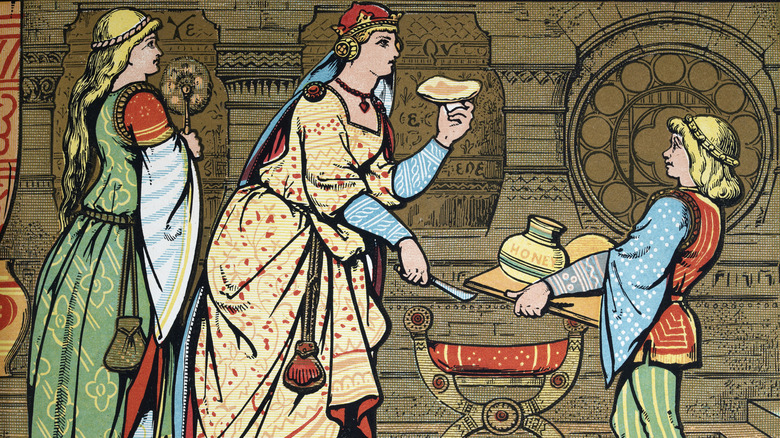
We've all noticed how even throughout one lifetime, culinary and eating practices can change drastically. Ultra-processed foods were all the rage in the 1980s, and while they remain popular, there has been a definite attitude shift towards such foods, which are falling out of favor due to real or perceived adverse health effects. All the while, froyo crazes have come and gone more than once.
The same is true for Europe in the Middle Ages, a period of time starting in the 5th century and continuing until somewhere between the 13th and 15th centuries. For instance, according to Bobbi Sutherland, Associate Professor of History at the University of Dayton, culinary changes during this time include an increase in sugar consumption, due to a rise in production in the Americas. Since then, things have continued to change at breakneck speed, to the point where diets of the day are hardly common knowledge, though we still eat some medieval dishes to this day. So to learn more about what people ate in the Middle Ages, we've put together a list of the most striking features of their customs.
Potage was a staple meal
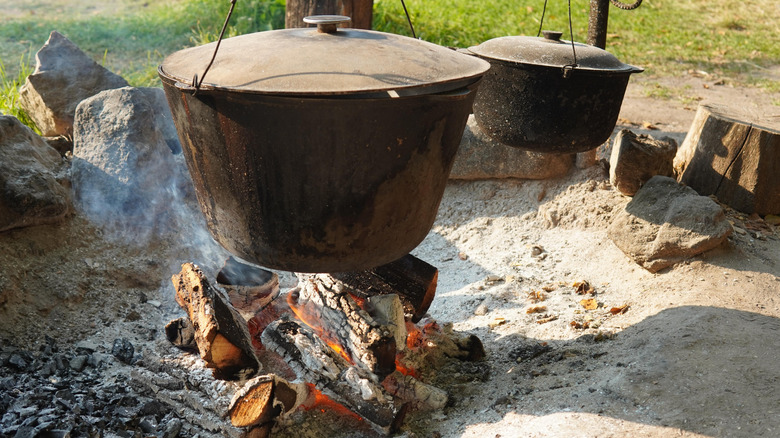
Given that the spoon was invented before the fork, and that table forks as we know them today were not so common in the Middle Ages, it makes sense that people of the day consumed a lot of soup, stews, or porridges. Indeed, according to Professor Sutherland, potage — a stew, or thick soup-like dish — was a common food throughout Europe. It was so common that it reached far and wide across the continent, with variations existing more across kitchens of various economic classes than geographical areas.
For instance, the wealthy could easily get hold of imported spices like ginger and cloves, which could be used to flavor soups, while the poor would populate their pots with garlic, onions, and local herbs like thyme, which, incidentally, was once used to fend off the Black Death. A lack of forks was not the only reason for the popularity of potage: Most people cooked on the hearth, over an open fire or coals, so it was more convenient to create a one-pot meal rather than a mixed plate.
Wheat was hugely popular
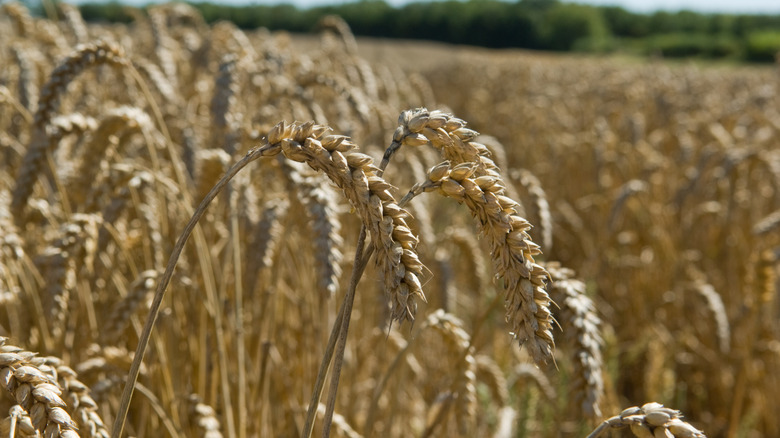
It may be fun to think of ancient people eating strange or exotic foods, but the truth is that the folks living in the Middle Ages were just as crazy about wheat as we are today. Although their diet relied heavily on cereals like barley and oats, people strongly preferred wheat, which was "almost certainly the most widespread ingredient," in the words of Professor Sutherland.
At first, wheat was more available to the rich than the poor; this began to change with the advent of the Black Death, the plague that wiped out more than a third of the European population. When demographics change so massively and suddenly, it's only natural that culinary practices would shift as well. In this case, the lower classes suddenly had more access to wheat because of the associated drop in labor needed to harvest fields, which meant workers could charge more for their services and earn better wages to pay for more wheat. At the same time, there was a decline in demand for wheat, which, of course, occurred because there were simply fewer people to feed, which, in turn, lowered the price of the item.
Meat consumption was heavily regulated
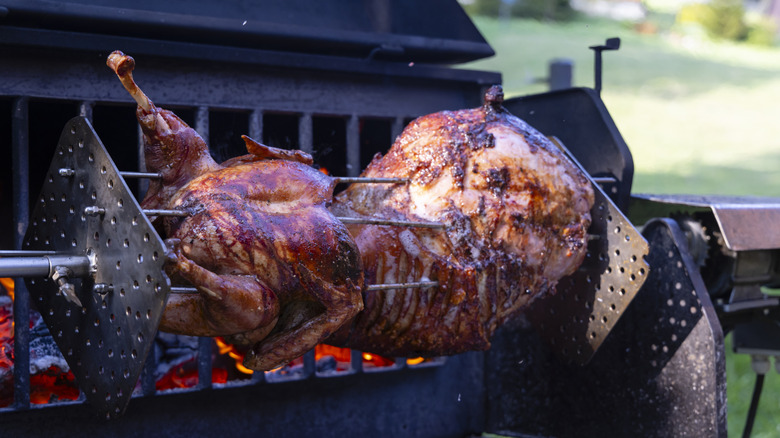
According to Professor Sutherland, meat was more common among the populace of the Middle Ages than many people think. This is in part because young male cattle were often killed off in favor of the females, which were needed for the dairy industry.
But that didn't mean people could eat meat whenever they wanted to, unless they wanted to fall afoul of religious dictates. For instance, the Catholic church did not allow people to eat meat for a third of the year. This was part of their fasting culture, which imposed dietary restrictions primarily on meat, though sometimes also on all animal products, and did not necessarily mean fasting in the sense of not eating at all. Most commonly, it meant meat was substituted with fish, though the definition of fish in the Middle Ages was somewhat murkier than our definition today, with dolphin meat being considered akin to fish due to the animal's habitat.
Pickled foods
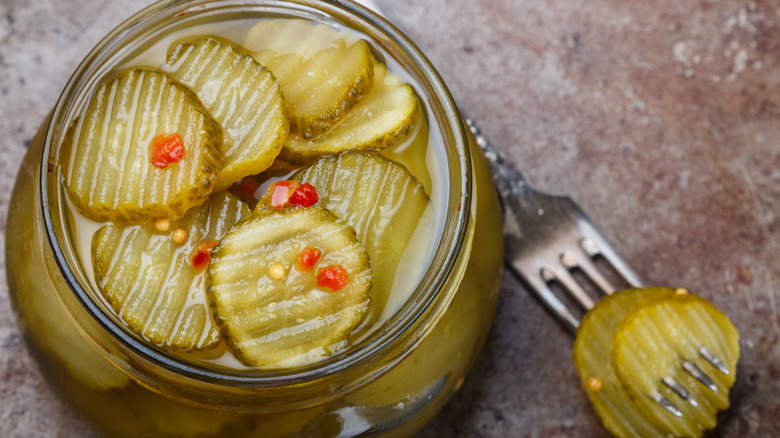
A lot of people today seem to have strong feelings about pickles — they either love them or hate them. But in the Middle Ages, pickling was often a necessity if you wanted to eat produce outside of a vegetable's normal season, as it was an important means of preserving foods like carrots, turnips, cabbages, and radishes. Pickling was also used on fish, which was helpful for those who consumed it during fasting periods where meat was not allowed.
Even then, pickling was not new. It was found to have been invented around 2400 BC in Mesopotamia before spreading to Europe and other parts of the Mediterranean. The availability of vinegar, a key pickling ingredient, also became more widespread during the Middle Ages, along with many spices, such as saffron and ginger, which traveled to Europe through the Silk Road trade route and ended up in various pickle jars.
Almond milk was everywhere
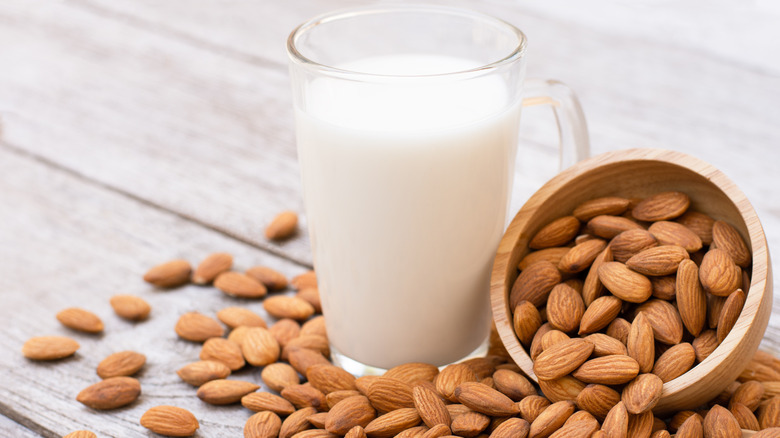
As it turns out, almond milk is not just for hipsters. It was a surprisingly common ingredient in the Middle Ages, used as a filler for stews and soups, and during periods of fasting when dairy was not allowed. Indeed, it was so widely used that it could be found even in parts of Europe where almonds did not grow, though it remained primarily accessible to royalty and other wealthy families. In particular, almond milk was used to make a dish called the blancmange, which Professor Sutherland says was a chicken stew similar to today's chicken and rice.
If you have heard of a blancmange and are confused by this description, you are not alone. Today's version of the dish is a sweet, gelatinous dessert, a particularly famous one being the extragalactic blancmange from "Monty Python's Flying Circus" that is especially fond of tennis. Or, more to the point, this very Earth-bound raspberry blancmange from Tasting Table's recipe developers.
Imported spices
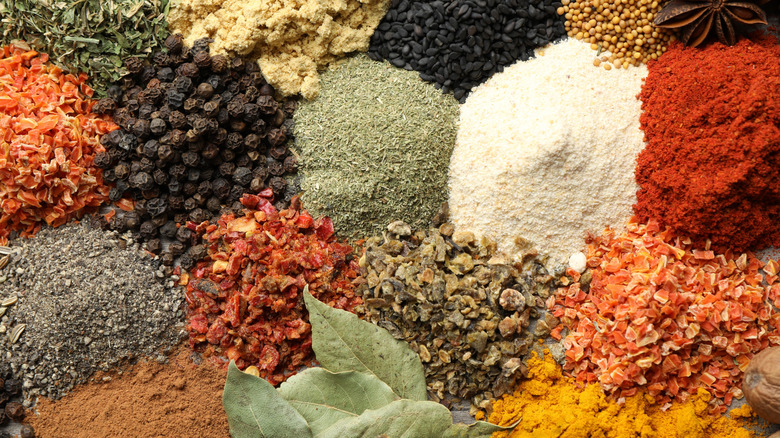
As Professor Sutherland told us over email, "Imported, rare foods were considered luxuries. Spices were ubiquitous in elite cuisine." Thus, seasonings you might find in a medieval spice cabinet included ingredients like saffron, cinnamon, nutmeg, ginger, and spicy pepper — all of which experienced fluctuations in popularity throughout the Middle Ages. For instance, pepper was initially the domain of the upper classes, but later became more widely available, "making the upper classes look down upon it, even while continuing to consume it," according to Professor Sutherland.
The presence of such spices can be found throughout medieval cuisine. The gingerbread cookies and speculoos we know today "are nearly identical descendants of late-medieval treats," according to Sutherland. Mulled wines also used spices similarly to how we use them today. The reason for their ubiquity might lie beyond simple flavor and reside in the fact that many believed such spices to have health benefits (which, as we know today, they do). For instance, pepper was seen as a spice able to stimulate appetite, treat flatulence, and generally improve digestion.
Foods cooked in lard
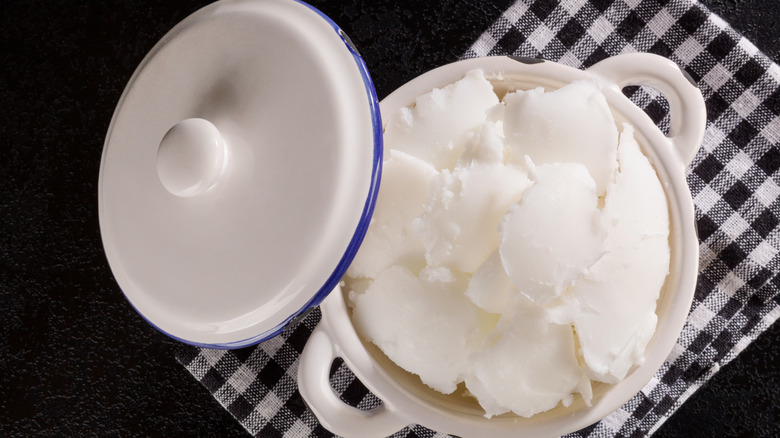
While geographic differences in cuisine were not as pronounced in the Europe of the Middle Ages as they are today, some differences were inevitable due to the climate and prevailing local crops. For instance, southern Europeans often cooked their food in olive oil, as they do today, while in the north, lard and butter were far more common, per Professor Sutherland.
That said, even southern European countries used lard regularly. Medieval Italy, especially in cooler mountainous regions, used lard on a daily basis. Its high fat content made it easy to preserve long before the advent of refrigeration, and it provided a big injection of calories that peasants often consumed quickly as they toiled all day and walked everywhere. Lard also varied by region, much like cheese: Each area had its own curing methods, as with Lardo di Colonnata. This variety, which is made in the Apuan Alps, dates back to Roman times and matures in marble basins.
Scrambled eggs, but not necessarily as breakfast food
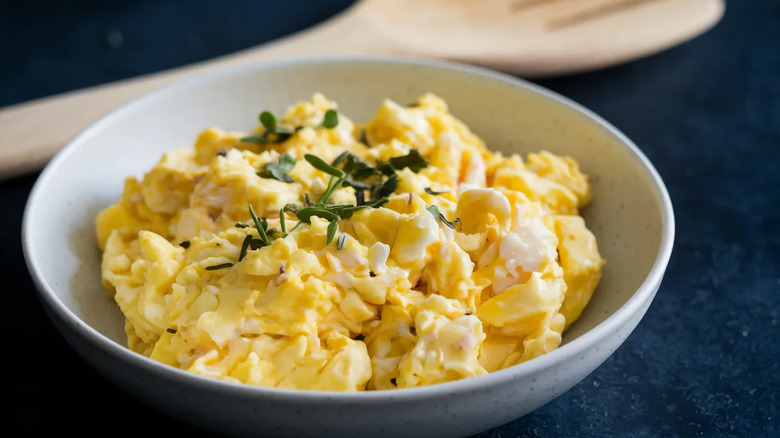
According to Professor Sutherland, some food preparations have remained more or less the same since the Middle Ages. Meat was often roasted, as it is today, and eggs were often scrambled. Indeed, if you were to travel back in time and be served scrambled eggs, you might not even notice you were in the Middle Ages. Except for how the eggs were probably cooked on a hearth instead of your handy induction cooktop.
One thing that is different, though, is that people in the Middle Ages didn't take breakfast, at least not in the early days. As Professor Sutherland explained, at the time, "people seem to have consumed two meals a day, with a possible third in summer." The two meals were our modern-day lunch, which took place around late morning, and dinner. Eventually, later in the period, breakfast started to emerge as a meal unto itself, though it would take many more centuries for brunch to become a thing.
Cheese
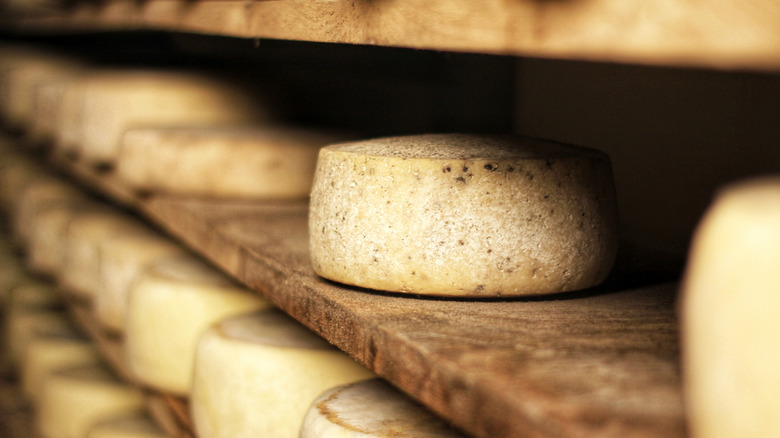
It seems like you can hardly throw a stone in Europe without hitting some new and unique cheese-making enterprise. Each country, each region — heck, even each neighborhood, it seems — has its own individual cheese. And while such activity was not quite as widespread during the Middle Ages, they did produce local cheeses all across the continent, with variations in the type of milk used depending on which dairy animal was de rigueur in a particular location.
One humble local cheese was none other than Parmigiano Reggiano, which was invented by monks in Northern Italy. They were trying to make their cheese last, and hit on a winning formula. They used local salts and milk, and came up with a product that not only preserved well, but has lasted through the ages to become one of the most popular, well-known, and versatile Italian cheeses in the world.
Sugar
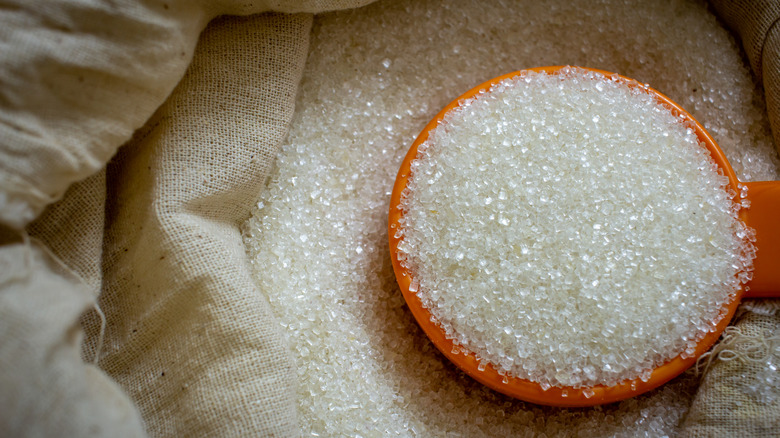
At the start of the Middle Ages, sugar was a rare occurrence and primarily seen as a luxury good to be used sparingly. Honey was cheaper and more readily available at the time, according to Professor Sutherland. This started to change toward the end of the Middle Ages, once sugar cane production rose in the Azores and the Americas, whereupon sugar became cheaper and more widely available.
Strikingly, at the time, sugar was almost considered a health food. Sugar was seen as promoting moisture, which was believed to have beneficial effects on the lungs and kidneys. Apparently, medieval people did not observe any deleterious effects on health from sugar, as we so often do today, perhaps because it was used in comparatively smaller quantities. Another interesting point about sugar was that it was not necessarily only used for sweets. It was also found in meat and fish dishes, which is not so outlandish, considering we often add sugar to meat rubs and tomato sauces even today.
Fast food
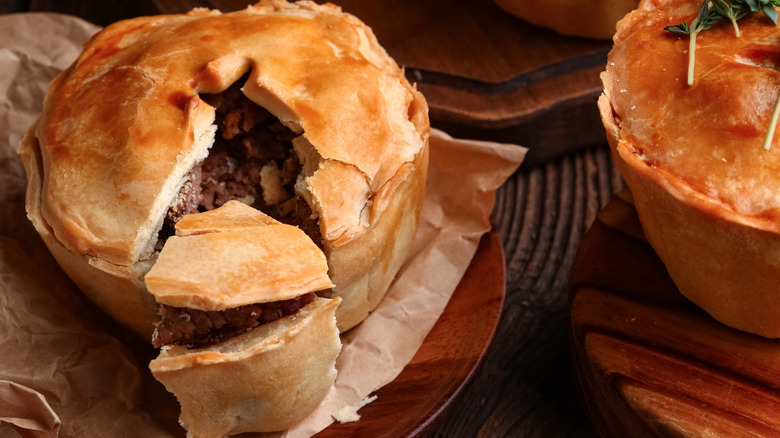
Fast food as we know it today would have been impossible to produce on such a huge scale back in medieval times. But if you think of the term as readily available street food that is quick and convenient to eat, then fast food was definitely a feature of the Middle Ages. It primarily consisted of pre-made hot pies, pancakes, waffles, and other hand-held foods.
Fast-food places could be found in large centers, like London, and were set up in much the same way as they are today: Establishments known as cookshops were present near markets and main routes, where they functioned as veritable drive-thrus (minus the modern vehicles). Similarly, to-go counters existed as far back as the 1st century A.D. Evidence suggests that travelers partook in these meals, and so did the urban poor, many of whom may not have even lived in lodgings where cooking was possible. This led them to go out and find prepared meals sold hot, such as meat pies and hot cakes.