

One Chicken Breast Feeds 4 People When You Cook These High-Fiber Sides With The Protein
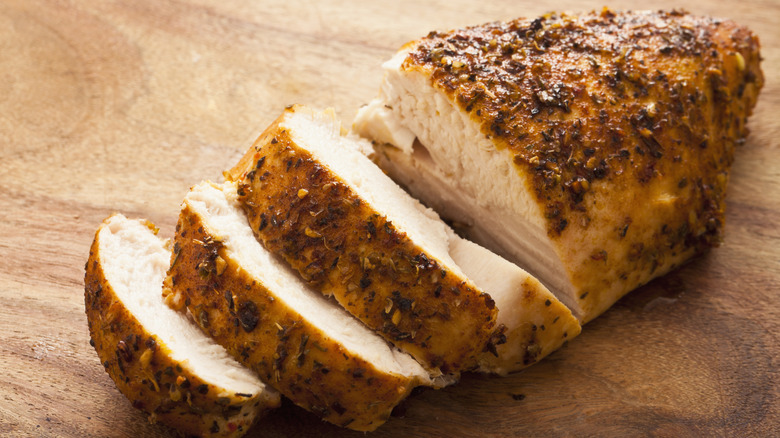
The strain of rising costs makes planning nutritious meals for yourself or your family feel extra complicated. Fortunately, fiber-rich foods (which are gaining popularity) offer a solution. Sides like lentils and broccoli don't just pack a nutritional punch, they can help stretch an economical protein like a single humble chicken breast to feed even a family of four.
One cup of chopped broccoli (weighing about 156 grams) delivers five grams of fiber, while a cup of cooked lentils brings a whopping 15.5 grams to the party. Both of these also have a lot more to offer than just fiber. The same serving of broccoli contains enough vitamin C and K to satisfy the average adult's daily needs, and the lentils boost your meal's protein by nearly 18 grams, to go along with the 53 grams contained in a 3.5-ounce serving of chicken breast.
Lentils are especially useful to keep on hand for anyone looking to add fiber and get more out of their food budget at the same time. They're hearty and filling like other legumes, but don't require soaking ahead of time. Fresh or frozen broccoli is another versatile kitchen staple, turning into a savory, nutty veggie after 25 minutes roasting at 375 degrees fahrenheit.
What's so great about fiber?
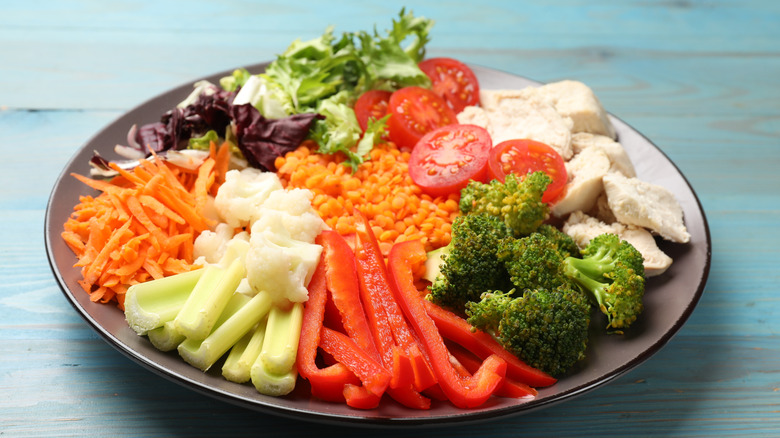
Dietary fiber is a kind of carbohydrate that the body can't absorb, found in vegetables, fruits, nuts, legumes, and whole grains. There's soluble fiber, which dissolves in water and helps slow down digestion, leaving you feeling fuller. And there's insoluble fiber, which doesn't dissolve and stays intact as you digest and helps keep your digestive system functioning regularly. High-fiber foods may also help block the absorption of cholesterol and sugars, and at the moment few of us get enough daily fiber.
Fiber-rich foods run the gamut of tastes and most people have a few they like to keep on hand to bulk up meals and add nutritional value. Vegetables such as peas, potatoes, cauliflower, corn, and brussels sprouts are all good options, as are legumes like split peas. Seeds, such as sunflower seeds, are another good source of fiber. Whole grains like brown rice, quinoa, and barley not only add extra fiber to a dish, but will help stretch servings and lower food costs even further.
Of course, other things you add to a dish affect its nutritional profile. This is true for sauces and condiments, but also cooking oil and seasonings. But keeping a variety of these on hand will increase the variety of dishes you're able to put together, which means that you can worry less about monotony.