

What's The Difference Between Skyr, Kefir, And Yogurt
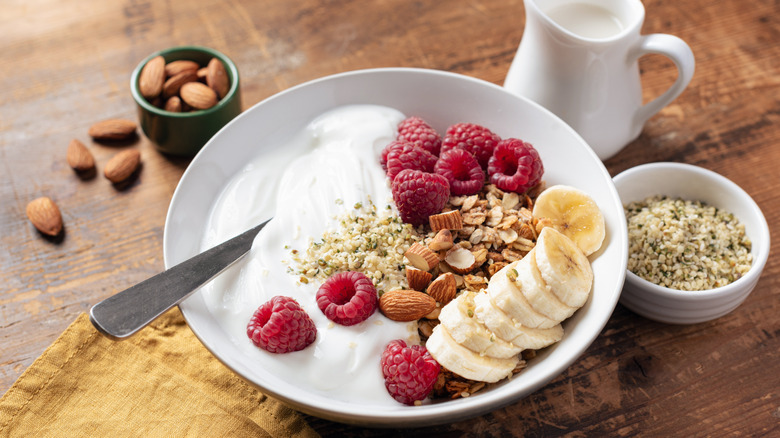
They're all white. They're all made from fermented dairy products. They're all really good with honey (and maybe some sliced strawberries or banana). But skyr, kefir, and yogurt are all very different products, each with their own unique histories and uses.
Skyr, for example, was brought to Iceland by Nordic settlers over a thousand years ago, and has been part of Nordic breakfast tables ever since. Yogurt appears in the writings of 1st century Roman philosopher and historian Pliny the Elder (he wasn't a fan). And kefir has been around since the Bronze Age. Also, not to get too technical, but one of them is actually just a very soft cheese.
While the process for making each of them is similar (involving the fermentation of milk with bacteria, the formation of lactic acid and its interaction with the milk proteins), the final products differ widely in terms of nutrition, texture, flavor and, ultimately, how they can best be used. Of the three, yogurt is the mildest and also the most versatile. Kefir is thin and drinkable, and best for shakes or smoothies. Skyr is very thick, less sweet than traditional yogurt, and carries a sharp dairy sourness when eaten plain.
Three dairy products with three very different histories
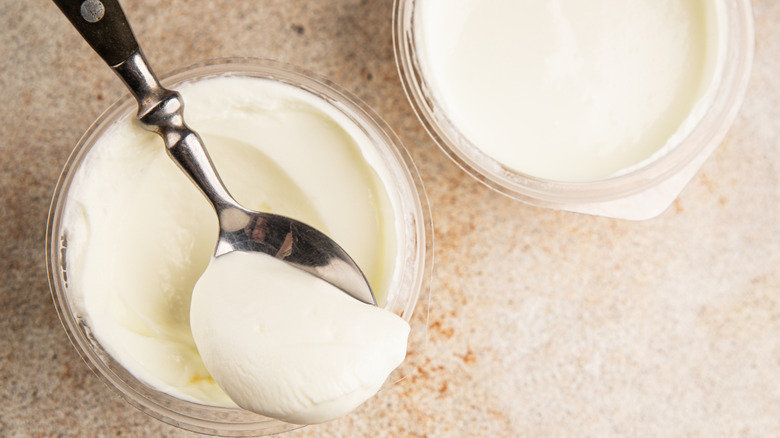
Traditional yogurt is likely the most familiar. Walk down the aisle at any grocery store and you'll be presented with an overwhelming variety of yogurt (and yogurt-adjacent) products. It is creamy, a little bit sour, not too thick, and exists in about a million varieties—everything from silky French yogurt in little glass jars to tubes of Day-Glo goop marketed to children in flavors like Cotton Candy and Strawberry Razzmatazz.
Kefir is different. While similar to yogurt (because it is made from fermented milk), kefir, or kefir milk, is made using kefir grains, which are symbiotic colonies of bacteria and yeast that look like little cauliflower florets. These are mixed with fresh milk and the result is a smooth, milky, drinkable probiotic yogurt with a recognizably sour and slightly effervescent taste.
And then there's skyr, which looks and tastes like yogurt but, because rennet is sometimes used during the fermentation process, is technically classified as a soft, sour-milk cheese that's merely masquerading as yogurt (and used the same way). It is sour, glossy, less sweet than traditional yogurts, extremely thick due to the amount of milk used to make it (about four cups of milk for every cup of skyr), and high in protein.
The best uses for skyr, kefir, and yogurt

Yogurt is the champ when it comes to variety of uses. Sure, you can just eat it plain. But you can also make raita or tzatziki, use it in marinades to flavor and tenderize meats, or mix it with milk until it's the consistency of heavy cream and use it as a substitute for buttermilk (it works great with pancakes). Additionally, plain yogurt can be subbed in for portions of the wet ingredients in baking to add more moisture to cakes and breads, and to help them rise because of the way the acidity reacts with baking soda.
Want to know something cool? The recipe for kefir was kept secret for a long time because the people of the Caucasus mountains believed that its health benefits gave them extraordinarily long lives. And they weren't entirely wrong about that. Because of its consistency, Kefir's most obvious utility is as a base for smoothies and shakes: just blend it up with some frozen fruit and maybe a touch of honey to cut the sourness. But like yogurt, it can also be used in many baking applications. It works great as a base for probiotic salad dressings, and strained through cheesecloth, it can also be used to make cream cheese.
If you're looking to add something different (and kinda Viking-y) to your regular fermented milk routine, skyr is perfect. Being the thickest of the three, it makes great breakfast bowls, but it can also be frozen and used for skyr bark, made into dips, dressing, and remoulades, or added to soups for a rich and creamy bump.