

Skyr Vs Greek Yogurt: What's The Difference?

There are many different styles of yogurt that come in all sorts of varieties, from nonfat to organic to totally dairy-free. However, two specific styles of yogurt have become especially popular: Greek yogurt and skyr. Both are creamy and slightly tangy, but there are a couple of key differences between them — the main one being how they're produced.
Greek yogurt has become a classic, popular option in North American grocery stores. A strained dairy product that can be traced back thousands of years, Greek yogurt is made by pasteurizing (heating) milk, adding live bacterial cultures to it, then straining the liquid left behind after it ferments, which is known as whey. This results in a thick texture, a concentrated flavor, and a high protein content.
Icelandic skyr yogurt is newer to American shelves. Like Greek yogurt, it's a strained product with ancient roots, but its production process is slightly different. Traditionally, skyr is made by using an older batch as a starter. The old skyr is then heated with milk, and the resulting whey is drained slowly, leading to a dense texture. If rennet is added to the mixture — which isn't often done in modern recipes — then skyr becomes more like a cheese. It tastes quite similar to Greek yogurt, but its flavor tends to be milder.
Skyr and Greek yogurt are both healthy options
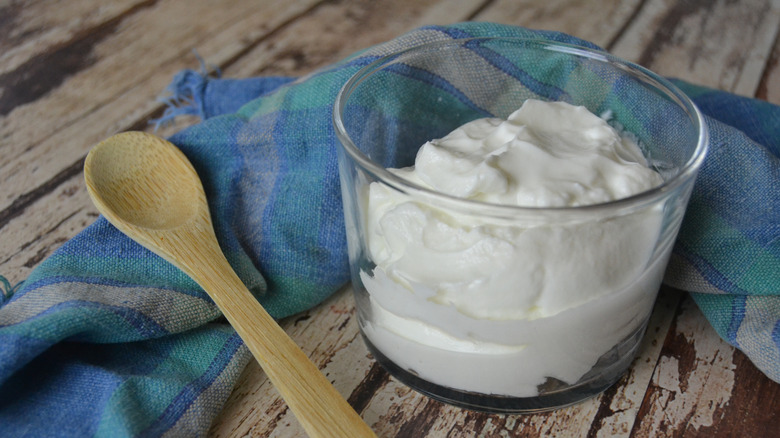
Skyr and Greek yogurt are both nutritious, but skyr is generally lower in fat because it's traditionally made from skim milk, which puts its fat content below 1%. There are also nonfat Greek yogurts available, although 2% is a common variety. Some Greek yogurts, such as whole Greek yogurt, contain up to 10% fat content. Some producers have started selling whole-milk versions of skyr, too, but these varieties may be labeled as "Icelandic yogurts" rather than skyr.
Because it's strained more thoroughly, skyr tends to have more protein than Greek yogurt does, but only slightly so. Exact numbers differ by brand, but for comparison's sake, a standard 3/4 cup (170g) serving of skyr often contains around 19 grams of protein. You can expect the same portion of Greek yogurt to contain about 15 grams of protein, although nonfat versions contain closer to 18 grams. Regardless, both types of yogurt are excellent sources of protein and other nutrients, including calcium and probiotics.
You can also use Greek yogurt and skyr interchangeably in most recipes. Either of them can help you make protein-packed cinnamon rolls, an Icelandic no-bake cheesecake, or even some flavorful homemade biscuits. Both also make a pleasant, tangy topping on sweet treats like pancakes or pies. Alternatively, you can eat them as standalone snacks topped with fruit, nuts, or seeds (or all of the above). They're both relatively low in sugar, depending on the type you buy — for optimal health benefits, consider buying plain yogurt only and avoiding varieties with added sugars or flavors.