

11 Iconic LA Restaurants From The '80s And '90s That Are Now Closed
The 1980s and 1990s were a special time for Los Angeles. The region was building on its reputation as a global entertainment capital, with its thriving movie, television, music, and fashion scenes continuing to shape its cultural identity. For foodies, this was also a pretty exciting era, as new, iconic restaurants were constantly emerging across the county. There was the ultra-chic Café des Artistes, the fun, immersive Dive!, and the experimental Orso, to name only a few popular examples.
Unfortunately, many of the beloved LA eateries that opened in the 1980s and 1990s aren't around anymore. But plenty were on the scene for several decades, catering to average Angelenos and movie stars alike, and they've left quite a legacy in their wake. Here, we take a trip down memory lane, with star-studded stops everywhere from the glitzy streets of Hollywood to the charming corners of Pasadena. Get ready, it's about to get seriously nostalgic.
Dive!
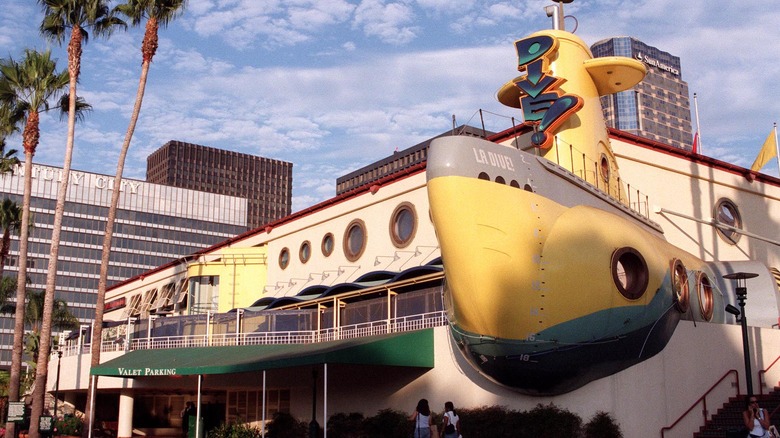
In the 1990s, Steven Spielberg was, arguably, at the peak of his career; it was the decade when he brought us instant classics like "Hook," "Schindler's List," and "Jurassic Park," after all. As his assistant during this time, you might assume you would get an exclusive peek behind the curtain at how blockbusters are made. And many probably did, but we also know that, in the early 1990s, several of Spielberg's assistants spent a fair amount of time driving around Los Angeles and eating sandwiches. Why? Because the hotshot director had a dream to open a submarine-themed sandwich shop, and, of course, he needed the market research.
Yep, alongside Jeffrey Katzenberg, the then-chairman of Walt Disney Studios, and restaurateur Lawrence F. Levy, Spielberg opened the iconic immersive restaurant Dive! in 1994. Located in Century City Mall, the 300-seater restaurant was fitted with portholes, airlock doors, and even digital screens showing marine life, which customers could watch while they tucked into one of the many sub options on the menu.
At first, Dive! was a smash, with customers waiting up to an hour for a table. Spielberg, Katzenberg, and Levy opened a second location in Las Vegas, and even had their sights set on a national chain. But it wasn't to last. By 1999, themed eateries had fallen out of favor with the public, and Dive!, unable to make back the substantial investment required to keep the place running, battened down the hatches in LA for the final time.
Patina
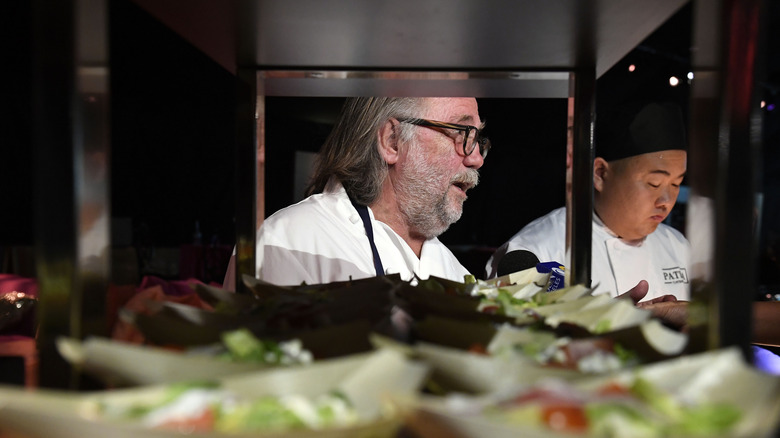
Not everyone wanted to eat their dinner surrounded by digital fish in the early 1990s. Some were after something a little more suave, with soft lighting, bread baskets, wine, and sophisticated-sounding dishes like duck liver with rhubarb and asparagus ravioli. Those people would probably have nabbed a table at Patina, a popular upscale restaurant on Melrose Avenue, opened in 1989 by renowned German chef Joachim Splichal.
Unlike Steven Spielberg's nautical dreams, Patina had some serious legs. That simple, high-class Los Angeles restaurant evolved into a hospitality juggernaut, the Patina Restaurant Group. By 1999, the Melrose Avenue location was joined by 10 other eateries, including restaurants and museum cafes, and a catering company. In 2003, Patina moved to the Walt Disney Concert Hall, where it gained a coveted Michelin star.
But even Michelin approval isn't enough to keep a restaurant afloat forever. In 2020, amid the tumultuous COVID-19 pandemic, Patina closed its doors for good. But the writing had been on the wall for a while before that. By 2016, the reviews had taken a turn for the worse, and fine dining, in general, was struggling. In LA Weekly, one reviewer compared Patina to "delusion and apathy." On Reddit, when one user asked where the "most pretentious, high-concept, overpriced, bullsh*t restaurant" in Orange County or Los Angeles was, one person replied, "Patina," before adding that it "used to be the talk of the town."
Yujean Kang
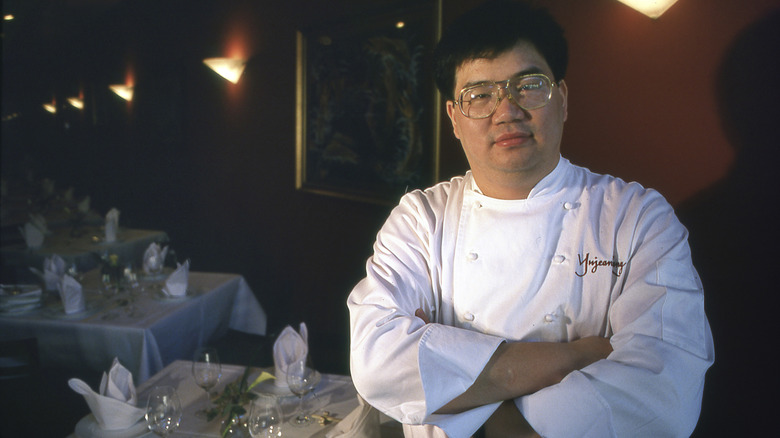
In the 1990s, several restaurateurs were betting on a Chinese food boom in California, and among them was Yujean Kang. The chef, known for his Westernized takes on classic Chinese cuisine, had tried and failed to open a restaurant in Taipei, Taiwan, in the late 1980s before taking a chance on a new spot in Pasadena in 1991. At the time, critics feared it was doomed to fail because of its location and the perception that prices would be high, but Kang proved them wrong.
For 20 years, the chef's eponymous restaurant wowed diners with dishes like tea-smoked duck, julienned sturgeon, and crispy tofu rolls. But in 2012, the feast came to an end. Hindered by a sluggish economy and high rent, Kang decided to call it a day on the iconic Pasadena spot, leaving many diners disappointed. "Shocked to walk by today and see the notice on the door," said one Yelp reviewer in June 2012. Before admitting that the quality had recently taken a nosedive, they added: "I [first] went to Yujean in the '90s and the food was outstanding."
72 Market Street
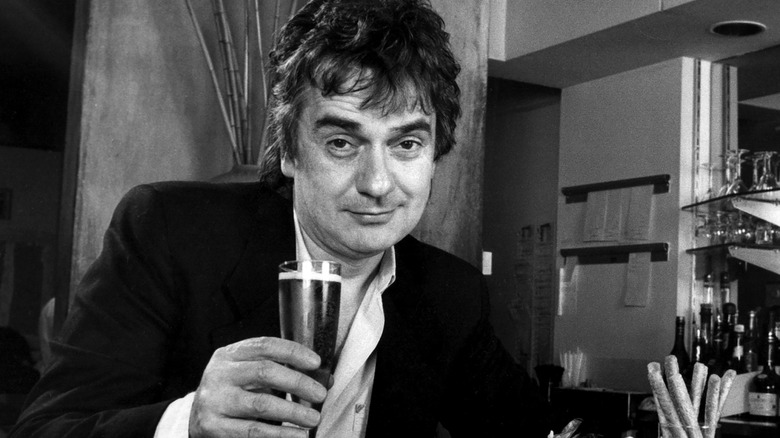
Back in the 1980s, Los Angeles' foodie scene was really coming into its own. Many Californians were tasting sushi for the first time, Wolfgang Puck was becoming a household name, and diners would happily drop a few hundred dollars on French haute cuisine. So it is, arguably, slightly odd that a restaurant best known for its meatloaf is also considered an icon of the era, but it's true.
Yep, in 1984, restaurateur Julie Stone, chef Leonard Schwartz, and architect Tony Heinsbergen opened 72 Market Street in Venice, with the help of some major star power. Dudley Moore and Liza Minnelli were two key investors, alongside Tony Bill, an Academy Award-winning producer and director. These names undeniably contributed to the restaurant's success, but people also seemed to enjoy that the food wasn't glam, but wholesome. As well as meatloaf, the menu featured comforting classics like chili and peach cobbler.
Schwartz left 72 Market Street in 1990, and French chef Roland Gibert took over in 1994, introducing more experimental dishes. The restaurant remained popular and beloved by the community and celebrities alike. In fact, it held on until November 2000. People still have fond memories of the iconic Venice spot. "My friend waited tables there with Kristin Davis before she became famous," recalled one Facebook user in the group Lost Angeles. Another added: "One of my [parents'] favorite places. I still make 72 Market Street meatloaf. Delicious."
Café des Artistes
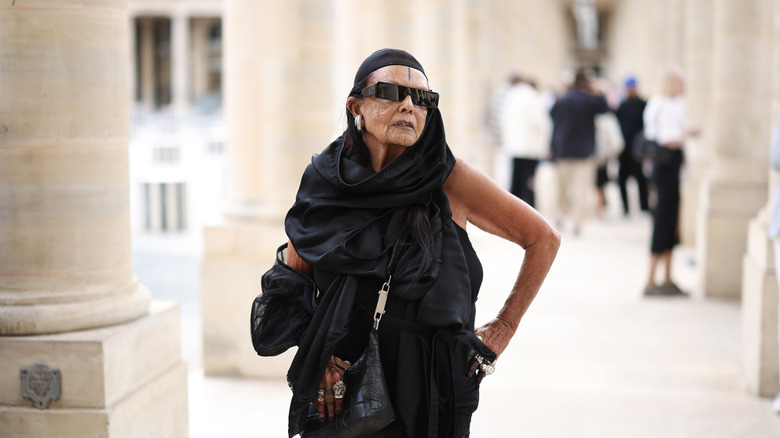
Of course, Hollywood's Café des Artistes was the height of cool — it was, after all, originally founded by the iconic French multihyphenate Michèle Lamy back in the late 1980s. Lamy was at the helm of the restaurant for seven years before she moved on to create the infamous parking lot Hollywood hotspot Les Deux Cafés.
But despite the loss, Café des Artistes maintained its status through the late 1990s as it ran under the leadership of French chef Jean-Pierre Bosc and Italian restaurateur Silvio De Mori, who served up extravagant portions of les fruits de mer and artichoke platters to diners eager to get a real taste of La République Française without having to board a plane.
Café des Artistes remained beloved all the way through the 2000s, finally closing its doors for good in 2011, to the disappointment of many. "This was my favorite secret hideaway in Hollywood, guess it was a little too secret," reads one Yelp review from 2011. "So sad it's gone."
Campanile
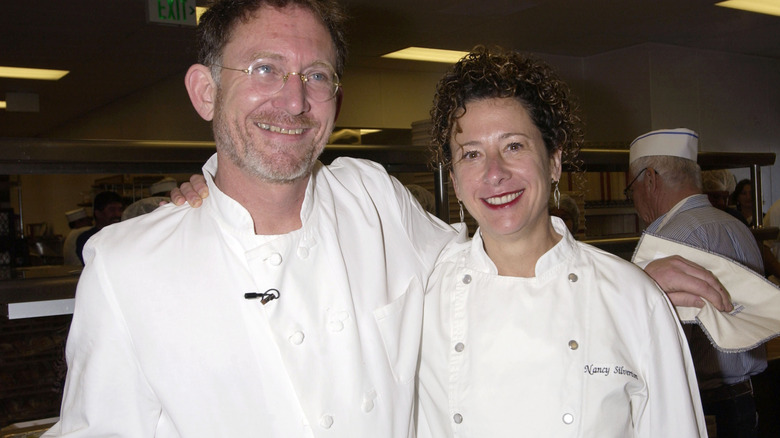
Today, most of us are familiar with the idea of a Mediterranean diet, with its emphasis on minimally processed whole foods. But back in the 1990s, Americans were only just starting to show interest in this approach to eating. Sun-dried tomatoes were all the rage, and suddenly everything needed a drizzle of extra-virgin olive oil. In Los Angeles, the best place to embrace the trend was Campanile, opened by chef Mark Peel and his then-wife Nancy Silverton on La Brea Avenue in 1989. Fun fact: The building used to be owned by silent film star Charlie Chaplin.
Campanile was beloved for its Mediterranean-style dishes made with fresh, locally sourced ingredients from farmers' markets. For years, diners would flock to the restaurant, which also housed Silverton's La Brea Bakery, to try everything from grilled fish to pork loin and handmade pasta, but also grilled cheese. Yes, you read that correctly. In the late 1990s, Silverton, a master of grilled cheese, decided to experiment with giving the all-American classic a Mediterranean spin.
In fact, Silverton's weekly Grilled Cheese Nights helped introduce the restaurant to a younger crowd and became one of its most popular traditions. Still, it eventually closed in 2012, after more than 20 years. "Few L.A. restaurants could equal Campanile for [its] mix of good food and charming setting," said one Yelp reviewer in a goodbye post. They added: "I have visited Campanile many times and rarely been disappointed by it. The only real disappointment is that it is going away."
Angeli Caffe
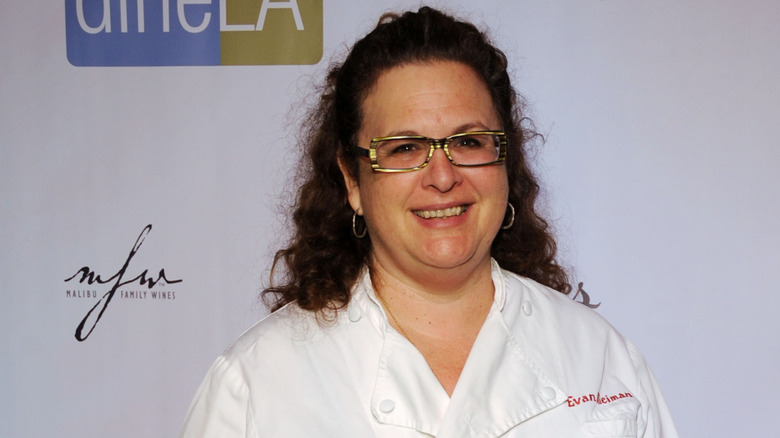
In 2025, IBISWorld reported that there were more than 44,800 Italian restaurants in the U.S. It's a staggering number, but not overly surprising. After all, Italian is one of the most popular cuisines in the country. But it hasn't always been this way; back in the 1980s, Americans were developing a growing appetite for authentic, regional Italian cuisine. So with Angeli Caffe, which opened in Hollywood in 1984, chef Evan Kleiman was ahead of the curve.
Angeli Caffe was different from the beloved but more easily found Italian-American eateries of the time, with their red-and-white checkered tablecloths and red sauce. It was more authentic Italian, inspired by the real trattorias Kleiman had visited on a trip across Italy. The pioneering chef wanted to recreate the experience for Angelenos, serving simple yet flavorful classics in an intimate setting, and it was a success. In fact, after opening Angeli Caffe, Kleiman expanded to open the larger Trattoria Angeli on Santa Monica Boulevard in 1987.
Unfortunately, neither lasted. But Angeli Caffe was still a major success, lasting nearly 30 years in Los Angeles' highly competitive dining scene. In 2012, citing the pressures of the 2007 recession, Kleiman called it a day. But still, people regularly reminisce on the spot. "Evan Kleiman's Angeli Caffe," said one Redditor in 2026, in response to a post about the shuttered restaurants people still think about. "The food was so good, but particularly the bread and their coffee." Another added: "Great restaurant, ahead of [its] time."
The Original Border Grill
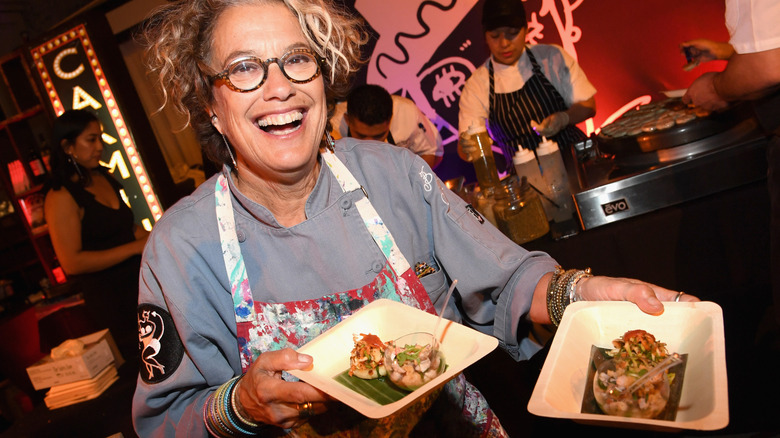
If you've been to LAX recently, you might be confused as to how Border Grill has made this list. The chain still has a spot at the Los Angeles International Airport, a restaurant and concession stand in Las Vegas, and a food truck. But the location that started it all back in the early 1980s is, unfortunately, long gone.
Border Grill was founded by chefs Mary Sue Milliken, who Tasting Table interviewed in 2016, and Susan Feniger. In the mid-1980s, the duo spotted a gap in the market for a small eatery specializing in regional Mexican cuisine. They rebranded their old 35-seater spot on Melrose Avenue from City Cafe to Border Grill, started serving their signature nouvelle Mexican cuisine, including masa turnovers and grilled scallops, and, well, of course, people loved it.
But in 1991, Milliken and Feniger split from the original location, leaving it to their partners, Barbara McReynolds, Gai Gherardi, and Margo Willits, who owned the neighboring optical store l.a.Eyeworks. By 1992, the original Border Grill closed; the struggling economy and rising rates of workers' compensation insurance had made it impossible to keep the lights on. Of course, if you're craving Border Grill, you can stop by one of the current restaurants, but many diners say they don't hold up to the original. "Border Grill ... I still think about the food there," wrote one Facebook user in the Lost Angeles group. Another responded: "[I] went to the one in Las Vegas to walk down memory lane, not the same."
Kate Mantilini
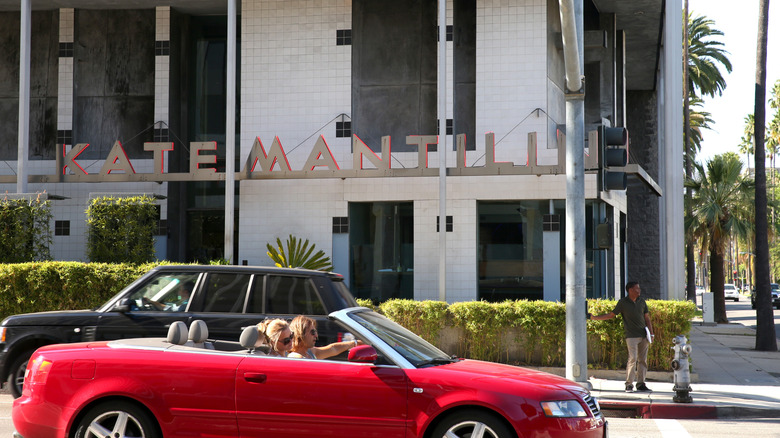
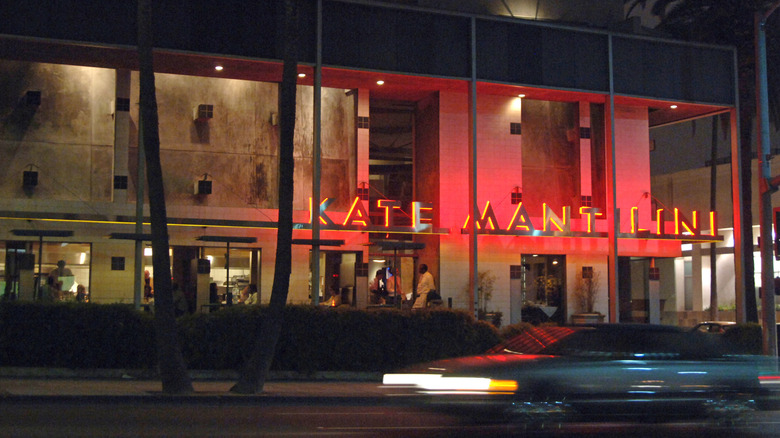
Hollywood icons Marilyn and Harry Lewis clearly knew a thing or two about opening a good restaurant. In 1950, they founded the iconic Sunset Boulevard burger restaurant Hamburger Hamlet, which used to draw in the likes of James Dean and Natalie Wood after long days of filming, and would ultimately grow into a $30 million chain. But they didn't stop there. In 1987, the Lewises were also the force behind the beloved late-night eatery Kate Mantilini, fondly known by many as "Kate's." Fun fact: In an arguably left-field choice, the diner was named after a real person, the mistress of Marilyn's uncle.
Just like Hamburger Hamlet, the stars loved Kate Mantilini. Mel Brooks, for example, used to stop by for its signature hash browns with sour cream, and it was even chosen as the backdrop for a scene in the 1995 movie "Heat" with Al Pacino and Robert De Niro. But the original Kate's, which closed in 2014 after nearly three decades in Beverly Hills, wasn't just a spot for the rich and famous; it was adored by everyone. "One of my favorite spots when I lived in LA," said one Facebook user in Lost Angeles. "Many dinners there after catching a film at the Writers Guild Theater." Another added: "I miss this place weekly. Always a lively and energetic place to eat!"
Chaya Brasserie
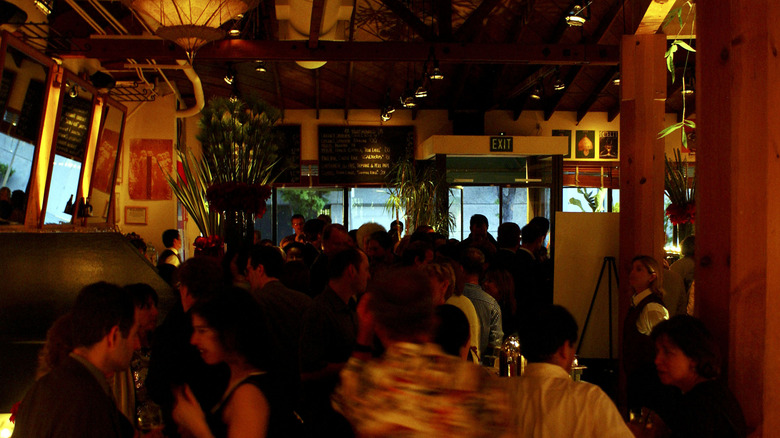
Chaya has a heck of a legacy. The first spot actually opened back in Hayama, Japan, in the 1600s. Yes, really. Owner Yuta Tsunoda brought the Chaya name to Los Angeles in the 1980s, opening Chaya Brasserie in 1984 and introducing diners to its signature French-Japanese fusion cuisine. But he gave it a twist, calling it Chaya Brasserie, and specializing in fusion French-Japanese cuisine. In fact, if you've ever had tuna tartare, a twist on French steak tartare using sushi-grade tuna, you can thank Chaya chef Shigefumi Tachibe.
In the 1990s, if you wanted a seat at the bustling Los Angeles spot, you had to be prepared to wait. As well as the tuna tartare, the restaurant gained a following for its unique fusion dishes, like halibut sashimi, spaghetti with Japanese eggplant, and grilled duck with wasabi-tamari. People also enjoyed the incredibly fast service, the ambiance, and the overall vibe of whimsy. "[One] of my absolute favorite restaurants of all [time!!]," reads one Facebook comment about the Chaya menu from the 1990s in Lost Angeles. Another replied: "The good old days!"
Chaya was such a hit that it opened a second location in Venice in 1990, then subsequent locations in San Francisco, Downtown LA, and LAX. But sadly for fans, most closed their doors in the 2010s — in fact, the airport location is the only U.S. spot left standing.
Orso
When restaurateur Joe Allen first brought Orso to Los Angeles in 1989, some were hesitant about the new trendy spot from New York (where it originally opened in 1983), with its marble flooring, uncomfortable seating, and adventurous menu. When we say adventurous, we're not exaggerating. One of its first dishes was, literally, a lamb's head.
But Orso had its own charm, and of course, it managed to find its way and win over Angelenos. In the 1990s, it pulled in many celebrities and industry professionals, who would lunch there while breaking from work at places like the nearby Creative Artists Agency and International Creative Management (both of which have since relocated). It even became another firm favorite of Mel Brooks — when he wasn't eating hash browns at Kate's, of course.
Orso closed in Los Angeles back in 2009, but the original spot in New York City is still going. At the time of writing, there's no lamb's head in sight.