

4 Best Gins For A Dirty Martini
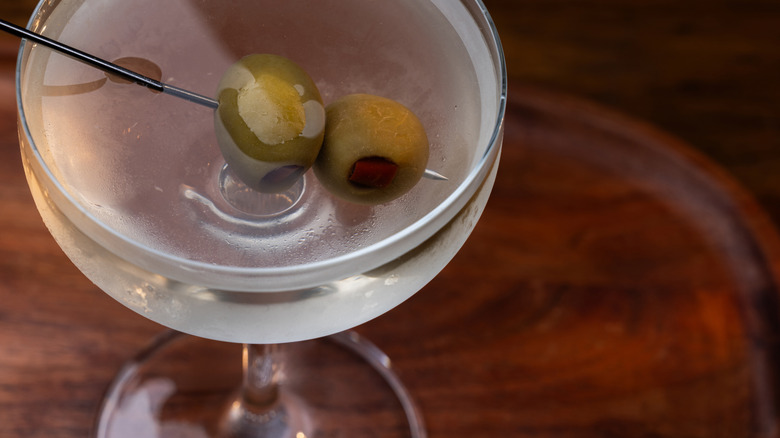
Any recipe that relies on so few ingredients as a martini demands a certain amount of care in the selection of its parts. For a dirty martini, with plenty of pungent brine, this can be especially tricky. The art is very different for vodka versus gin dirty martinis, as vodka provides a relatively neutral backdrop, inviting the olives to dominate. Making a proper dirty gin martini, on the other hand, requires choosing the right bottle to find that perfect balance of botanical and brine. To aid in this selection process, we reached out to an expert, asking Molly Horn, chief mixologist and spirits educator at Total Wine & More, for her take on the matter.
"Having been a longtime dirty martini lover," she says, "I have a lot of fun experimenting with different gins for the base, and leaning in different directions depending on the season." As with many drinks, it seems that the right type of gin for your martini may correspond with the current weather outside. According to Horn, cooler weather invites a greater degree of savoriness in the gin, whereas in the summer months, the move is to lean instead toward brighter citrus notes.
For the sultry days of autumn and winter, Horn suggests making your dirty gin martinis with James Gin American Mustard or Edinburgh Gin Seaside Coastal Dry Gin. For the longer days and warmer weather of spring and summer, on the other hand, she suggests Garnish Island Gin and Gray Whale Gin. Below, we will delve further into each of these spirits and why they are ideal as the backbone of a dirty martini.
James Gin American Mustard
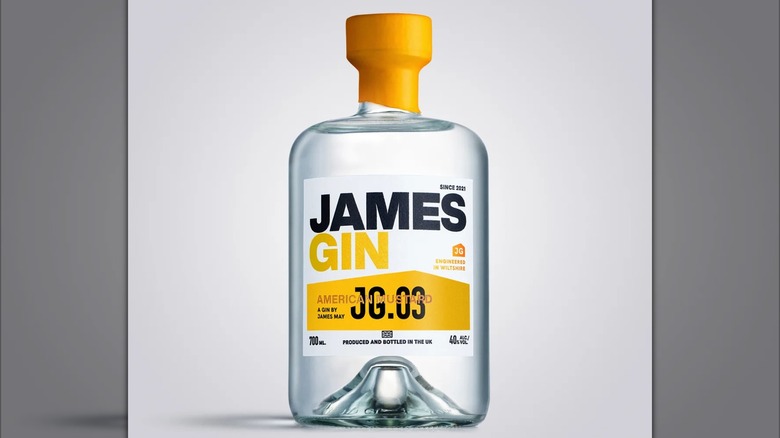
"In cooler weather," Horn says, "I tend to go for a savory, herbaceous gin that will integrate really nicely with the brininess of the olive juice. James Gin American Mustard is a great example." It is not hard to see how the botanicals in this gin would work well in the context of a dirty martini, as the recipe features some quite unusual ingredients with a strong savory tilt.
James Gin American Mustard is, as the name implies, centered around bringing very American flavors into gin, such as yellow mustard and dill pickles. The array of botanicals used includes many that are typical to a wide variety of gin recipes, such as coriander seed, licorice root, and orange peel, as well as a handful that are more unusual, like mustard seed, sundried tomatoes, and pickled cucumber. The resulting spirit is one that is still very clearly gin, but it doesn't taste quite like any gin you've had before.
Even before noting that this bottle took home gold medals from the World Gin Awards in 2026 and USA Spirits Ratings in 2023, among other accolades, it's easy to see how briny olive juice would pair nicely with what Horn describes as "notes of zippy relish, Dijon mustard, and coriander." The unique ingredients used in this bottle bring an unexpectedly savory character to the gin, making it ideal for a dirty martini as well as other savory drinks like the
Edinburgh Gin Seaside Coastal Dry Gin
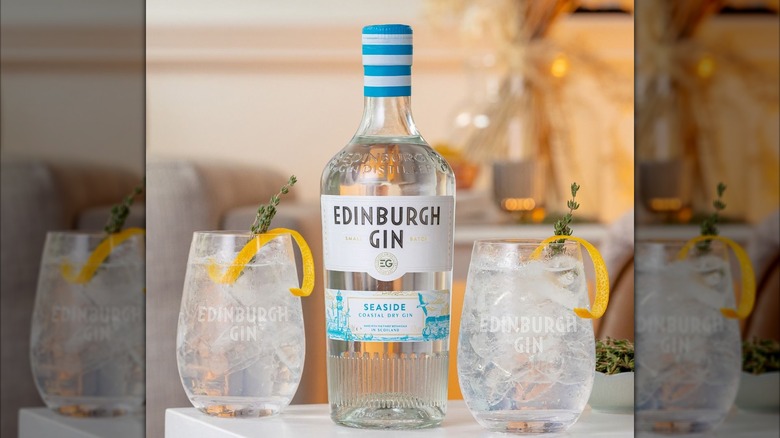
Horn's other suggestion for a cooler-weather dirty gin martini is Edinburgh Gin's Seaside Coastal Dry Gin, which uses botanicals foraged from coastal areas near Edinburgh to create a spirit the distillery describes as "reminiscent of a bracing walk on a Scottish beach." As Horn explains, it is "made with actual seaweed and other grassy, green Scottish flavors that play great with that fatty-yet-meaty olive character."
The signature botanicals of this Seaside Coastal Dry Gin include scurvy grass, a relative of mustard with a fresh, spicy flavor; another fresh-tasting grassy wild herb called ground ivy, a back yard weed that was also once used to flavor beer; and bladderwrack, a seaweed which lends both sweetness and salinity to the gin. The interplay of these unique elements with more traditional botanicals creates a spirit that stays within the bounds of a classic dry gin while transporting the taster to the coast with its pronounced maritime character. The juniper is there, but it is not dominant, balancing well with the brine and minerality of the sea.
Dirty martinis are, of course, constructed around brine. By bringing a gin into the mix that is briny in its own right, that rich, olive-imbued flavor finds a complementary playmate, opening the palate to a range of harmonizing flavors and aromas. Playing off the natural umami-rich compounds present in bladderwrack and other seaweeds, you could even use this gin to make an extra-dirty martini with a sprinkle of MSG as well.
Garnish Island Gin and Gray Whale Gin
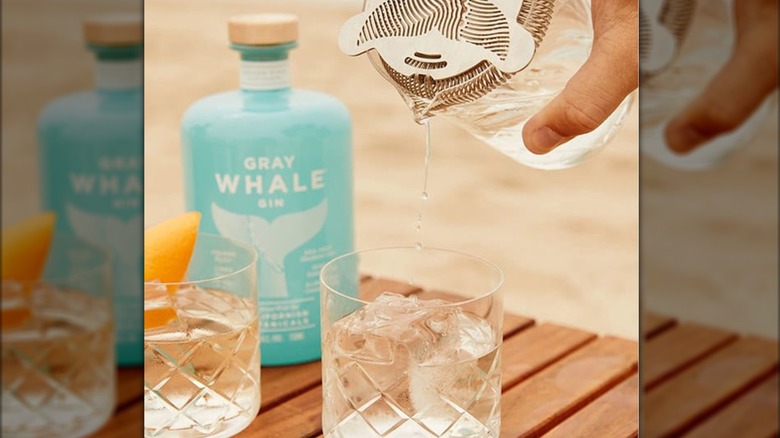
For the balmier times of year, Horn has another pair of suggestions for how to fill that cocktail shaker. "In warmer weather I lean toward citrusy gins that have enough character to stand up to the boldness of the brine while still lifting up the overall texture and weightiness of the cocktail," she says, "Garnish Island and Gray Whale are great examples, with bold citrus and juniper characteristics that can handle that dirty mix without adding too much weight."
Compared to some of the other gins on this list, Garnish Island from West Cork Distillers in Ireland might seem downright simple, with a bill of only four botanicals. Just like the martini itself, though, a lean recipe of carefully selected and well-balanced ingredients is often more than capable of outshining its more complex competitors. A strong spirit, bottled at 46% ABV, it nevertheless delivers mint and licorice aromas, herbal notes of rosemary, agreeable spice, and a touch of citrus to brighten an olive-heavy martini.
Gray Whale Gin, Horn's other suggestion for warm-weather dirty martini mixing, is another bottle that brings a maritime element to the glass, featuring six California botanicals harvested from along the migratory route of the gray whale down the Pacific Coast — mint, lime, juniper, almonds, fir, and kombu. This gin balances the citrus of lime with the salinity of kombu, a type of seaweed, while creating its own sense of place with the sylvan aroma of fir trees and the creamy sweetness of Golden State almonds. Together, these ingredients create a balance that is bright enough to hold its own in the glass with olive brine while also layering on its own uniquely California flavors.