

Before Hops Dominated Beer, Brewers Relied On This Common Backyard Weed
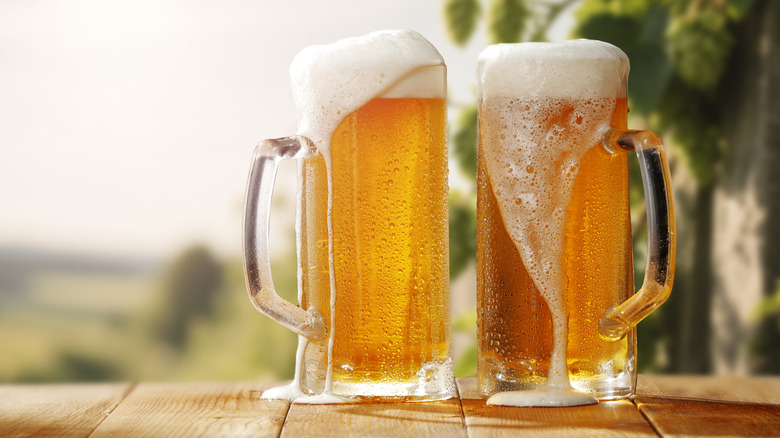
Malted barley, water, hops, and yeast are the four central ingredients that most beers rely on. While some beers are brewed with adjuncts — additional grains like rice and oats, spices, or fruits, for example — but those are the exception rather than the norm. There was a time, however, before brewing was quite so standardized, when the brews on offer might not be easily recognizable to modern drinkers. Hops, for instance, weren't used in beer at all until the 9th century and didn't really catch on until centuries later. English brewers began using it regularly in the 15th century. Prior to that, the bittering agent in the beer might have been a weed that you'll likely recognize from your yard, even if you don't know the name: ground ivy.
Ground ivy — Glechoma hederacea — is not a real ivy, but rather a member of the mint family, Lamiaceae. It is a low-growing, creeping plant native to Europe and Asia, though it was introduced to the Americas long ago. From a distance, it is recognizable by its bluntly toothed heart or kidney-shaped leaves and small purplish-blue tubular flowers. Upon closer inspection, you might notice that ground ivy has square stems and hairy leaves that produce a somewhat minty aroma when crushed. We won't go too deep into the botanical description, lest we bore those for whom all plants are just different shapes of green, but one you may well recognize, even if you can't quite picture it now.
Ground ivy in beer and beyond
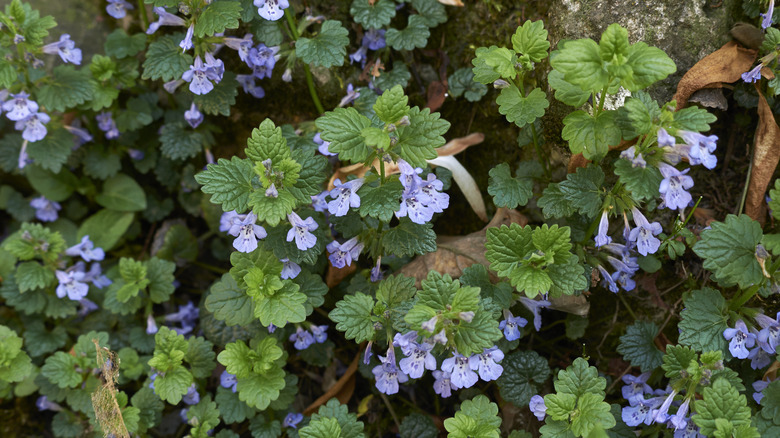
In addition to its Latin name and "ground ivy," this plant is also known by a whole host of other common names such as "Creeping Charlie," field balm, cat's foot, runaway robin, gill-over-the-hill, and alehoffs. While there are a few lookalikes out there — henbit and purple dead nettle — but neither of these are poisonous, so if you want to try to forage a bit of ground ivy, it's fairly low risk.
Before hops were a common beer ingredient, this creeping ground weed filled a similar role for brewers. The use of hops in beer is much more than just adding bitterness. These days, that might be the primary draw, but there was a time when the antimicrobial properties were just as important, lengthening the lifespan of a brew. Ground ivy performed both of these functions, each imbuing the beer with a light bitterness and helping to increase its shelf life. It may have even been used as a clarifying agent. Either way, this plant was useful well beyond just brewing.
It's possible that ground ivy found its way into the brewing process due to its well-known medicinal purposes. For centuries, the plant was used by folk healers to treat such conditions as colds, asthma, bronchitis, gastric disease, and inflammation. These days, it is also recognized for its antibacterial, antiviral, and anticancer properties. Whether brewed into beer or tea, eaten plain as a green, or used like an herb to flavor other dishes, ground ivy is (and long has been) a versatile and nourishing wild food.
Why hops replaced ground ivy in beer
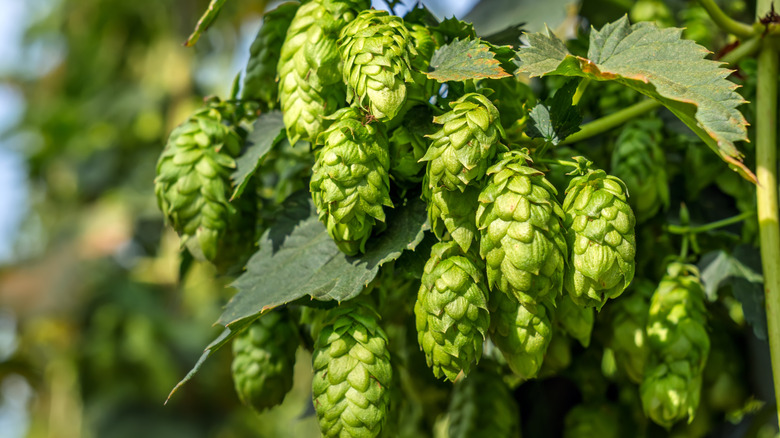
While ground ivy may have a wide array of benefits for both beer production and the human body, it eventually gave way to hops as beer's primary bittering agent. Given how long ago this occurred, it's hard to pin it on a single causative factor, but the evidence seems to suggest that it all came down to preservation. Hops are a more effective preservative than ground ivy, extending the shelf life of brewed beer considerably. Thus, hops became the go-to.
If you're concerned about the loss of the medicinal qualities, worry not. Hops may not have the same medicinal effects as ground ivy, but, in addition to the antimicrobial effects, they are also known for their anti-inflammatory, anti-oxidative, and calming properties. Additionally, they've proven to offer some preventative measures against obesity and diabetes.
There are still some homebrewers out there that like to play with these old hop-free beer alternatives, but this is one that you are unlikely to see in a modern commercially produced beer. To sample beer as it once was (gruit ale, as these herbal brews were called), you may have to make it yourself. Fortunately, ground ivy covers much of the country, excluding the Southwest, Deep South, and parts of the Great Plains. All you need is a foraging buddy who knows a thing or two about plant identification and a few homebrewing tips, and you'll be well on your way to a mug like those in the 7th century would've enjoyed.