

Get The Best Grocery Store Baby Back Ribs Using These 5 Tips
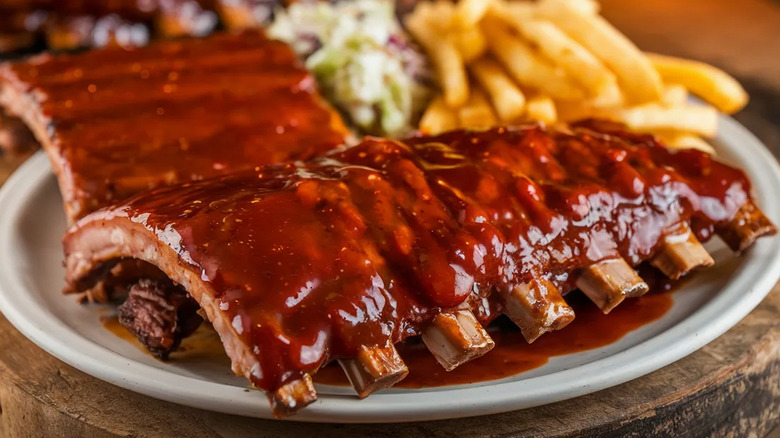
For a barbecue dish that's going to get rave reviews time after time, it's hard to go past baby back ribs. While ribs of any cut are a classic choice for a barbecue, baby back ribs are the most tender and lean, with more meat in every bite compared to others.
Baby back ribs are taken from the back of the pig directly beneath the spine. In this area, the rib bones are shorter, which accounts for the "baby" part of the name — the ribs are not taken from baby pigs. This smaller size is a benefit when it comes to entertaining, as you'll find that baby back ribs cook faster than spare ribs or St. Louis-style ribs.
One of the few downsides to baby back ribs is that they do tend to be more expensive than other types of ribs. Many would say that they're worth the price, but at the same time you want to ensure that you're getting quality meat for what you pay. This is exactly the kind of thing you would normally ask your butcher, but if you're shopping in a grocery store, you'll need a few tips to help you get the best ribs for your buck and for your barbecue.
Look for deep pink meat with some marbling
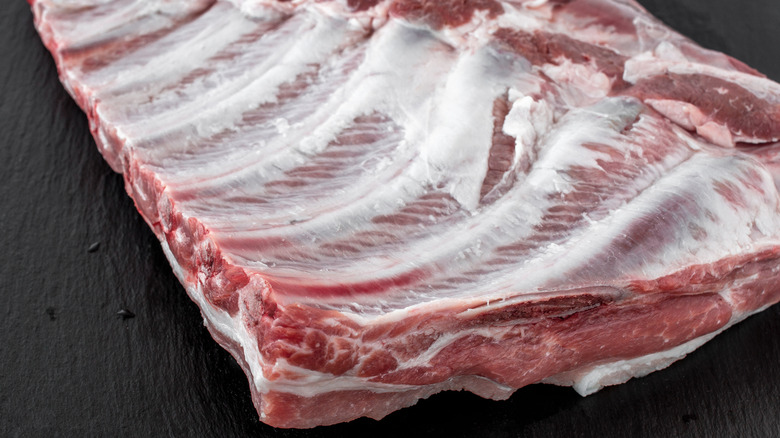
You might have heard the advice to look for pink when shopping for pork ribs, but according to Paul Lyons, aka Paulie Meats, not any pink will do. In an interview with Mashed, the butcher for Krasdale Foods explained, "Some will say pink color is better," but for him, "The darker the pork ... the more tender it is and juicy." Avoid pale pink meat, which can tend towards a mushy texture and can exude moisture when cooking, resulting in a drier, tougher meat.
Some marbling in the ribs (but not too much) is also important. Marbling is the intramuscular fat in meat that helps it to stay moist while cooking, and even more importantly ensures that it's flavorful. Baby back ribs don't have as much fat as spare ribs, but you should be able to see marbling as small white veins running through the meat between the ribs, which will melt as the pork cooks.
Thick fat on the outside of the meat is less desirable, as this generally won't render down completely. Try to avoid buying ribs with large pockets of fat or take the time to cut these off before cooking — it will make for a much more pleasant eating experience.
Avoid exposed bones
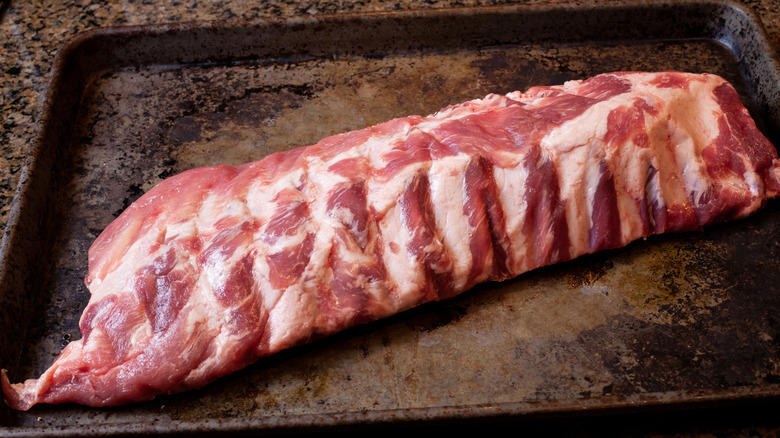
Bones are part and parcel of the whole rib experience, but you shouldn't be able to see them when looking at the raw slab of meat. Exposed bones are what's known in the industry as shiners, the result of cutting too close to the bone when separating the ribs from the rest of the carcass, and are generally considered a sign of poor butchering skills.
The first issue with this is that it skews the ratio of bone to meat in the rack that you're buying. More bone and you're not getting value for money. Lyons insists, "You're paying for meat, so you want to see meat." This is for the same reason you want to look for ribs that have plenty of meat between the bones.
Too much bone, especially exposed bone, can also cause problems when it comes to cooking the ribs. Bones without sufficient meat to hold them in place can fall out as the meat cooks, leaving you with an unstable rack of ribs. In the case that these bones don't fall out, they can char if you're cooking ribs on the grill, and the surrounding meat will end up unpleasantly dry.
Consider the shape and size
One element of choosing the best baby back ribs at the grocery store is looking for high-quality meat, but you also need to take into account some practical considerations. How will you be cooking and serving the ribs, and how many people are you feeding?
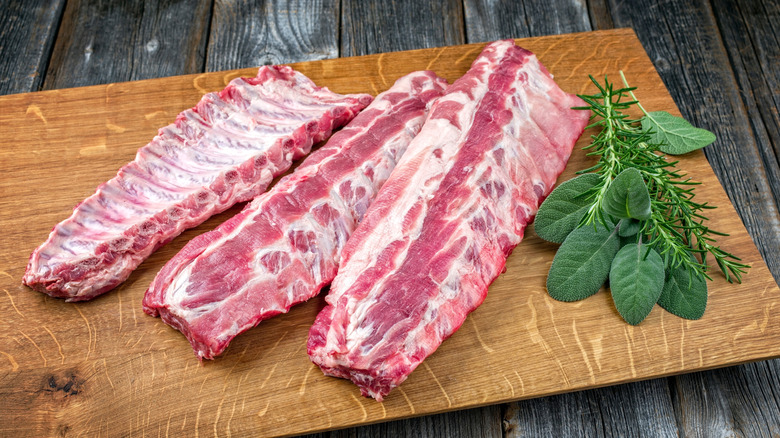
When buying multiple racks of ribs, choose those that are the same size and thickness. When cooking the racks intact, they'll take the same amount of time and help to coordinate getting everything on the table. This is less important when cooking ribs party style, where the ribs are separated into single-bone servings before cooking.
In an ideal world, you also want a rack of ribs that's the same thickness all the way along. This can be a little harder to achieve with baby back ribs, as they have a natural taper from the spine of the pig. Choosing ribs with the least amount of taper will help you to get even cooking right along the rack and no overcooked ends.
Finally, you need to think about portion sizes. A rack of baby back ribs can serve four people at a barbecue, or two adults when served as a main. The size of racks can vary somewhat, both in weight and the number of bones, with anything from eight to 13 bones possible. It's worth considering how they will be cut up, and choosing smaller racks with an even number of bones if you're just serving two people, and larger racks for feeding a crowd.
Inspect the packaging
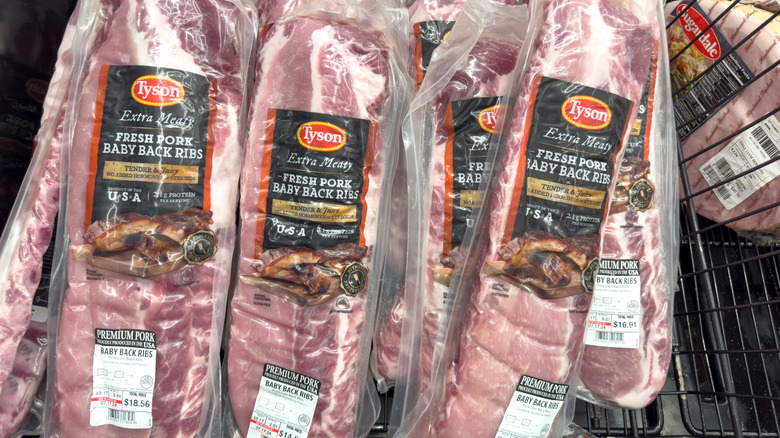
When you're shopping at a grocery store that doesn't have a meat counter, your only option is to buy ribs that are prepackaged. This plastic wrap might thwart your chances of getting a good look at some aspects of the meat, but it can also provide some clues as to the quality of the ribs you're buying.
The first thing to check is the condition of the packaging itself. The plastic on vacuum-packaged ribs should sit tight against the meat — any air pockets can indicate incorrect processing and can provide space for bacteria to breed. You can expect to see some liquid in the bag, but excessive amounts can be a sign that the meat has been sitting too long, or an indication that the ribs were previously frozen.
The label will tell you if you're buying regular pork ribs or if you're working with what's known as enhanced meat. This is when producers inject meat with a solution of water, salt, and other flavors or preservatives. It's done to extend shelf life and provide a juicier cooked meat, but it can change the taste and the texture of the ribs. In some cases, enhanced meat won't be able to develop a crust. The packaging might not mention the word "enhanced," but by law the ingredients for the solution must be listed.
Be prepared to remove the membrane
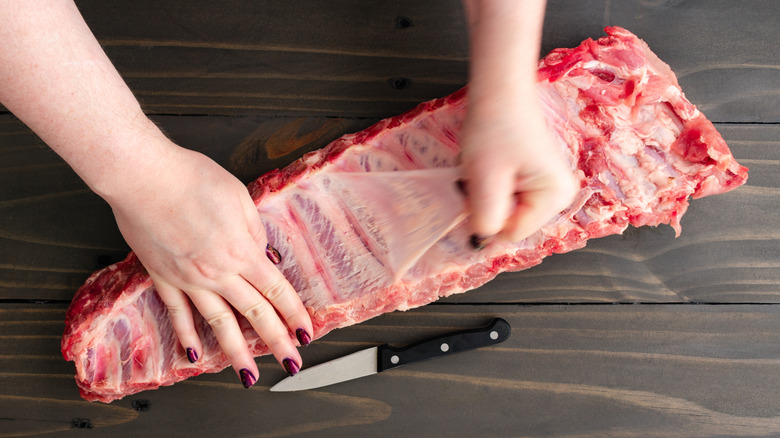
When you unpack your ribs to prepare them for cooking, you'll notice a thin membrane that covers the meat on the underside of the rack. This membrane (also known as "silver skin") can become very chewy once it's cooked, and most people prefer to remove it, especially if they plan to eat the ribs without a knife and fork. Removing the membrane has another benefit — it exposes the meat underneath to seasoning. Your favorite dry rub or the taste from the smoker will have the chance to fully penetrate.
You can request a butcher to take the membrane off for you, but you'll have to do it yourself if it's still on your packaged grocery store meat. It's not as complicated as it might seem and takes less than a minute. Take a butter knife (not a sharp knife) and insert it under the membrane on one of the ribs towards the end of the rack. Slowly push the butter knife further under the membrane until it's loosened enough to grab a section with a paper towel. Get a firm grip and pull the membrane towards the opposite end of the rack, and it should come off in one piece.
Static Media owns and operates Tasting Table and Mashed.