

If You Don't Peel Your Potatoes Before Cooking, Check For This Before Buying
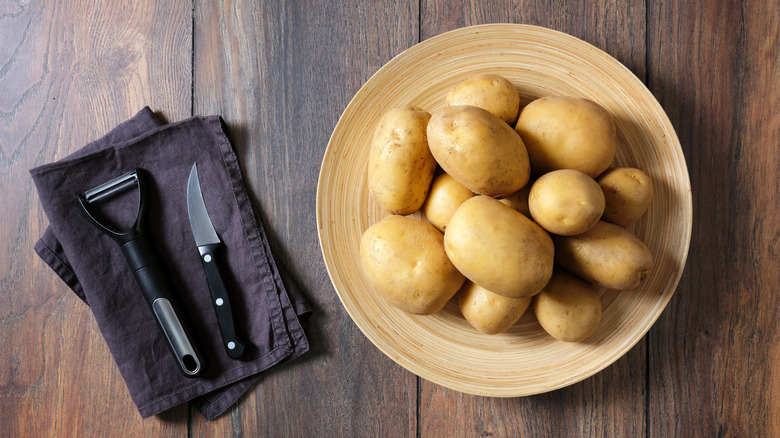
In potato dishes like wedges, baked spuds, or crispy-edged smashed potatoes, the crunchy skin is one of the best parts. These recipes also save you the work of peeling, making them seem effortless. But you have to be more careful than you think when working with skin-on spuds. According to Marc Jonna, co-founder and president of Plum Market, you should check that potatoes are certified organic before you buy and eat them unpeeled.
Jonna explained that heavy pesticide use makes potatoes one of the foods you should always buy organic. "The peel is where residues concentrate," he said. "Conventional potatoes see heavy pesticide use in the field, and the skin holds onto it. If you're eating the peel, organic takes that question off the table entirely," he said. Jonna's advice is more crucial than ever in 2026. This year, potatoes landed on the Environmental Working Group's "Dirty Dozen" list, which reveals the top 12 fruits and veggies with the heaviest pesticide residue.
In the U.S., most conventional potatoes contain high levels of chlorpropham, a pesticide that helps prevent sprouting. This substance is controversial for its toxicity to animals and potential to disrupt hormones in humans. The fungicide chlorothalonil is also commonly used on potatoes and has come under fire as a possible carcinogen. Both of these pesticides are approved for use and not considered an unreasonable threat by the Environmental Protection Agency, but it still recommends buying organic potatoes.
How to prepare organic potatoes before eating them with the skin on
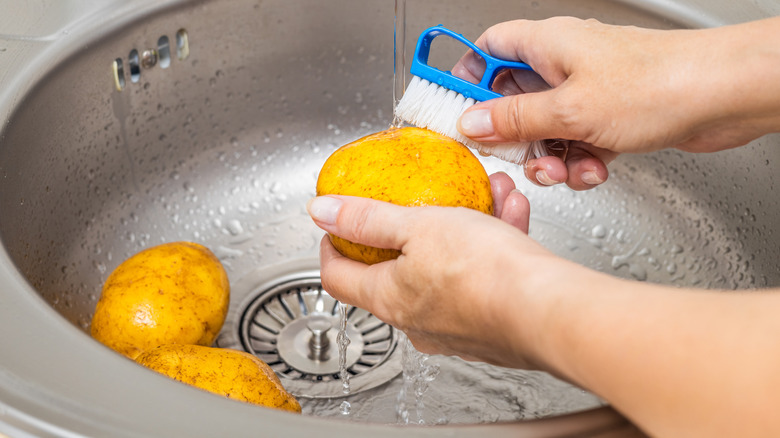
To further minimize pesticide exposure, Marc Jonna shared essential tips for preparing skin-on, organic spuds. While they're grown without pesticides, some organic potatoes may still carry low amounts of chemicals like chlorpropham due to cross-contamination with conventional potatoes during processing or storage. That's why you should still wash them thoroughly if you plan to leave them unpeeled, as Jonna recommended. "Scrub them hard under cold running water with a stiff brush, cut out any eyes, sprouts, or green spots, and cook them through. And wash the brush and your hands too, the peel touches everything before it hits the pan," he explained.
Without anti-sprouting agents like chlorpropham, organic potatoes grow eyes more easily. It's okay to eat potatoes after they've sprouted, as long as the eyes are small, you remove them, and there are no other signs of spoilage. You can also safely eat green potatoes in moderation — those green areas are made up of excess chlorophyll. While they indicate the potatoes are getting old and may have begun producing solanine, which can be toxic in large amounts, green spuds generally won't harm you so long as you don't binge on them. It's still best to cut green spots, and it's even better to inspect potatoes at the store and avoid ones that are already sprouting or turning green. When you buy fresh, organic spuds, you can enjoy your loaded potato skins and other skin-on recipes without worry.