

Forget Traditional Beef Stew: The French-Style Alternative That Is Just As Hearty And Warm
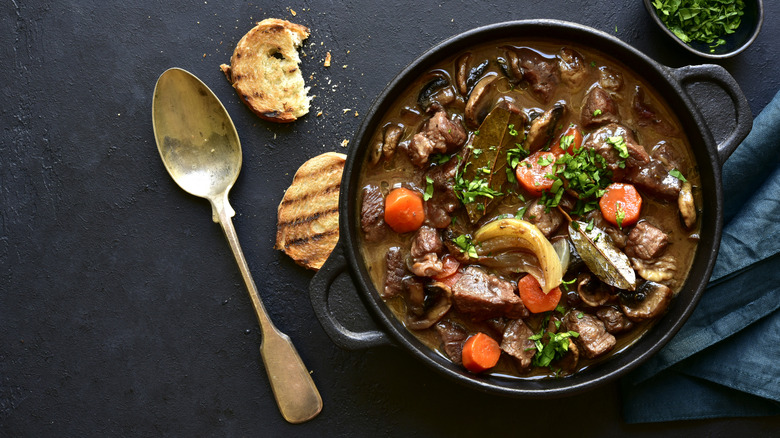
You may think the traditional beef stew is as good as it's going to get. And yet, one French dish begs to differ. Hailing from Provence, daube de bœuf inherits the region's culinary proclivity for both freshness and rustic depth. In your kitchen and on your dining table, that's exactly what it brings, and it might just be good enough to make you forget all about regular beef stew.
It may not be as popular as bœuf bourguignon or steak-frites, but make no mistake: Daube de bœuf is still one of the top French beef dishes you should know about. This classic stew's history dates back to the 14th century in the south of France, where it was originally cooked for hours (or even days) over an open fire. In fact, daube de bœuf got its name from the very utensil it's cooked in — a terracotta clay pot called the daubière.
Of course, nowadays, an indoor braise or oven-bake will work just fine. Starting with beef (hence the "bœuf," which is French for beef), marinated overnight in red wine, aromatics, and, of course, herbs de Provence. Accompanying it are other Provencal cooking staples, most notably olives and artichokes, along with common stew vegetables like carrots, onions, fennel, and tomatoes. Aromatics give the dish its enticing, fragrant edge, often coming from garlic cloves, peppercorns, bouquet garni, and dried orange peels — another daube de bœuf signature. Everything is simmered for at least three hours in the wine-based concoction until the dish develops a delectable piquant depth. However, if you really want that classic daube de bœuf heartiness, consider making the dish days ahead.
A stew where every ingredient matters
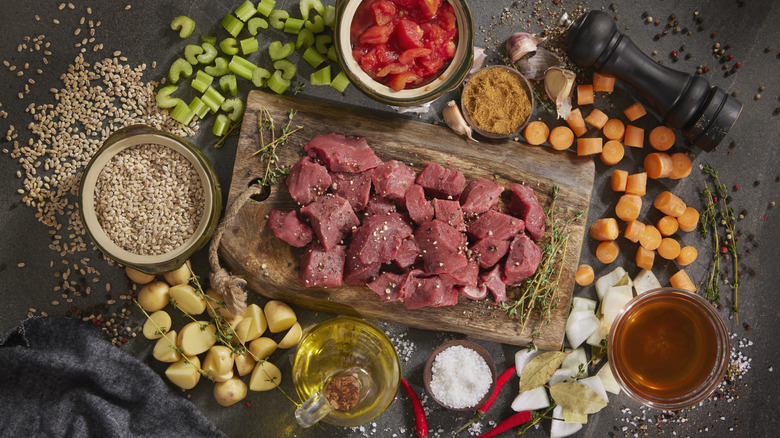
Traditionally, daube de bœuf uses cheap beef cuts that verge on the tough and chewy side, such as boneless chuck, beef shank, or shin beef. Over hours or days of braising, they will tenderize beautifully, with gelatinous drippings that further enrich both the texture and taste. Moreover, you don't need to strictly stick to beef, and can use lamb, mutton, ox, veal, or even shellfish. Some recipes, such as the New Orleans rendition, also feature bacon, which gives the stew an extra touch of smokiness.
No less important is the wine. The absolute best red wine to use in your beef stew doesn't always have to be the most expensive. Opt for complex, bold, and full-bodied varieties, such as Cabernet Sauvignon, Cahors, or Syrah, maybe even Madiran if you can get your hands on it. Alternatively, white wine is an option should you want a more subtle, sweet-leaning taste. Although not compulsory, you can also add a bit of beef stock to build into the beef's hearty richness, or perhaps add anchovy and capers to introduce a briny undertone.
Once all is braised and done, don't forget to give your daube de bœuf some company. Needless to say, a red wine pairing is a must. Matching the dish's rich complexity, something with a bold, spiced aroma and tannic undertone should be perfect. Think Côtes du Rhône or Châteauneuf-du-Pape. As for a side dish, pasta is always a wonderful companion, especially macaronade — a French-Italian pasta layered with beef stew sauce, or macaroni au gratin, in which macaroni is layered with three cheese varieties.