

Forget Pyrex Or CorningWare: Look For This Vintage, High-Quality Glassware Brand In The Thrift Store
We may receive a commission on purchases made from links.
There was a time when people were surprised to find that the dishes or kitchen items passed down from their parents or grandparents could actually be worth something, but thanks to social media, flipping thrift store finds has become something of a lucrative hobby for many. In recent years Pyrex and CorningWare pieces have famously been bought for next to nothing and sold for hundreds of dollars, but lesser-known brands could present more of an untapped market. One such vintage kitchenware brand to look out for at the thrift store is Libbey.
Although Libbey glassware never reached the same popularity as other homeware brands, there's no denying its success. Originally known as the New England Glass Company, it launched production in 1818 and continues to make glassware, dinnerware, and bakeware to this day. Of course, it's the vintage items that are more sought after, but age alone is not an indicator of value. With such a long history, the company has produced countless designs, but as mass-produced items, many of them are only worth a few dollars each. The pieces to keep an eye out fall into two main categories: early cut glass items (which had initially brought the company its fame) that are etched with the brand's name and mid-century decorated glassware — particularly if it forms part of a set. Rare items in good condition can fetch hundreds or even thousands of dollars.
Collecting Libbey glassware
Heavy cut glass kitchenware has now fallen out of use, but in the late 1800s through to the early 1900s, it was the height of fashion. At this time, Libbey was the biggest cut glass producer in the world and earned a gold medal for cut glass excellence at the Chicago World Fair in 1893. Libbey items from this era, known as the Brilliant Period, are the most valuable, with single bowls selling for as much as $800 at auction. It's worth noting that the brilliance of these early cut glass pieces is due to the use of lead in the crystal, which makes them unsuitable for daily use.
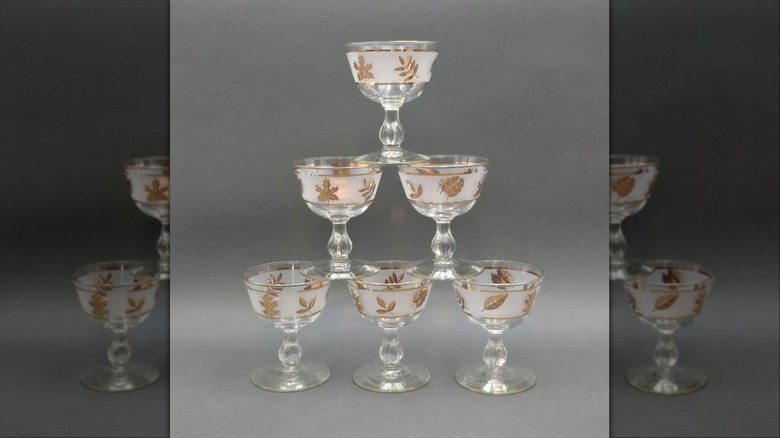
In the 1940s, Libbey began to find success with sets of decorated glassware. The glasses themselves were simple shapes but featured intricate or colorful designs of animals, plants, cartoon characters, or holiday themes. The value of these glasses now depends on the rarity of the design, but also the condition. The Silver Foliage and Gold Foliage patterns are some of the most popular, but the gold and silver leaf has tendency to rub off with age, ultimately bringing down the price.
Complete sets of glasses or barware will always be more valuable, but if you find a lone vintage cocktail glass at a thrift store it might be worth taking a second look. For some of the rarer patterns there will be a market for individual items, as collectors look for the missing pieces to their sets.