

When Should You Choose Custom Countertops Over Pre-Cut Options?
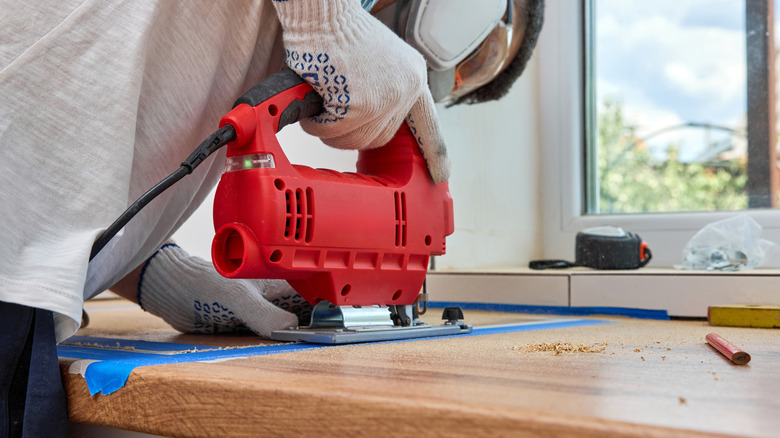
Not to jump to conclusions, but if you're reading this article, there's a strong chance you like food and care about where you make it. The kitchen countertop is your primary interface with one of your home's most important rooms, and should not be taken for granted. For homeowners tossing up whether to save some cash with fewer, pre-fab choices or spend more time and money on personalization, this choice can be difficult. To help us better understand when to step over the line and install a custom countertop, we've gathered some expert insights from Kerrie Kelly, CEO and creative director of design and lifestyle powerhouse Kerrie Kelly Studio.
"Custom countertops provide a precise fit, greater control over slab and veining selection, and the ability to respond thoughtfully to the architecture of a space," explains Kelly. The desire to design a unique space can be the first reason to opt for a custom counter, but it's also a good choice if you want to exercise more authority and install with intention — that means putting your sink and cooktop right where you want them. Conversely, if you want to elevate an uninspiring kitchen, a custom approach might also be the go. Kelly describes that both backsplash integration and waterfall applications become modifiable options when you go custom. Even the "veining, seams, edges, and transitions are considered as part of the overall composition" that, when designed with intention, makes a space one-of-a-kind.
It's not just a spend, it's an investment
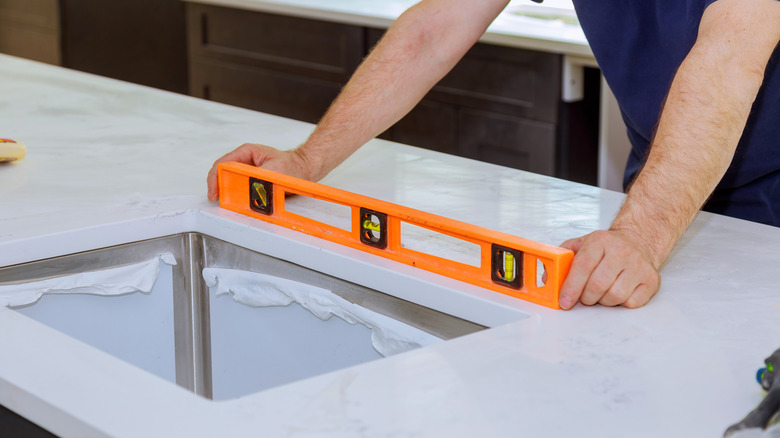
Another excuse — ahem — reason to splash out on a custom countertop is when you want to invest in your kitchen, rather than simply fix or improve it. The cost of installing customer countertops adds value to your property, because it's not just the slab you're paying for. "The investment encompasses more than the material itself — it includes precise measurement, fabrication, detailing, and installation tailored specifically to the space," explains Kelly. This means that the time, energy, and money you put into going the custom route becomes a tangible investment in your house.
To get the most out of the material investment, Kelly also offers some advice. "Whenever possible, view the full slab rather than relying solely on a small sample, particularly with materials that have significant movement or veining," she shares. Kelly also urges those opting for a custom countertop to communicate upfront, before any cutting happens. "Discuss seams, edges, and cutouts with the fabricator before fabrication, and always select a surface based on how you actually live." High-performance surfaces like Silestone or Dekton are two durable, low-maintenance types of kitchen countertop materials that Kelly gravitates towards frequently.
Perhaps a sufficient reason to opt for a custom countertop is simply because you want to, because it will bring you joy and a sense of ownership over a space that matters to you. If you simply can't afford to install a custom countertop, you can also update your kitchen around what you've got.