

The Unique 19th-Century Cast Iron Pan To Look Out For At The Thrift Store (It Doubles As Beautiful Decor)
We may receive a commission on purchases made from links.
Thrifting for kitchen decor and staples is more popular than ever, and we can't say we're surprised. It's not only usually a cheaper way to outfit your kitchen, but it's also a sustainable way to reuse items. Best of all, it's like a treasure hunt that ends with your kitchen being so eclectic and artful. One of the more valuable vintage kitchen items to look out for now is the cast iron gem pan. Depending on the condition of one you might come across, you may be able to both use and display this unique and statement-making find, as it's a kitchen tool that doubles as decor.
These hardy cast iron pans look like muffin tins, with individual sections for little baked treats called gems. Gems seem to have come about in the 1800s. It's unclear where the name came from — possibly a genericization of an early brand that made these ("Gem pans") or just a nod to the baked goods' small, gem-like shape and size. We do know gems were specific types of muffins made with these cast iron pans, from whole wheat flour with fruit sometimes added. The producer Nathaniel Waterman is credited with making the first real cast iron gem pan in 1859, with innovative cutouts to leave enough cast iron connecting the wells for necessary heat conduction, but also some room for air circulation to promote even heating. You can still find a Waterman pan today, if you're lucky. They're typically marked "Waterman / Boston," with the 1859 date.
Different gem pan designs and how to use them
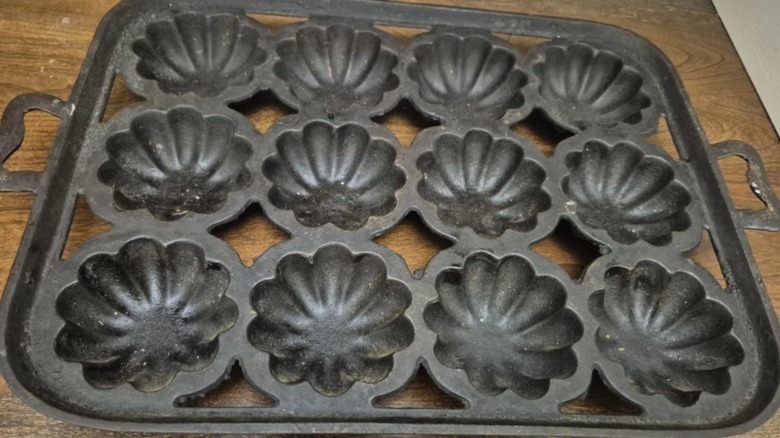
If you're on the hunt for potentially high-value vintage kitchen tools, there are several other gem pan designs and producers. One particular type is also called a turk's head pan, in which the wells are fluted. They may or may not have cutouts, and were made by brands like Griswold, Lode, and Wagner. In addition to Waterman, those are some of the top producers to look for when seeking out gem pans. You may well see shapes like circles, rectangles, and especially elongated ovals, with or without cutouts. Depending on maker, age, condition, and rarity — some designs are rarer than others — you'll see gem pans from under $50 to $375.
One of the major selling points of cast iron is its durability, but take some precautions before using an antique or vintage gem pan. It may be worth conducting a lead test, since lead was more common in kitchenware before 1980. Check for chips, cracks, and rust. You can remove rust from a cast iron pan, but heavy layers are a red flag. Whether you can use these pans or not, they make for gorgeous farmhouse-chic decor. Prop them up on your counter as part of a vignette with wooden bread boards and a vase of flowers, or mount them on your wall; display a collection of them together if you find more than one, or mix and match them with antique dishes.