

The Sticky Bread-Baking Rule Pro Bakers Know That Home Cooks Often Miss
We may receive a commission on purchases made from links.
Have you ever fumbled a loaf of bread despite closely following the recipe then wondered aloud, "How do the professionals do this?!" Well, we reached out to a pro to help you on the baking journey. Heather Thomas is the bread baking expert behind That Bread Lady and the author of "The Baker's Bucket List" cookbook, set for release in November 2026, and she said the biggest mistake that new bread bakers make is "assuming that sticky dough automatically needs more flour."
Even when working with the best bread recipes, the right flour-to-water ratio is crucial for a tasty loaf with good texture. "It can be tempting to add more flour when bread dough feels sticky, but adding too much changes the balance of flour and water in the recipe," Thomas warned. That extra flour can have disastrous consequences for the bread's final crumb. "The dough can become too stiff, which can lead to bread that's dry, dense, and heavy instead of soft and airy," shared the expert.
Working with sticky dough can admittedly be frustrating, but Thomas has an easy hack that can help with that. "Try lightly wetting your hands with water instead of adding more flour. This helps prevent the dough from sticking without changing the flour-to-water balance in the recipe," she advised.
If your dough is too sticky, give it time instead of flour
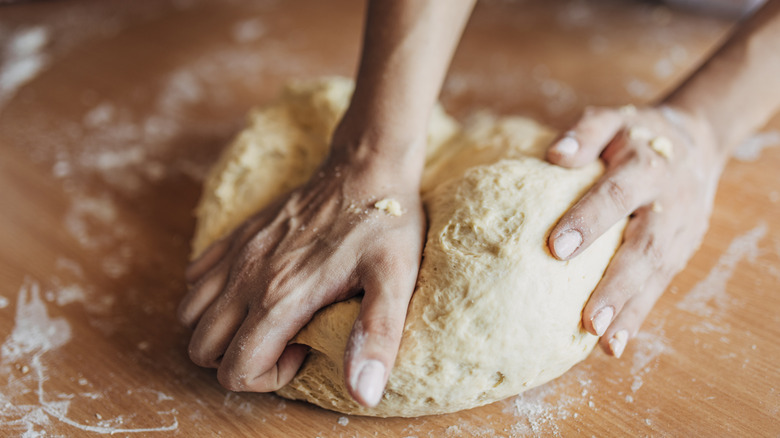
It's easy to feel like you've done something wrong when you encounter sticky dough, but the gooey texture is really just a natural part of the process. "Many bread doughs feel somewhat sticky, especially at the beginning of kneading," Thomas explained. "As you continue to knead, gluten develops and the dough will become smoother, stronger, and easier to handle." Being impatient is definitely among the most common bread baking mistakes, and Thomas highlights the importance of timing. "Instead of immediately reaching for more flour, give the dough time to knead and develop," she said.
Despite knowing this, beginner bakers could be prone to over-kneading their bread dough, so it's also important to develop a feeling for when to stop. "As you knead, the dough should gradually become smoother, more elastic, and less sticky," Thomas said. That's the first indication that the gluten is developing and you're making progress.
However, simply not being sticky doesn't mean the dough is finished yet; it also needs the right amount of elasticity. "You'll know it's sufficiently kneaded when you can stretch a small piece several inches apart without it easily tearing. You may even see light coming through it; this is called the windowpane test, and it's a simple way to check that the dough has developed enough gluten strength," the expert explained.