

12 American Whiskeys To Try If You Like Smoky Scotch

If you love smoky Scotch, you're most likely enjoying a spirit where the malted barley was dried over a peat fire. This adds heavy smoke, but it can also contribute to other flavors, such as brine and iodine, along with the flavor of peat itself. American whiskey is often missing these flavors. The problem is that, relative to land area, Scotland is a lot more peat-rich than America, especially in the Lower 48. But hope isn't lost. There are plenty of American whiskeys that find a way to either incorporate peat, add smoky flavor in another way, or naturally have earthier flavor.
This means that if you love smoky Scotch, but want to expand your whiskey-tasting horizons, there are still plenty of great options out there. This is where I can help. I'm a huge fan of peated Scotch, but over the years I've come to enjoy many American whiskeys that introduce smoke in their own way. With my vast whiskey experience, I've picked 12 that I feel are worthy of seeking out if you love your whiskey with an earthier edge, rather than relying on sweetness alone.
1. Bulleit Mesquite Smoked Malt
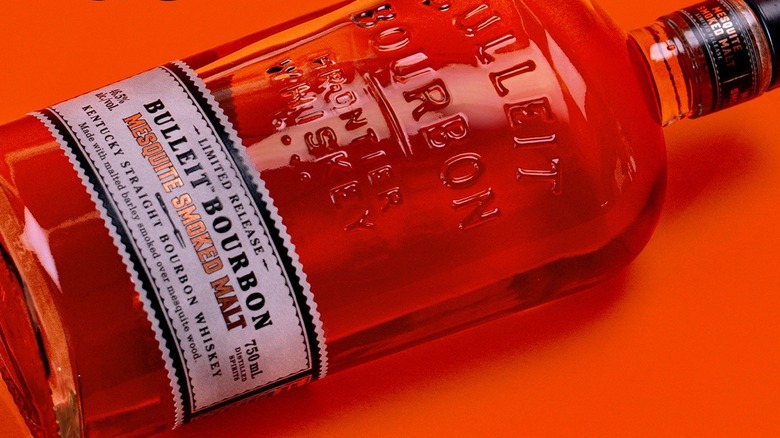
To make whiskey, barley needs to be soaked to start germination. This starts the process of it producing enzymes that are required for fermentation. Once those enzymes are created, the growing process of the grain needs to be stopped, which is done by drying it out. In unsmoked whiskey, this is done in a kiln, and simple hot air can be used. For peated whiskey, it is done over a peat fire. For this Bulleit expression, a different method is used whereby the barley is dried over a mesquite wood fire. Mesquite is often seen as a brilliant fuel for BBQs, due to the rich, smoky flavor it can impart on meats.
Here it has a similar effect on the whiskey to give it an interesting range of flavors. You get that dry mesquite smoke on the nose along with its toasted wood and a hint of spice. It's a similar story on the palate, as you'll get to enjoy those earthy flavors, with the mesquite bringing forward its unique barbecue-like character. That said, you still have a lovely rich malt taste, along with more classical sweetness, such as caramel. The smoke isn't intense here, and it works well to create a distinctive and unusual whiskey that will likely appeal to drinkers of peated Scotch.
2. High West Distillery Campfire Whiskey
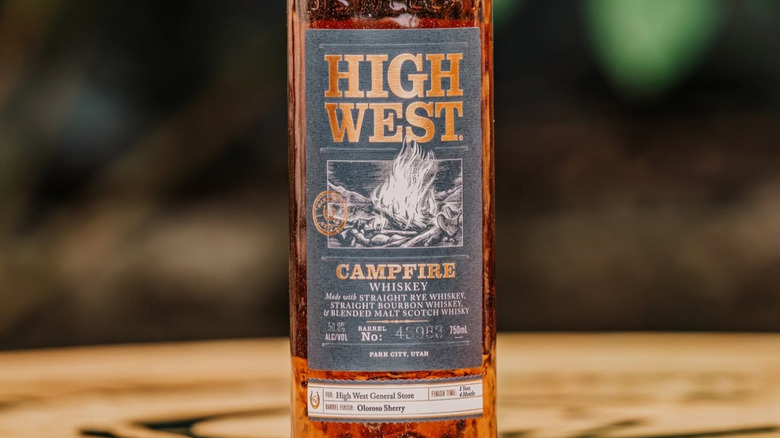
High West takes a different approach to creating its smoky whiskey, as this is a blend of three variations of the spirit. The first of those two are straight rye and straight bourbon, with the bourbon being partly sourced from the High West distillery. The other variation is a blended peated Scotch that helps to introduce smoke into the tasting experience. It's a fascinating combination, but one that works nicely together to create an intriguing range of flavors. The smoke isn't as dominant as you'd expect from a pure peated whiskey. Instead, it lays a nice foundation from which the sweeter notes can shine.
As the name suggests, it presents as more of a campfire smoke on the nose, and you'll also get to enjoy aromas of toasted oak and dried fruit. Often with peated Scotch, you'll get hit by a wave of smoke before other flavors make an appearance. Here, the opposite happens as you're initially greeted by sweet caramel and vanilla. The smoke then follows, along with some baking spices and dark chocolate. The finish is long and warm, with the rye influence being most notable here, as pepper nicely lingers. Campfire isn't quite Scotch, and not quite bourbon. This middle ground creates a captivating bridge between the two styles, while still being easy to drink.
3. Russell's Reserve 10-year
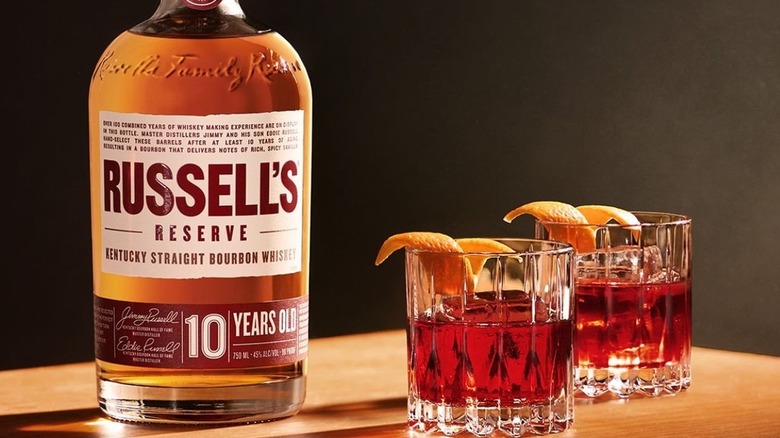
Here I present a slightly different proposition, as this isn't a whiskey that is smoked at all. Despite this, I feel it still has a flavor profile that would be of interest to drinkers of smoky Scotch. With its decade in the barrel, the whiskey has earthy and oaky notes that will appeal to anyone looking for depth and character. As a Kentucky bourbon, its flavor profile is still mostly built around the vanilla and caramel you expect, along with oak and baking spice. Yet, those noses are deeper than with most bourbon, and are joined by some more unique notes.
The oak is quite prominent, and you'll also enjoy some char, leather, and tobacco. Those are the notes that will most likely entice you if you're used to drinking peated Scotch. Even without the unmistakable character of peat, it shows how earthy depth can also come from barrel aging, rather than relying on how the malted barley was dried. You get all these qualities at an affordable price, as Russell's Reserve 10-year is one of the best bottles of whiskey you can find for under $60. If you want to leave the smoke to the Scots, but are intrigued by the deeper side of bourbon, this bottle is a great place to start.
4. Westland Solum
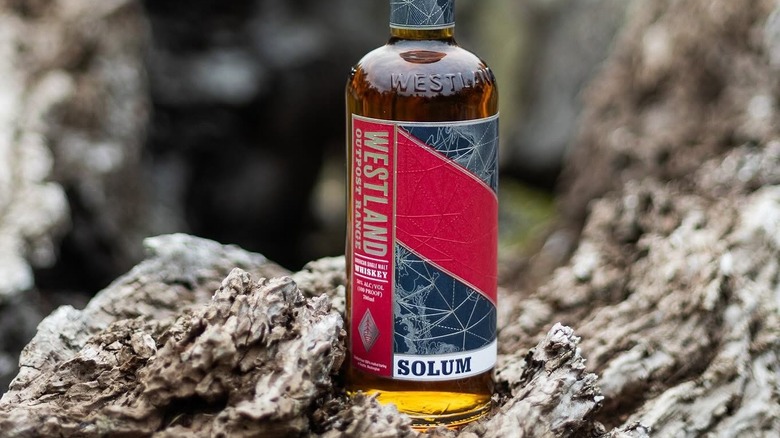
Here I go on the other side of the spectrum as Westland Solum is probably the closest match on the list to traditional peated Scotch. Yet, this is a distinctly American interpretation, as the peat itself comes from the Olympic Peninsula in Washington State. What's fascinating here is that it's a perfect example of how not all peat is the same. Peat may be decayed plant matter, but the organic materials inside will be unique depending on the region. The result here is a whiskey that has a large influence of smoke, but with a different flavor profile than you may be used to.
Whereas smoky whiskeys from Scotland can bring briny and medicinal qualities, the peat Westland uses has more of a herbal and menthol quality. If you love whiskey, you most likely love exploring how different production processes affect the outcome. With this whiskey being born out of genuine curiosity and craftmanship, it's well worthy of such exploration. Three versions of the Solum have been made now, all offering something a little different. What you can expect is caramel sweetness, along with gentle spice, bright fruity notes, and a nice thread of oak. What makes this whiskey so appealing is that it's not an attempt to imitate Islay. Instead, it will satisfy the curiosity of anyone wondering what American peat tastes like.
5. Balcones Brimstone
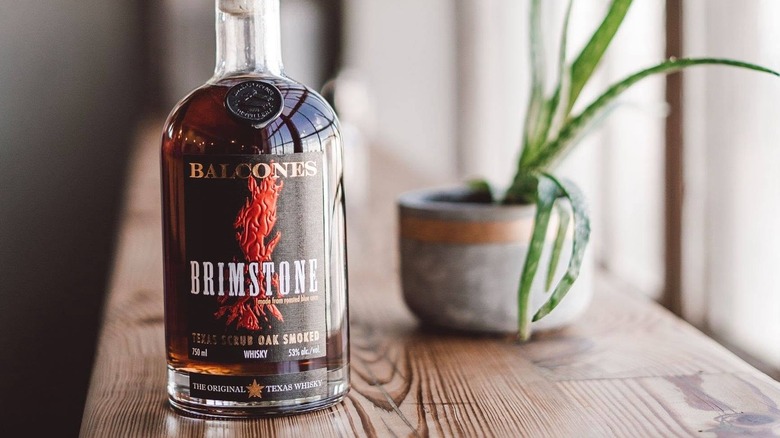
Balcones goes about adding smoke in a completely different way to its Brimstone bottle, even though the exact method is kept secret. What we do know is that the smoke is added to the distillate, rather than before distillation, and that it's smoked using sun-baked Texas scrub oak rather than peat. It can be a quite polarizing whiskey due to the heavy ash flavor the process brings. Yet, if you're the type who enjoys smoky Scotch, this is unlikely to put you off. What's intriguing about this whiskey is that it's made from a 100% corn, therefore it contrasts this smoke with a high level of sweetness.
The result is an interesting balance of flavors that are on the extreme ends of the tasting spectrum, but seem to work well together. The smoke you get is similar to mesquite-based expressions, as you get those charred wood and pepper notes. The palate brings plenty of sweet corn, but there is also some caramel there. As with most of these American whiskeys, the smoke is dry and savory, rather than salty and medicinal. While a few of the bottles on this list have a subtle smoke, there is nothing subtle about Balcones Brimstone. When you add the 106 proof into the equation, it equals an intense whiskey and one that's worthy of your consideration, alongside other impressively bold bottles from Texas.
6. Elijah Craig Barrel Proof
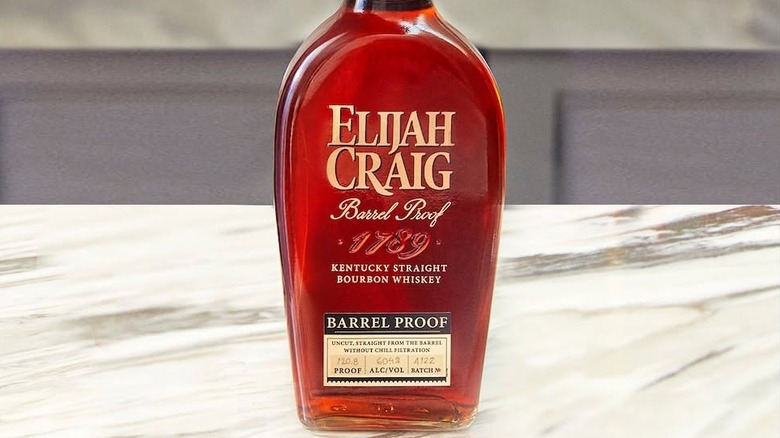
Here we have another example of whiskey, which is not smoked in the traditional sense, but still delivers plenty of flavors that a peated Scotch drinker would most likely appreciate. Those flavors come from a rich, charred oak character that develops during its time in the barrel. It's also helped by it being barrel proof, meaning its bottled straight from cask with the sky-high alcohol percentage. Each batch will vary slightly, but what you'll always get is a high level of intensity that will appeal to anyone who likes robust whiskey.
If you're a fan of the best peated Scotch whiskey, you'll enjoy the deeper oak and baking spices here, along with other warm notes, such as dark chocolate and roasted nuts. This is balanced by rich and deep vanilla and caramel flavors that are delivered on a full-bodied mouthfeel. The barrel char does contribute a subtle smokiness, but it sits nicely in the background, rather than having any prominence. It won't satisfy someone specifically looking for peat smoke, but if you enjoy the charred, roasted, and oak-driven flavors that often accompany smoky Scotch, Elijah Craig Barrel Proof offers a compelling American alternative.
7. Corsair Triple Smoke
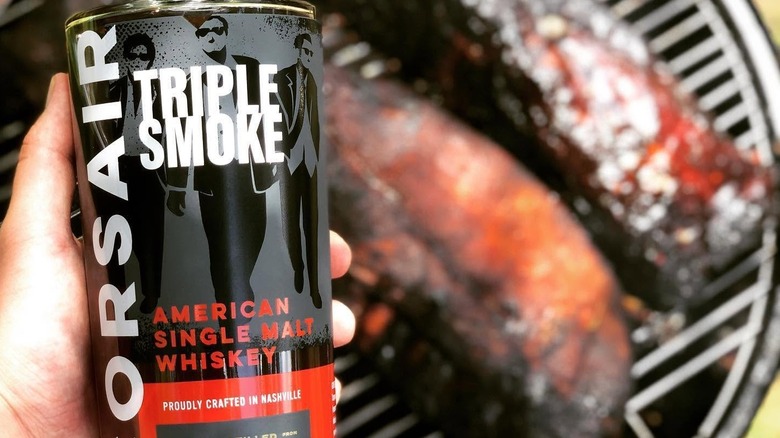
You're probably already intrigued by the name of this "triple smoke" whiskey. It's certainly an interesting process, as it uses two malts smoked in cherrywood and beachwood respectively, with the third smoke-influence coming from peated Scotch. It means that it has some of that peat flavor you may be accustomed to, while also bringing in different influences. The Scottish aspect of the whiskey isn't instantly noticeable on the nose, as you'll enjoy more of an aroma of campfire smoke and charred wood. With subtle notes of dark chocolate and toasted grain, it does hint at the layers of depth that are to follow.
You'll instantly taste its charred malt, and the influence of peat appears with a slight briny quality and the richer smoke you may be more accustomed to. The cherrywood brings sweet, fruity smoke, while beechwood adds a more traditional wood-fired character. The result sits somewhere between an American single malt and an Islay-inspired dram. Caramel, dark fruit, and chocolate help to keep things interesting beyond the smoke influence. What I love about this whiskey is how you can pick out the individual influence of the three parts as you're tasting it. It perhaps lacks the elite balance to a classic Islay single malt, but if you want genuine peat character, it's one of the clearest choices in this list.
8. Del Bac Dorado
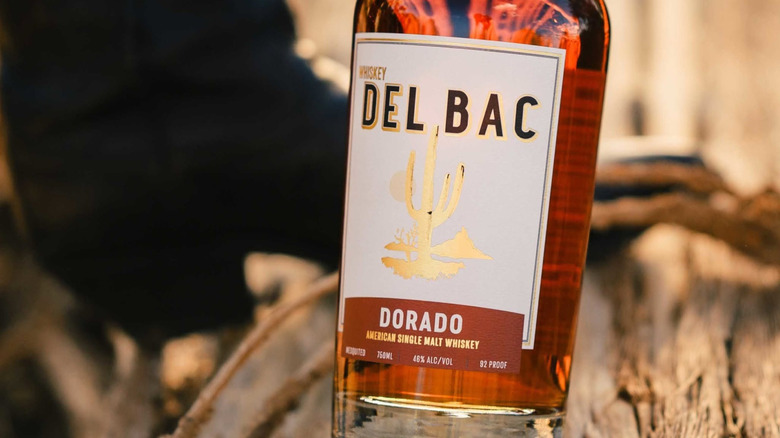
This list is an interesting mix of whiskeys that incorporate different influences like the Corsair bottle above, and others that feel like a much more traditional product. Del Bac Dorado is firmly in the latter category, as this is a classic American single malt. It's made from 100% barley, with that barley being dried over a mesquite fire. Not sourced or blended, this is a fantastic choice if you're looking for a smoky American whiskey that is proudly crafted on-site and doesn't try to compete with any other type of whiskey.
Made in Tucson, Arizona, its process does mean you won't get those qualities of peat. Instead, it leans towards dry wood smoke, barbecue, and campfire embers. There is a deliciously sweet caramel to go with this, along with other influences such as dark fruit, tobacco, and pepper. Personally, I love it when whiskey has its own unique personality and charms. There is genuine smoke here, but it has a distinctly American personality, with the mesquite bringing a warmer, more roasted quality to the malt. It is quite young and raw, but it's worth exploring for those who want to explore how changing the source of the smoke can influence the single malt whiskey you're used to.
9. Woodford Reserve Double Oaked
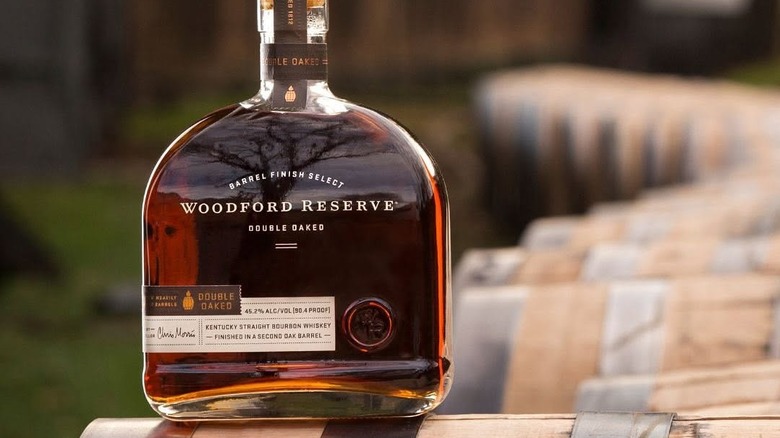
Woodford Reserve Double Oaked isn't a smoky whiskey in the same way as others here, but you can see a hint from the name as to why I've included it. It earns a place here for its pronounced toasted and charred oak character that comes from its double barrel maturation. This process helps to give it a richer, darker profile than the most bourbon, including the standard Woodford Reserve. There is a subtle thread of smoke, but it mostly shines in how it elegantly presents its flavor. Firstly, you'll enjoy the deep caramel and vanilla sweetness before you get to its earthier notes.
They mainly come in the form of toasted oak and baking spices, with more unique flavors of dark chocolate, dried fruit, and brown sugar helping to give it additional depth. This won't appeal to anyone solely looking for pure smoky power, but the toasted wood, char, and roasted sweetness give it a level of complexity that smoky Scotch drinkers will appreciate. It's a good example of how American whiskey can develop a darker character without using peat or smoked grain.
10. FEW Chicago Smokeworks
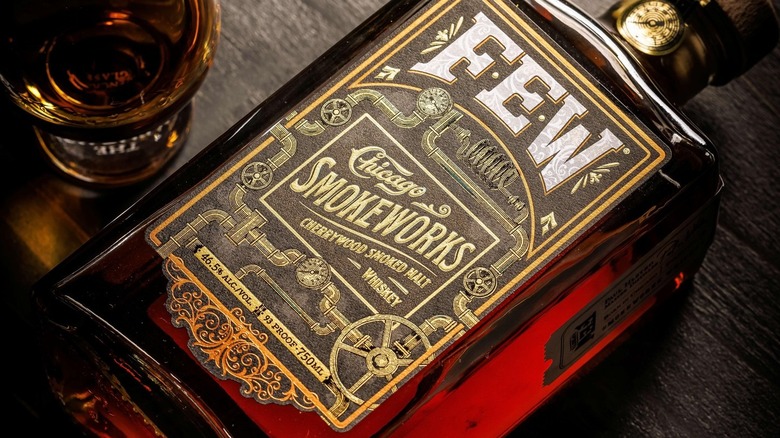
The Corsair bottle above partly uses it, but this is the only bottle in the list where the malted barley is solely dried using a cherrywood fire. This is not a single malt though. The mash bill is a mix of this barley along with rye, combining to make a smoky whiskey that also has plenty of spice. There is fruitiness on the nose, which sits in between the sweetness of vanilla and the gentle wood smoke. There is also an interesting interplay of aromas, echoed by the tasting experience.
Upon tasting, you'll instantly be greeted by its smoky and malty character. There is classical bourbon sweetness there, but that is heavily contrasted by the earthy smoke and pepper spice. As far that that smoke goes, it gives you savory barbecue and smoked-meat qualities for a distinctly American personality. The finish is long enough for you to appreciate the lingering smoke, pepper, and toasted oak. It's the type of whiskey that would warm your soul on even the coldest of days.
11. Kings County Distillery Peated Bourbon Peated Bourbon
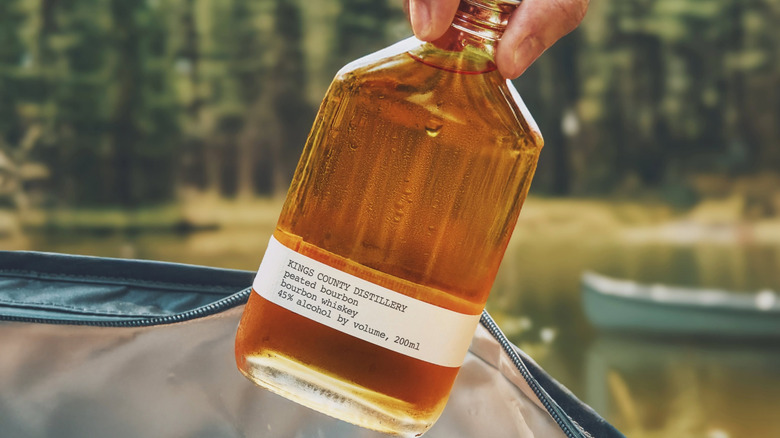
Kings County Distillery provides another unique interpretation of smoky American whiskey. The mash bill has two components, with 75% of it coming from corn. The other 25% is made from Scottish lightly peated barley. It means that you get a whiskey that is still unmistakably bourbon, but still has that Scotch influence running though it. The peat doesn't dominate the whiskey, but instead, lays a nice foundation for the other flavors to shine. Caramel, baking spice, and the sweetness of corn remain at the forefront, while the smoke develops more noticeably towards the finish.
Kings County describes the profile as having barbecue and campfire smoke. While I wouldn't disagree, that smoke is not as dry or savory as bottles made with mesquite or cherrywood. This whiskey is very much a clash of two separate worlds of high sweetness and smoke. However, these two extremes balance each other well to create a unique whiskey. If what you were looking to find in this list was bourbon flavor with a smoky edge, Kings County Distillery Peated Bourbon ticks all the right boxes.
12. Santa Fe Original Mesquite
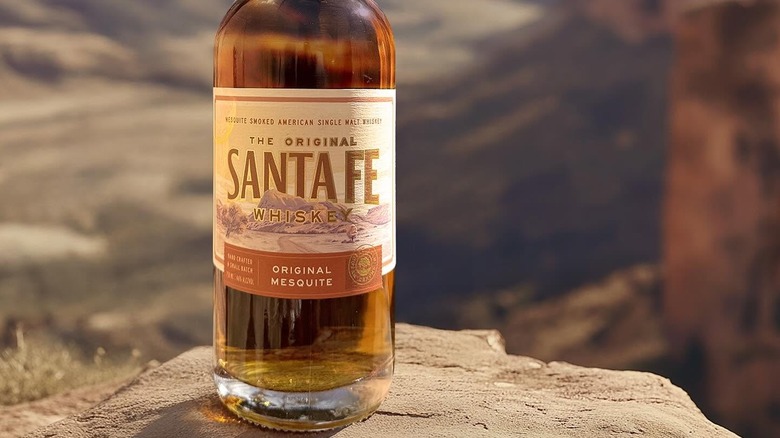
The final whiskey here is another that uses the process of drying barley over a mesquite fire. Produced in New Mexico, the whiskey is then double distilled in copper pot stills, before being matured in a combination of both new American oak and used bourbon barrels. It helps to give the whiskey a distinctive character that is well worth seeking out. You can sense the mesquite influence on the nose, but it doesn't dominate the aroma as it sits nicely alongside baked fruit and some lovely, sweeter notes, such as honey.
The smokiness you get here on the palate is much woodier than you may expect from a peated malt. There aren't any medicinal notes and you'll get to enjoy a robust char instead. This is balanced by plenty of lighter notes, such as its caramel and stone fruit. There is also some vanilla alongside warm, toasted malt. The finish isn't too long, but it's gently smoky, joined by a nice pepper spice. It's a whiskey that has its own charms and manages to be sweet and approachable, despite that smoke influence. If you love exploring different type of whiskey, the Southwestern spin that Santa Fe gives on the classic spirit is highly recommended.
13. Methodology
I'm a longtime whiskey drinker who loves the taste of peated Scotch. That means that I went through this exact journey of seeking here, wondering which American whiskey which could equally delight my tastebuds. What I found were the bottles that most appealed to me weren't always the ones with heavy smoke, but ones that could provide some earthy depth with a distinctive character. It's that experience that has led me to choose 12 bottles that I felt would most appeal to those who enjoy smoky Scotch.
I looked beyond simple smoke, and included bottles that may also introduce the likes of char, oak, tobacco, leather, and roasted flavors into the tasting profile. Nowhere does peated whiskey like Scotland. However, these 12 bottles I've enjoyed will allow you to expand your tasting experience and hopefully develop a love for a different type of spirit, as I once did.