

The Hands-Down Best Way To Degrease And Clean Granite Countertops
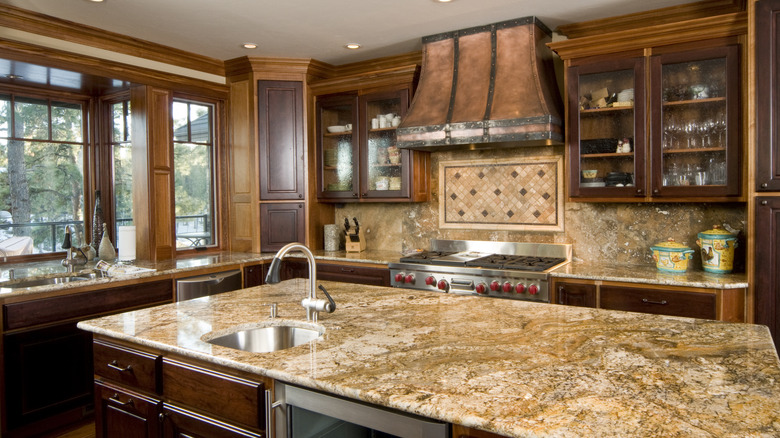
Granite countertops sail smoothly through everyday kitchen activity, shining for all the reasons you chose them in the first place: durability, practicality, and extraordinary beauty straight from Mother Nature's underworld. Cleaning them does take a bit of extra care and attention, but not in a strenuous way — more like a commitment to continuity and prevention.
First of all, cleaning granite isn't a job for ordinary kitchen cleaning agents or heavy-duty degreasers. The best approach is actually much gentler, according to investigative chemist Alexis Rochester, owner of Chemistry Cachet, who told Tasting Table the hands-down best way to degrease and clean granite. It's much simpler than you might imagine: She specifies using a granite-safe cleaner every day, with her preferred homemade version requiring only three ingredients: one cup water, one tablespoon dish soap, and one tablespoon rubbing alcohol.
"While granite is a very sturdy natural stone, you cannot use anything harsh to clean it without damaging the surface," Rochester explains. If you don't have rubbing alcohol, she says a simple mixture of dish soap and water also works. The dish soap does much of the everyday grease-cutting work, which is super helpful for kitchen counters where cooking residue is almost guaranteed to accumulate. Rochester's other key piece of advice is consistency in cleaning the granite daily. "Don't let it go too long without cleaning," she says. "Keeping up with the mess helps prevent buildup so a mild solution remains enough to leave the surface clean and shiny."
What not to use when cleaning granite
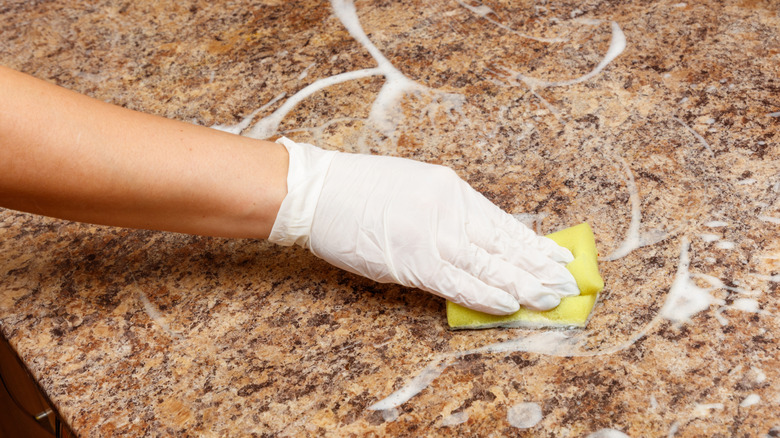
In a previous Tasting Table guide to making a homemade granite countertop cleaner, we similarly recommend gentle cleaning solutions and soft microfiber cloths instead of harsh chemicals or abrasive tools. After wiping away crumbs and debris, clean the countertop and then use a fresh cloth to remove remaining moisture.
Rochester particularly warns against reaching for vinegar just because it's a popular DIY household cleaner. "Never use vinegar or acidic cleaners on granite," she says, while also advising to avoid abrasive scrubs, which can damage the countertop's finish. Using the wrong cleaners can leave granite more vulnerable to staining and scratching, so steer clear of things like ammonia, bleach, acidic citrus cleaners, steel wool, scrub pads, and any other harsh or abrasive products that can damage granite or its protective sealant.
Quick cleanup matters as well. In fact, allowing spills to remain is the one simple cleaning mistake that can actually wear down granite countertops. That's especially true when acidic liquids are involved or if the stone's seal has been weakened. Fortunately, an effective overall maintenance plan for granite doesn't require an arsenal of expensive specialty products. Rochester's method comes down to simple mild ingredients, regular cleaning, and consistency: Degrease the surface before grime builds up, skip the aggressive cleaning agents, and let a simple granite-safe solution keep your beloved countertops in tip-top shape for many years of living and cooking.