

Raising Cane's Vs KFC: Which Chain Boasts The Best Coleslaw?
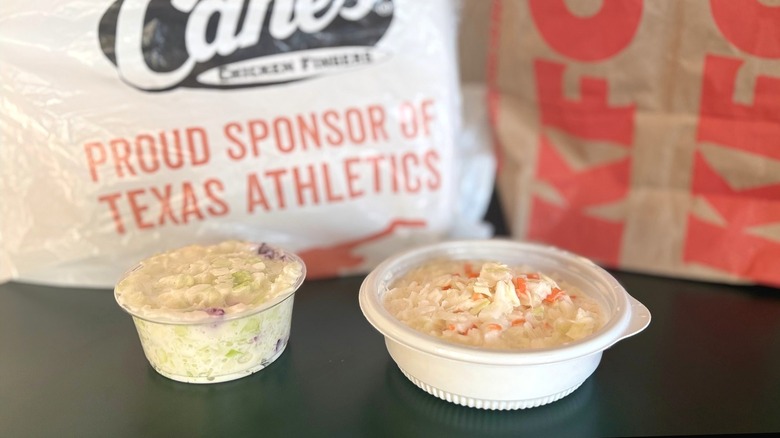
Coleslaw is one of those foods that doesn't fit just one definition, which is probably due to its enduring history. Hailing from Dutch origins in the 17th century, coleslaw's name comes from the word "kool sla," translating to cabbage salad. Since then, this unique food has become a staple in American cuisine. Fast forward to today, coleslaw in America is probably most associated with Southern food and barbecue. It's the perfect creamy, tangy side to cut the fat of rich meats and fried foods.
It's not all that common for fast food chains to serve coleslaw, but it makes sense that both Raising Cane's and KFC do. With roots in Louisiana and Kentucky, the two are well-known for fried chicken and side dishes that pair well with Southern fare — like coleslaw.
The dish can vary by each of its elements; dressing, vegetables used, how the vegetables are prepared, overall flavor profile, and more. Because of this, there is a lot of opinionated discourse regarding what kinds of coleslaw are the best — and Raising Cane's and KFC are included in the chatter.
Although fans of this one-of-a-kind side may have their preferences, it is possible to determine the best coleslaws despite the dish's array of differences. By sorting through universal criteria and the ideals of varying slaw styles, let's compare the two.
Methodology
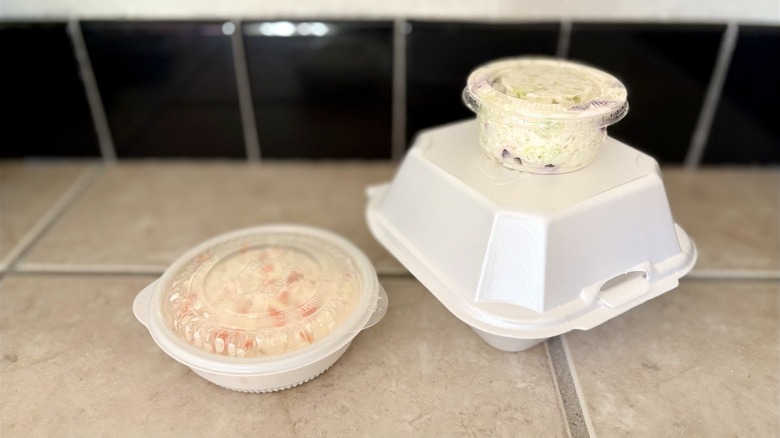
To simplify, all styles of coleslaw fit into two broad categories: vinegar-based coleslaw and mayonnaise-based coleslaw. Because Raising Cane's and KFC's coleslaws are of the same mayonnaise-based style, they inevitably share many noticeable similarities. But that just means their differences stand out even more.
Peak freshness, significant crunch, and never-soggy texture are examples of universally must-have criteria when judging coleslaws. Although the base of coleslaw is always cabbage, these recipes can also vary by what additional veggies they do or don't use. On a similar note, the preparation or chopping style of the vegetables can change between coleslaws. Between the two categories and within each, the desired flavor profile of coleslaw can vary immensely, from acidic to umami to sweet.
Here's where things get specific: Mayonnaise-based coleslaws can have their own unique issues. If the dressing is too thin, warm, or unevenly dispersed on a mayonnaise-based coleslaw, the whole dish has the potential to be an epic fail. Vinegar-based coleslaws have a little more leeway in this area.
All in all, coleslaw is a food type in which all of its elements greatly depend on and interact with each other. Because of this, my final measure in this taste test was to observe the overall execution and harmony of each coleslaw, considering how all of these standards worked together.
Raising Cane's taste test
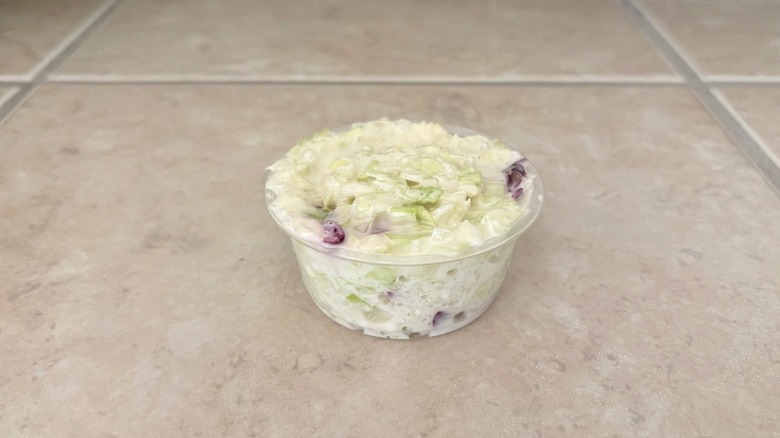
My first impression of Raising Cane's coleslaw was that I spotted finely chopped slivers of green cabbage and a tiny bit of red cabbage as the vegetable components of the slaw. I also noticed that the dressing was pretty dominant in the entire mix, and I wondered if it would overpower the veggies.
I guessed right. When I tasted this coleslaw, there was way more dressing than needed in ratio to the vegetables. It also didn't help that the vegetables were thinly cut; this preparation caused a lack of crunch and higher odds of sogginess. In my opinion, the coleslaw as a whole tasted like eating a finely minced salad mixed with mayonnaise.
Unfortunately, that's not the worst of it. Not only was the texture not ideal, but it was off-putting. I immediately noticed a palpable sliminess. I'm not sure if this was due to poor quality control of the coleslaw or how it's supposed to taste, but regardless, I was not a fan. More specifically, it didn't give off an oily mouthfeel. Instead, it was more of a fatty viscosity — more so than your typical mayonnaise.
Trying to look past the texture, I then focused my observation on the flavor profile. With most mayonnaise-based coleslaws, a slightly sweet flavor is to be expected. I was unable to detect any sweetness at all. No sweetness isn't necessarily a coleslaw dealbreaker; however, if anything at all, it was slightly sour. Raising Cane's coleslaw was disappointing.
KFC taste test
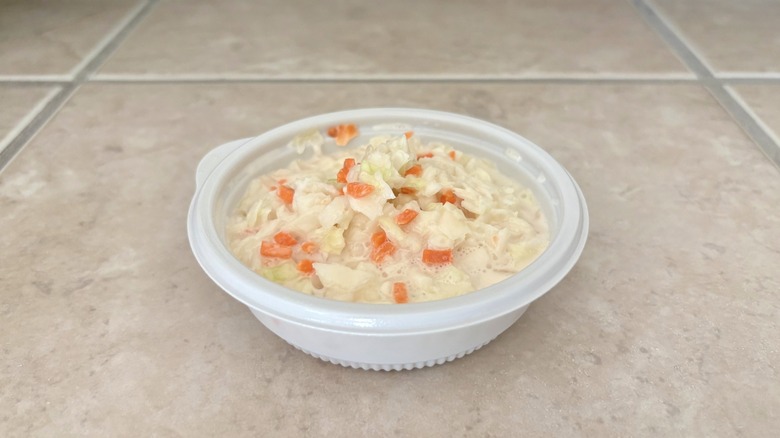
Upon first look, I noticed chopped cabbage and some carrot as the vegetable components of KFC's coleslaw. It's a little simple, but that's not necessarily a bad thing. The dressing was slightly thin, but not distractedly so, and it seemed to be spot-on in terms of amount and distribution.
By first taste, I was pleasantly surprised. To be honest, I keep my standards for fast food coleslaw at a reasonably moderate level. KFC's coleslaw was very good; I would go out of my way to order it again. It had that classic coleslaw sweetness, but not to an over-the-top extent. In fact, the fresh cabbage had a rich earthiness that perfectly cut through the sweet to create a more complex profile. The dressing melded with the veggies in a cohesive and consistent way, so there was no sporadic confusion of flavor throughout the eating experience.
In the case of KFC's coleslaw, the texture played an essential supporting role to the slaw's solid flavor profile. I was impressed by how crunchy and fresh the vegetables were in every bite. Furthermore, the texture stayed that way. I don't know what spell KFC casts on its coleslaw to prevent any trace of sogginess, but it works.
Finally, the texture of the dressing was a welcomed addition to this mix of elements. It was silky smooth, not fatty or overly mayonnaise-based, and it was just the right consistency to bind the ingredients together without being gunky or overpowering.
Overall execution
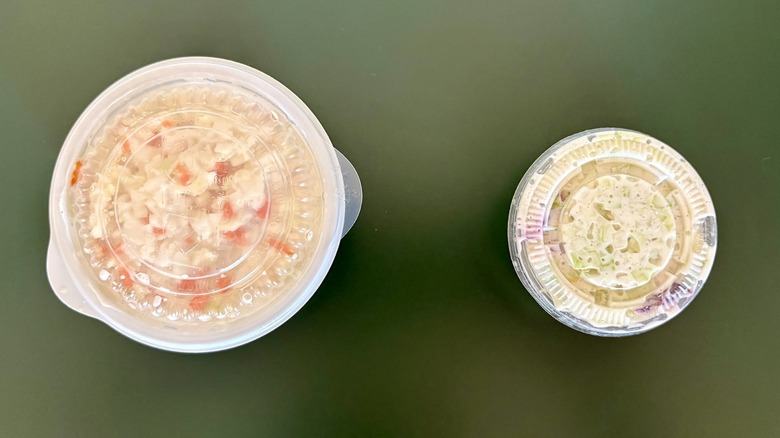
Wrapping up this taste test, there are some execution elements to address; temperature, appearance, portion size, and overall cohesion. Due to the very nature of fast food, temperature control can sometimes be a problem. Raising Cane's coleslaw was a noticeably colder texture. KFC's wasn't warm, but I did wish it was more chilled. With that said, both were in the parameters of desirable coleslaw temperature.
Both looked moderately appetizing, and neither featured a more colorful array of ingredients than the other. The difference in size of these two slaws were very noticeable; however, the prices were a reflection of that comparison.
I was dismayed by the size of the coleslaw from Raising Cane's, which came in a small to-go ramekin and looked more like a garnish than a side. Yes, it costs less than $2, but still. On the other hand, the portion size of KFC's small coleslaw was right on target — enough to be called a side, but not excessive. Sitting at just under $5, I thought the price tag was a little steep, but worth it
When it comes to cohesion, I thought KFC did a great job creating complementary flavors, textures, and proportions within the side. Raising Cane's coleslaw ended up being much less cohesive than it looked — each element was dissonant with the next. And, although the dressing itself seemed to congeal, the ingredients separated from each other.
Final verdict
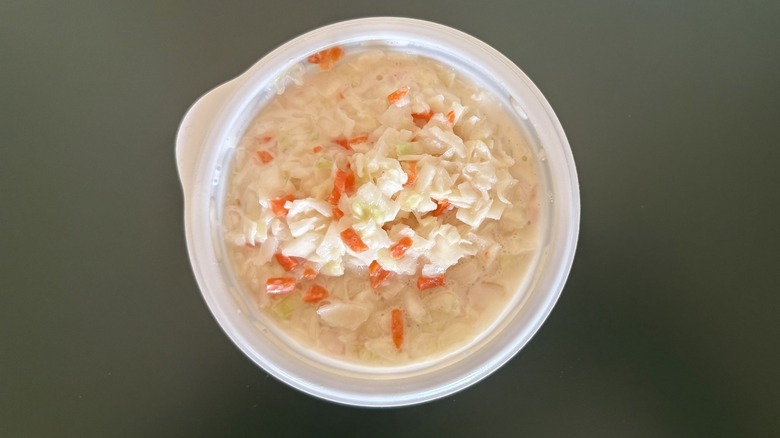
It's official: KFC's coleslaw wins over Raising Cane's by a landslide. While I could barely stomach Raising Cane's, KFC's exceeded my expectations for fast food coleslaw.
KFC's coleslaw hit every mark of texture, flavor profile, consistency, and overall execution. The flavor was not just that familiar sweet coleslaw taste — it was complex and balanced. Apple cider vinegar is one ingredient that makes KFC's coleslaw so good, but its accolades went beyond flavor. The freshness and crunchiness levels were so up there that I wondered how the chefs also mastered those categories. After this experience, I'm reminded why KFC has endured for so long. I now see it as a restaurant that has more than fried chicken.
Here's what I'll say about Raising Cane's: I'd like to add avoiding the coleslaw as one of the unwritten rules to know before visiting this chicken chain. It's a bummer that the coleslaw from Raising Cane's was so subpar, because some of the chain's menu options are really great for a fast food spot. With that said, doing away with its coleslaw or at least revamping it is one of the changes I wish Raising Cane's would make. I'd be curious to know if mine was from a bad batch, or if the slimy, mushy texture was intentional. However, I'm not curious enough to order it again.