

Booze Or Boos? Why Certain Alcohols Are Called 'Spirits'
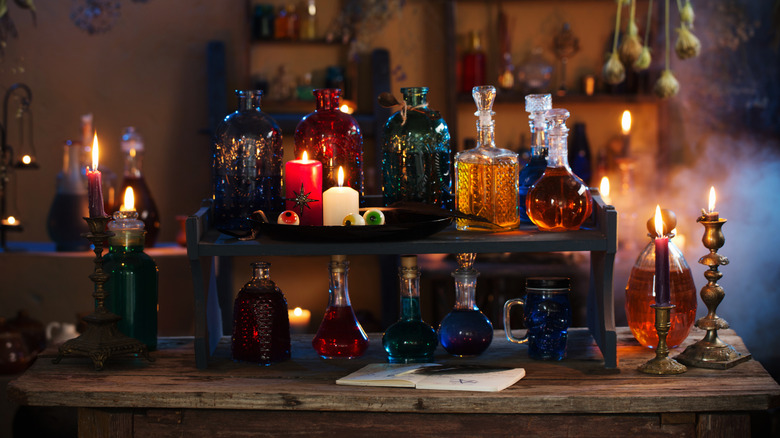
The word "spirit" can mean many things. It can be a spooky apparition appearing in the night, or it can be the camaraderie shared by a sports team. It can, of course, also be any of a variety of alcoholic beverages. One common explanation for this definition is that drinking alcohol can lead to altered behavior, almost as if the imbiber were possessed by certain spirits, but this explanation has been largely debunked. The truth of the matter points instead to Middle Eastern alchemists of the Middle Ages.
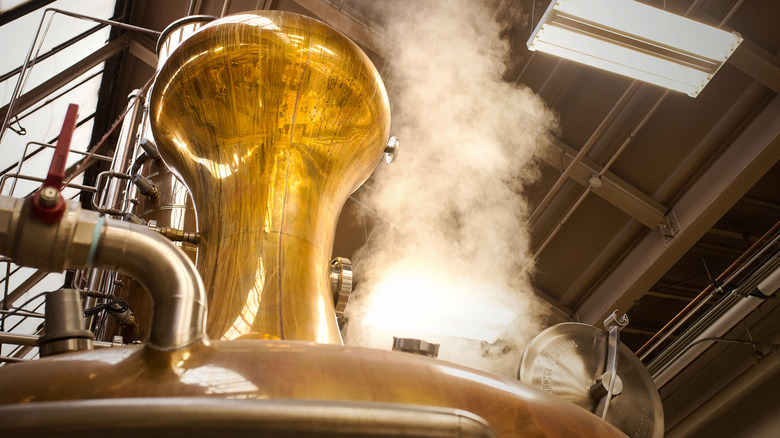
In addition to pursuing things like the famed philosopher's stone, these alchemists also used pot stills to explore different phases of matter. Distillation was seen as a way to extract intangible characteristics of a substance into a sort of water. As the liquid was boiled off and condensed, it left behind both solid matter and characteristics like color, but maintained certain others, like aroma. This was true for things like rose or orange blossom water, but it was also true for alcohols like wine — in a slightly different manner.
Understanding the difference between distilling and brewing is key to understanding the origin of spirits. Brewing alcohol involves introducing yeast to a sugary solution of grains, juices, or whatever else. The yeast eat the sugars and create alcohol. Distillation follows, the heating of that brewed liquid to evaporate and then condense the alcohol. Alcohol evaporates before other liquids, so it is boiled off and captured. The word "spirit" comes from the Latin "spiritus," meaning breathe, breeze, or soul. As the vapors rose, they carried with them the soul of the brew, while leaving behind much else.
The spirit of alcohol has many names
By the 13th century, the word "spirit" was recorded as being used to describe distilled alcohol, with the alchemist Ramon Llull often credited as the first to do so. Specifically, he referred to the "flammable spirit" of the distilled product. As this technology became more widespread, however, the distilled alcohol began to take on many different names. Sometimes called "water of wine" or "burning water" — a reference likely to its flammability rather than its tingling effects on the palate — its use as medicine eventually earned it the moniker "water of life."
In Latin, as it was penned at the time, "water of life" would be "aqua vitae." While it might not seem quite as familiar as the term "spirits" in a modern bar, this is another name that has stuck with us. The Scandinavian liquor aquavit is a modern spirit that one might see on a cocktail menu that also, when said aloud, sounds quite like that original title — but there are actually many alcohols with names derived from the same. Eau-de-vie, for example, is the French phrase used to describe clear, unaged fruit brandies. Even the word whiskey means "water of life," as the Anglicized version of the Gaelic "uisge beatha."
These days, the origins of these titles are largely forgotten. The art of distillation is now thoroughly explainable by science, robbing it of some of its wonder. But while those bottles of liquor in your home bar may no longer seem like the water of life itself, they are still spirits, each one carrying in it not just the essence of another brew but also its own bit of magic.