

Not Just Chickpeas: These Underrated Beans Are Packed With More Protein And Over 10 Grams Of Fiber Per Cup
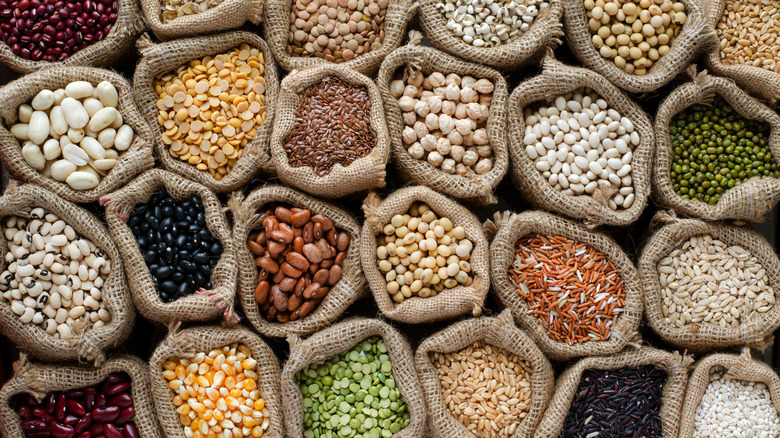
Good things do come in small packages. Case in point: A single cup of cooked soybeans packs impressive nutrient density into a pile of relatively tiny beans, with around 28.6 grams of protein, alongside 10.3 grams of fiber. Soybeans have the highest amount of protein per serving compared with other commonly eaten beans. Meanwhile, chickpeas contain 14.5 grams of protein per cup despite being larger, because different seeds (which is what beans are, botanically) divide their resources differently.
A seed is essentially a cache of provisions for the plant that might eventually emerge from it. Before a seedling can establish roots and leaves, it has to draw nutrients stored inside the seed, including carbohydrates, oils, and protein. Legumes tend to be particularly protein-rich, and soybeans take it pretty far — protein can account for roughly 40% of a soybean's dry weight. Soy also stores substantial amounts of oil, while other beans may devote a larger share of their reserves to carbohydrates.
Humans have been taking advantage of that compact nutritional package for thousands of years. Cultivated soybeans, also known as Glycine max, descend from a wild East Asian relative called Glycine soja. Generations of domestication transformed the wild plant into a larger, easier to harvest crop, while generations of creative cooks figured out an astonishing number of ways to process the beans to make them as edible and delicious as possible. The soybean is definitely nutritionally impressive in its plain cooked form, and while you could hit your macros grin-and-bear-it style with a modest handful of unseasoned, boiled soybeans, the real culinary superpower of the bean is how many wonderful foods humans have managed to make from it.
The best ways to eat soybeans
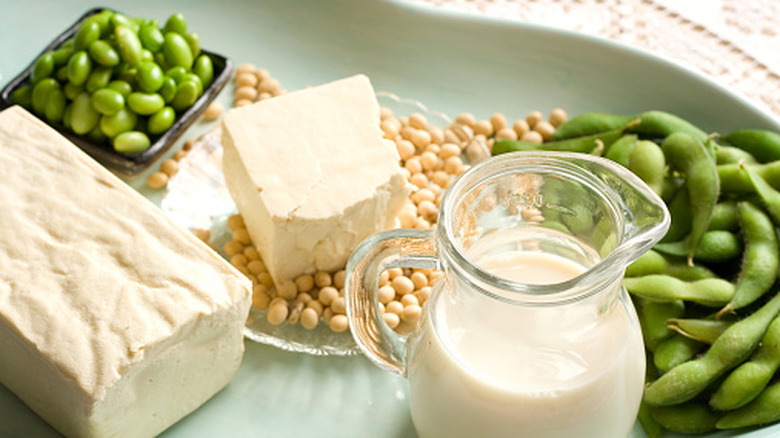
Harvest the young beans and they're easy and delicious edamame; let them fully mature, and the dried beans can be soaked and simmered until tender. Their mild, nutty flavor works in soups, stews, chili or salads, pretty much anywhere any other bean would be suitable; you can also mix soybeans with more familiar beans if you don't want a 1:1 swap. Grind soaked soybeans with water, and you're halfway to soy milk. Coagulate that milk and press the curds into tofu, or with one extra ingredient, you can make vegan buttermilk. Fermentation sends them in still more directions, including tempeh, miso, and natto, a curiously textured fermented soybean dish you should try at least once.
These processing interventions also change what you get nutritionally. Raw soybeans contain compounds like trypsin inhibitors that interfere with protein digestion. Heat reduces their activity and makes cooked soy more nutritionally accessible. Tofu retains plenty of soy protein, but making it traditionally involves filtering out okara, the fibrous pulp left behind when soybeans are processed into soy milk. Therefore, tofu doesn't give you the same 10-plus grams of fiber per cup as whole cooked soybeans.
Understanding nutrition can be empowering without making every meal an optimization challenge. If protein and fiber are both priorities, whole soybeans are great. Edamame is easy to snack on, tofu soaks up braising sauce and can develop tantalizingly crispy edges in a hot, oily pan, and nutty tempeh can develop a sear to rival steak. Find your own nutrition-to-joy ratio, by leaning the scientific facts of what you're getting from a food, and exploring the ways you genuinely enjoy eating it.