

Why Is Canned Tuna Usually Sold In Short, Wide Containers?
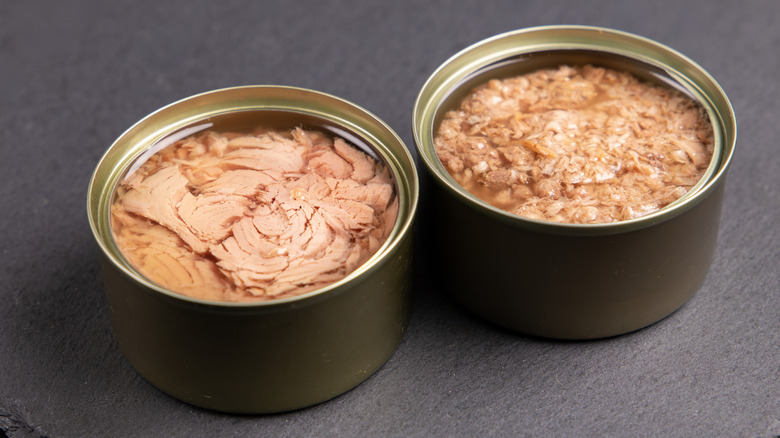
We love diving into food mysteries, like why chickpeas go by two names, or why a chef rubs onions on new stainless steel pans. The latest eating enigma we want the answer to is why canned tuna comes in squat little cylinders. Because if you think about it, they're a pretty unique shape. Yes, there are other seafood varieties neighboring tuna on the shelves in similar attire, and water chestnuts and bamboo shoots seem to prefer the look as well. But why?
To get to the bottom of our packaging riddle, we enlisted Marifrances Trivelli, the director of the Los Angeles Maritime Museum. Per Trivelli, "It appears that the early tuna canners simply used sardine cans, because they were in plentiful supply. Later, the shape of the cans lent themselves to easy packing and display." She adds that the can size has to do with the heating process that kills bacteria, which is why your tuna doesn't require preservatives or refrigeration. "Evidently, the shorter the can, the quicker the heat can reach the middle of the product," she explains to Tasting Table exclusively. Basically, steamed tuna is put into a can, which is sealed and heated to make it a sort of dead zone where nothing (especially bacteria) can survive. If the can were bigger, it would take too long for the heat to "cook" the meat in the center, and would overcook the outer edges of the fish. Hence, the squat can that we associate with tuna fish.
Public acceptance of canned tuna wasn't immediate
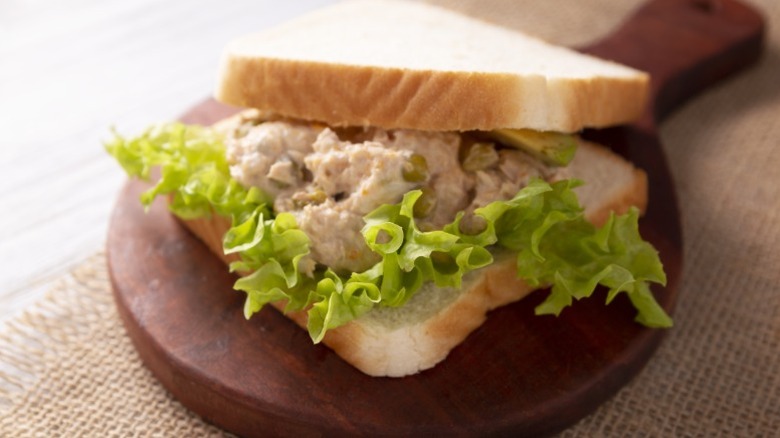
Canned tuna seems like it should have a place in most kitchens; we'd even argue that you should have canned tuna in your pantry for easy, nutritious meals. But it didn't always have such widespread acceptance. Back before anything other than sardines and mackerel were sold in a can, the idea of eating unrefrigerated fish that had been stored on the shelf was baffling to many consumers. But the combination of a strong marketing campaign that began in the early 1900s for tuna, along with meat shortages after World War I, shifted public perception, and things like tuna casserole and tuna fish sandwiches became common options in the ensuing decades.
The latest evolution has seen tuna transfer from cans to pouches. Among a number of pros and cons to skipping canned tuna in favor of pouches, our expert, Marifrances Trivelli, tells us, "Stores tout these as 'handy,' as in, easy to pack for lunch, but they are also much cheaper to produce than a metal can." Will these squat little tins become a thing of the past? Time will tell, but we have a feeling that nostalgia, if nothing else, will keep them on shelves a little longer.