

14 Rare Citrus Fruits You (Probably) Haven't Seen Before
There are wine aficionados, mushroom hunters, coffee snobs, and cheese heads, but have you ever heard of a citrus connoisseur? These are the folks who know rare citrus — when mandarinquats come into season, which farm has the prettiest finger limes, and where to get fresh yuzu (legally). It's an especially rewarding obsession in winter when the produce landscape is largely bleak and withering. In those gray days, citrus season comes roaring in with fragrant skins, sunny, jewel-toned flesh, and just the tart, acidic punch you need to wake up your entire face. Beyond supermarket standards, there's a sprawling world of variety worth seeking out.
Citrus also has a spectacularly tangled biology. It hybridizes readily, often without intervention, though humans often encourage the process, intentionally and otherwise. Some unusual citruses are wild species, while others began as random seedlings found and propagated. Others still have been deliberately constructed by the U.S. Department of Agriculture (USDA) and university breeding programs, producing family trees that resemble algebraic proofs. Throughout human history, citrus has been used for food, perfume, agricultural rootstock, art, ritual, and cultural expression.
Admittedly, "rare" depends entirely on where you're standing. One person's specialty-market score is someone else's grandma's kitchen staple, and a fruit thats unheard of in one country may be an ordinary seasonal pleasure somewhere else. The hunt is part of the fun: Learning the brief seasons, trying different varieties, forming an opinion on who's having a particularly good crop this year. These 14 citruses are a good place to start.
Australian Finger Lime
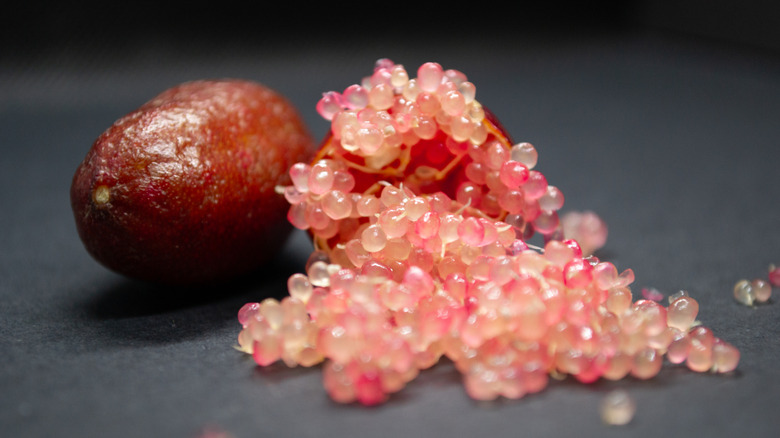
Finger limes are nature's own molecular gastronomy parlor trick. When you open one up, you'll immediately understand why it's often called "citrus caviar." Instead of pulp, the long, narrow fruit contains many tiny, tightly packed juice vesicles that tumble out like glittering fish roe or translucent glass beads. Depending on the variety, the colors inside range from pale green to pink and red. The fruit is native to Australia, and the acidic limey pearls are mainly used as a garnish for textural intrigue scattered over oysters, seafood, desserts, and cocktails.
Buddha's Hand
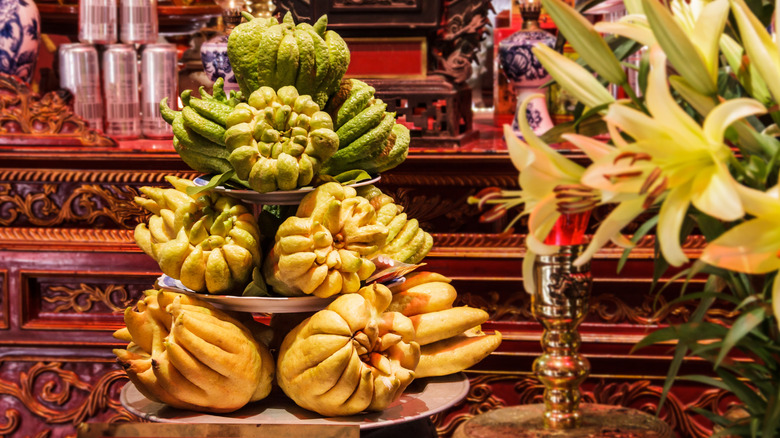
The Buddha's Hand citron looks like a freaky lemon that sprouted tentacles, but the resemblance ends there. This variety contains barely any juicy pulp or seeds. The interior is mostly fruitless; a white pith surrounded by an intensely thick, fragrant rind. The peel, therefore, is the point. Zest it, candy it, or infuse it in alcohol for a cocktail or somehow even kitchen perfume. Because of the unusual shape, it's an intriguing element for a tablescape. In China, the fruit symbolizes happiness and longevity and is displayed in homes and presented as a temple offering.
Calamansi
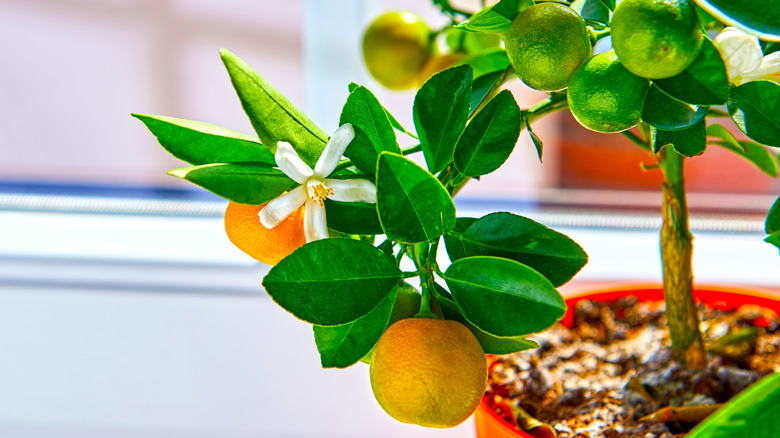
If you're familiar with food from the Philippines, you probably already know and love the unique calamansi fruit, which is also called a "calamondin." The tiny citrus is an essential ingredient in Filipino food, where the intensely tart juice brightens everything from drinks to marinades and dipping sauces. Less common in the U.S., you're most likely to run into it at a Filipino or Asian specialty market. The round fruits ripen from green to orange, and they're thought to be a natural hybrid of kumquat and mandarin oranges somewhere in their ancestry.
Yuzu
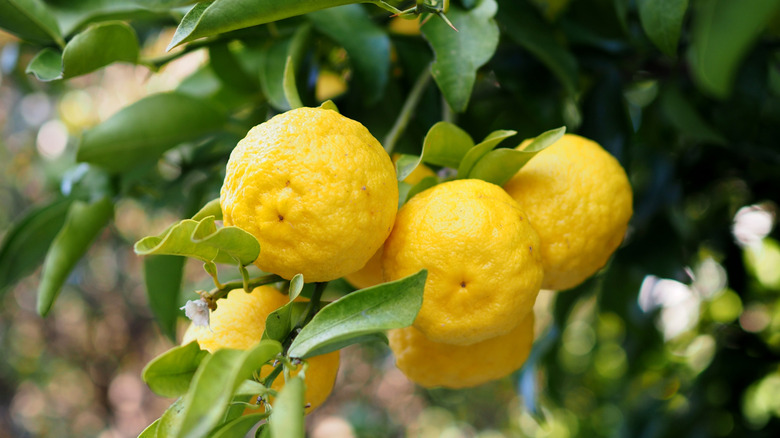
In recent years, Yuzu has become a familiar word on American restaurant menus, but many who have tasted fermented yuzu kosho, yuzu cocktails, or yuzu-flavored desserts have never encountered the fruit itself. This extremely fragrant East Asian citrus is featured prominently in Japanese cuisine and is primarily valued for its juice and aromatic zest rather than eaten out of hand. Fresh yuzu cannot be legally imported, and remains a high-end specialty purchase in the U.S., with one online California-based grower currently listing a pound (two to five whole fruits) for $25.
Sudachi
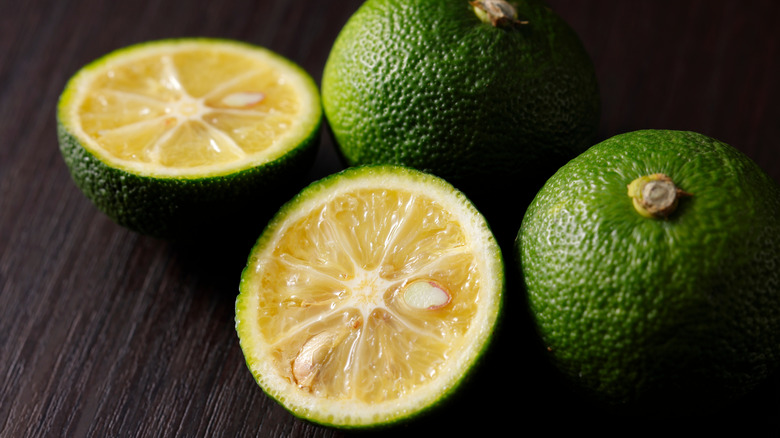
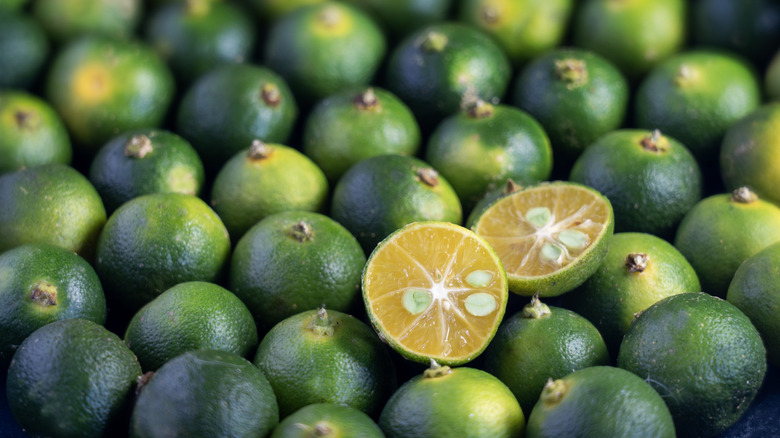
Little green sudachi can look like a lime at first glance, but this fruit is deeply rooted in Japan's Tokushima Prefecture, which produces nearly all of the country's sudachi. In fact, Tokushima claimed the tree's white blossom as its official flower in 1974. Sudachi is traditionally harvested while still green, when the fragrance is particularly distinctive, but they turn yellow after picking. The juice and peel can flavor vinegars and other dishes, and a halved fruit makes an especially good accompaniment to grilled fish.
Rangpur Lime
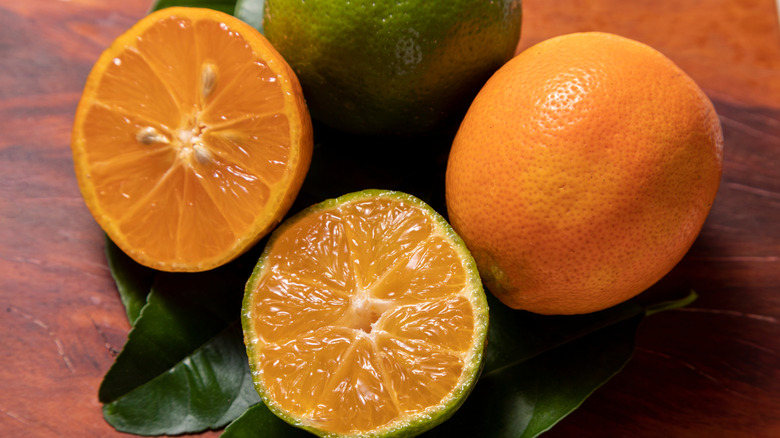
The Rangpur Lime doesn't look much like a regular lime — its thin rind goes from yellowish to a reddish orange at maturity, with an even brighter orange flesh hiding within, which is juicy and intensely acidic. Native to India, where it's sometimes called the "marmalade lime," the fruit spread through Asia, picking up different names along the way, such as "lemandarin," "Canton lemon," "hime lemon," to name a few. It's used as a citrus rootstock in several parts of the world, making it more common behind the scenes of citrus production than it in American fruit bowls.
Ugli Tangelo
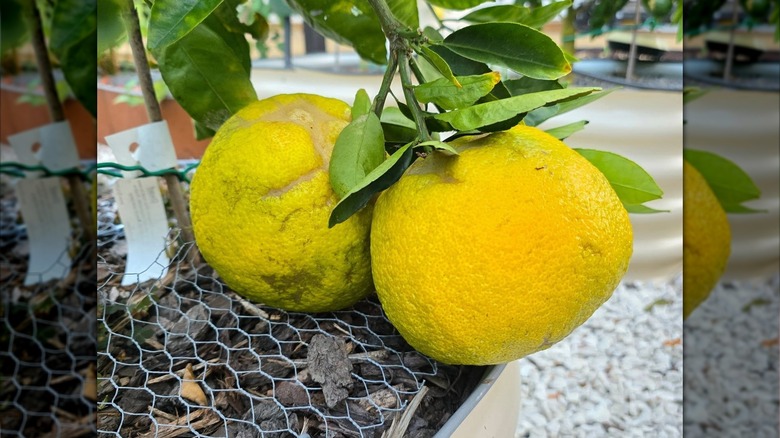
When life gives you "unpretty" citrus fruit, trademark the insult. The Jamaican tangelo (typically called "ugli tangelo") probably originated as a chance seedling near Brown's Town. Its exact parentage remains unknown, although horticulturalists have grouped it with tangelos. It's larger and more lopsided than a grapefruit and packed with sweeter juicy segments, as well as some of the puckery, aromatic tanginess of a tangerine. The thick peel comes away relatively easily, so it can be eaten out of hand, added to salads, or anywhere you'd use a grapefruit.
Oroblanco
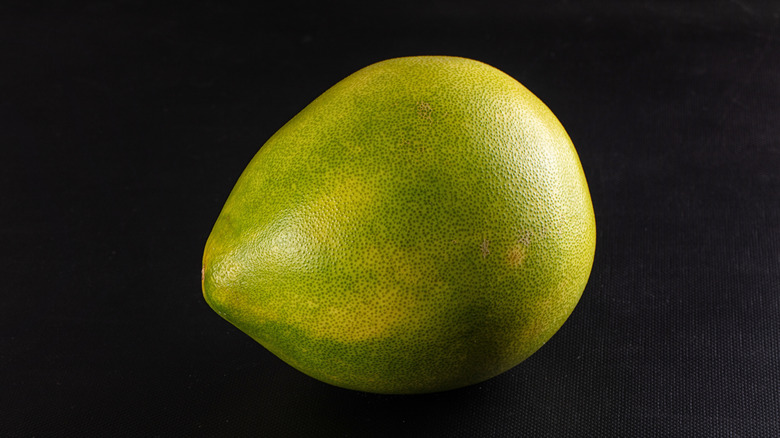
Since it was made on purpose, oroblanco has a known family tree. It's a triploid hybrid citrus, with three sets of chromosomes instead of two, which accounts for its near-seedlessness. Citrus breeders from University of California, Riverside crossed a low acidity pummelo with a white grapefruit in 1958, eventually releasing the perfected oroblanco in 1980. With pale green flesh and a mild, sweet flavor, it is surrounded by a thicker rind and bitter membranes. Its name means "white gold," an appropriately flashy name for a selectively bred citrus.
Valentine Pummelo Hybrid
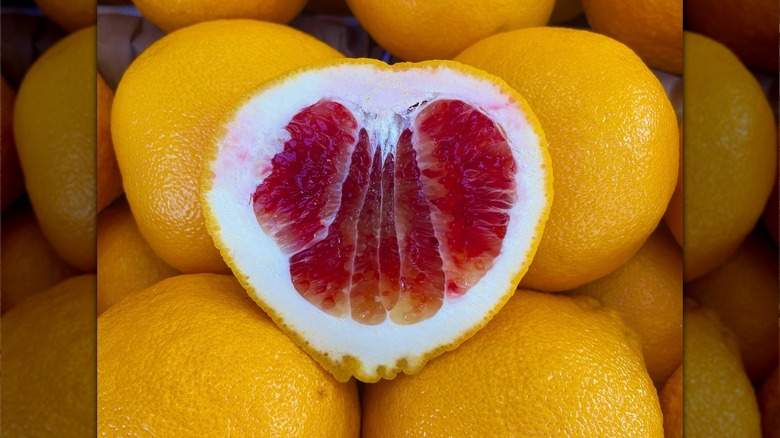
This hybrid fruit is for lovers. UC Riverside breeders crossed a Siamese Sweet pummelo with a Ruby blood orange and Dancy mandarin hybrid for this citrus gem. The fruit combines the pummelo's large size and low acidity with floral notes from Dancy and a deep red flesh from the blood orange. It reaches peak ripeness and color in February, and when sliced lengthwise, the butterfly-shaped segments of the red interior sort of resemble a heart.
Eustis Limequat
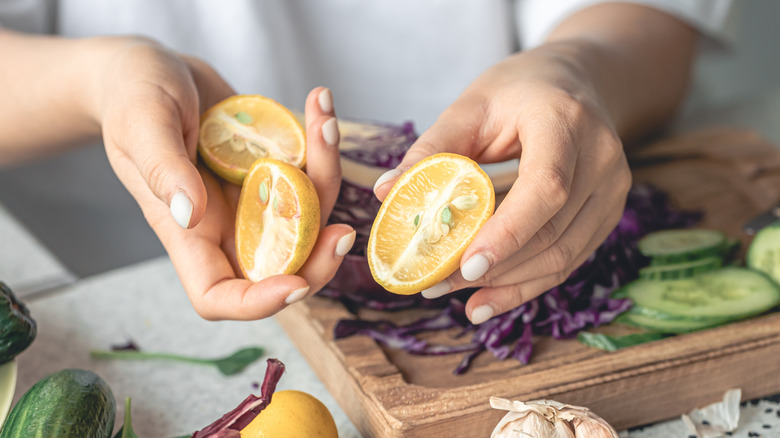
Famous USDA plant breeder Walter T. Swingle spent his career playing matchmaker among citrus species. In 1909, he used a West Indian lime and a round kumquat to produce the Eustis limequat. Eustis looks like a miniature yellow lime and is useful in many of the same ways. The acidic juice, plus an edible rind, is inherited from the kumquat side of the family. The trees are also more tolerant of cold than true limes and are small enough to grow perfectly well in containers.
Indio Mandarinquat
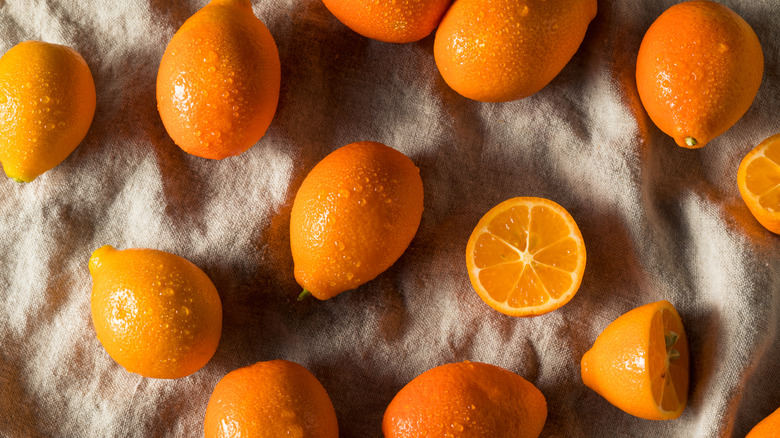
Indio mandarinquats look a little like bulbous, overgrown kumquats, with elongated orange fruit and a sweet, fragrant peel. Inside, the flesh is intensely tart and juicy — and the whole fruit is ideally eaten together, so you get the contrast of both flavors together. This fruit's lineage is somewhat of a citrus paternity mystery. A Nagami kumquat tree at UCLA produced the seed, but the flower was naturally pollinated by anonymous donor anthers. Selected and introduced in California in the 1970s, it's still uncommon enough that you're most likely to encounter it through specialty growers and produce markets.
Makrut Lime
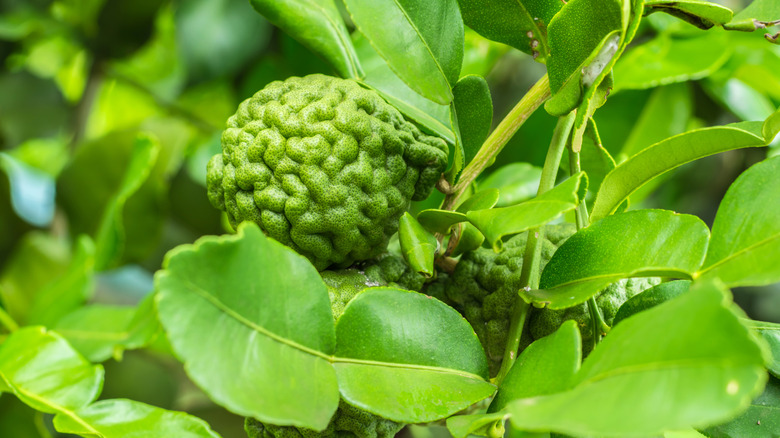
The gnarled, dark green little fruits of the makrut lime are only half of the story. The glossy leaves have a distinctive hourglass shape, like two leaves connected end-to-end, and they're the aromatic heart notes across many Southeast Asian cuisines. You may encounter or be familiar with this fruit under a different name that's increasingly avoided due it's deeply offensive racial connotations, but "makrut" is the Thai name for this citrus and a perfectly accurate alternative. Try infusing the leaves in gin — their perfume is the beginning of an excellent lime-leaf gimlet.
Bergamot
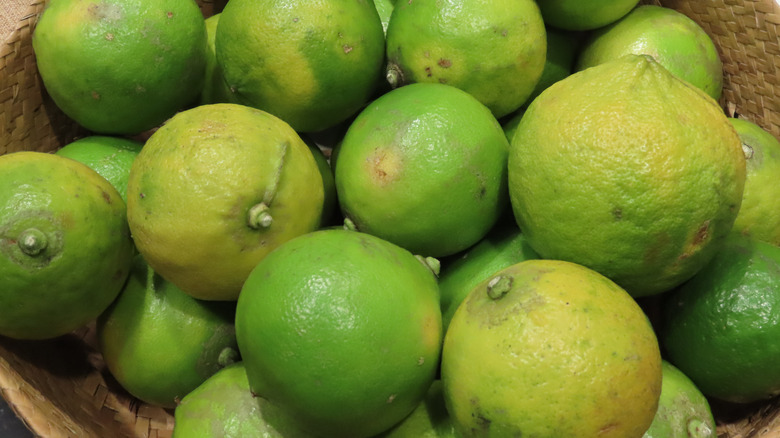
You may recognize bergamot by the smell before the sight. Oil expressed from the rind gives Earl Grey tea its unmistakable floral aroma, and bergamot has a long history in perfumery — including in the original 17th century Eau de Cologne — for the same reason. The fruit itself is anywhere from yellow to greenish yellow. It's intensely acidic with a bitterness that makes eating it like an orange fairly impossible. The aromatic peel is where most of the action is, although fresh bergamot can also be used in desserts, marmalades, and cocktails.
Chinotto orange
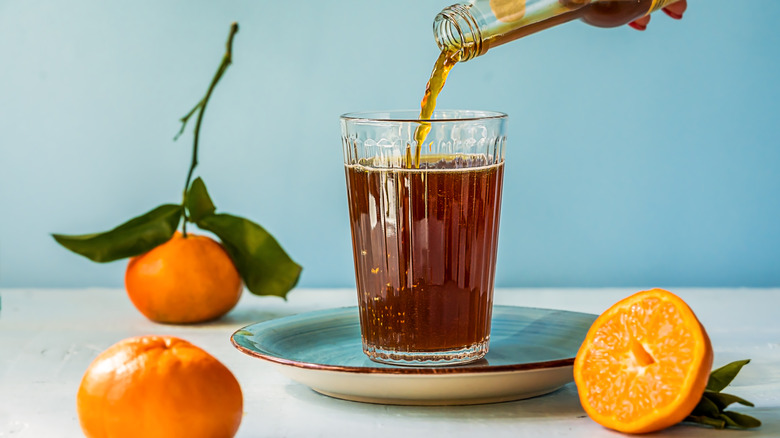
If you're lucky, you've encountered this fruit in one of its best-known forms: the dark, bittersweet Italian soda of the same name. The citrus myrtifolia (or sour orange) produces clusters of small orange fruits on a compact tree whose tiny leaves resemble the myrtle. The fruit is bitter and sour enough that processing makes more sense than peeling for a snack. Besides flavoring the namesake Aperol spritz alternative soda, it can be candied, syruped, or turned into preserves. In the U.S., you're more likely to encounter the tree at a nursery than the fruit at the supermarket.