

What Beef Cuts Are Used To Make Frozen Hamburger Patties?
We may receive a commission on purchases made from links.
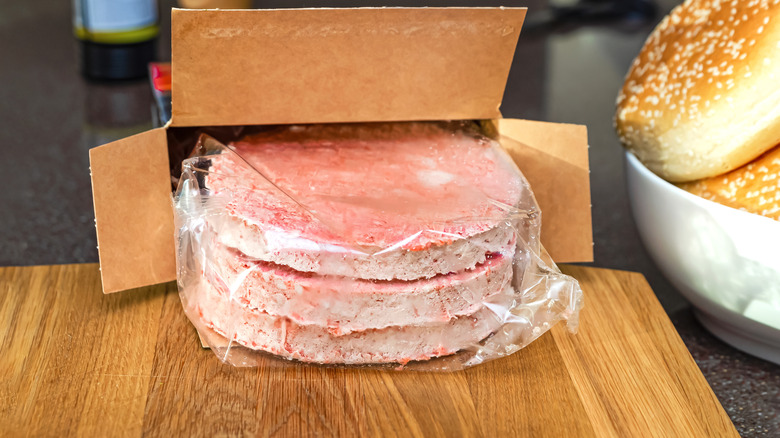
Few people ever find themselves in the freezer aisle holding a box of patties, wondering which part of the cow they're looking at. But if that's the situation you're finding yourself in, the answer is: there's no single cut. The driving number behind a box of frozen patties is fat percentage, and depending on what they're aiming for, processors will blend trimmings — the small bits of lean and fat left over when a carcass is carved into steaks and roasts — together until that number's hit.
Speaking of trimmings, there are two types: "50s" are fatty trimmings from finished steers and heifers, while "90s" are leaner scraps from cull cows and bulls. According to Iowa State University's AG Decision Maker, mixing the two lets processors land on ratios like 80-20 or 85-15. The result is a patty that's chuck and round and brisket and sirloin, plus the odds and ends nobody sells whole, all at once. Or, as chef Robert Irvine bluntly put it when we asked him to share some frozen burger facts, you get "a mash-up of random trimmings from who-knows-what cuts."
The label is the only place you'll get a straight answer
"Ground beef," "hamburger," and "beef patties" are actually all different products and are regulated differently under U.S. Department of Agriculture rules. For instance, for something to be called "ground beef," it can't have beef fat added to it; it has a maximum of 30% fat, and it can't contain added water, phosphates, binders, or extenders. "Hamburger" has the same fat ceiling but permits extra beef fat. Per the Cornell Law School's Legal Information Institute, regulations surrounding "beef patties" are slightly looser, allowing for binders, mechanically separated beef, partially defatted beef fatty tissue, and specific amounts of water. In other words, the name on the package says more about what's inside than you might expect.
Even the word "beef" can be surprisingly tricky. A package labeled "100% beef" isn't necessarily made from whole-muscle cuts alone; it may also contain beef heart. That might sound alarming, but it's entirely legal (the heart is a muscle, after all), and there's no evidence so far that it affects the patty's safety.
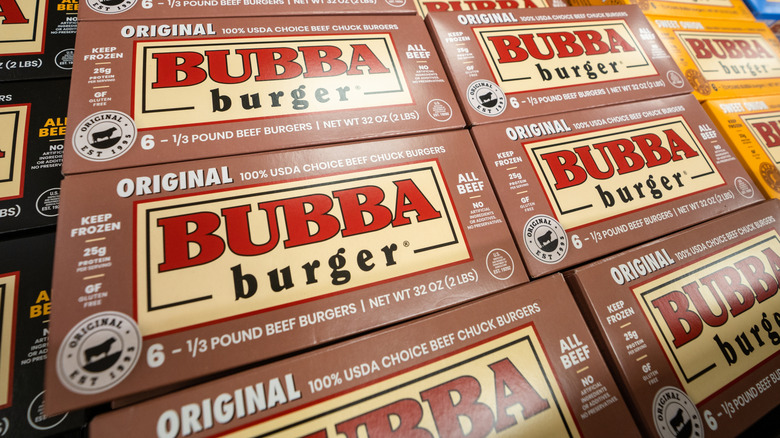
In case you only want your frozen burger patties to come from a named primal — ground chuck, ground round, and so on — look for brands that say so directly on the box. Bubba Burger advertises 100% USDA Choice beef chuck, and with it being so explicit, you can bet that it's ground beef chuck rather than random mashed trimmings. In our frozen smash burger ranking, first place went to Bubba's Smashed Original, specifically due to the product's beef quality. Not thrilled about what might be in your average frozen patty, and not keen on paying for Bubba's every time? Skip the frozen aisle and grind your own chuck instead.