

9 Frequent Complaints About HexClad To Know Before Splurging
Cooks have two broadly different strategies with non-stick cookware. One is to consider it disposable and pay accordingly. The other argues that if you avoid common non-stick mistakes, it's okay to pay a premium for higher-quality pans, and baby them to get your money's worth. One brand that fits the second strategy is HexClad.
These pans' striking appearance, stainless-steel construction, and celebrity endorsements positioned them immediately as an aspirational, top-tier option in non-stick cookware. We've tested them here at Tasting Table and found that HexClad pans are certainly impressive, working exactly as well as the manufacturer claims. Our team concluded that they were worth the price, though every shopper has to decide what's "worth it" based on their own needs and budget.
Overall, to judge from shopping-site reviews, the vast majority of HexClad buyers are happy with their purchase. That said, if you're thinking of taking the plunge, it's worth noting that there are a handful of recurrent complaints about the company and its products. To help you make an informed purchase, we've combed the Better Business Bureau and other online venues, to compile this list of complaints you should know about before you click that "Check Out Now" button.
Recurring shipping issues

One of the first things you'll see, if you look at complaints about HexClad on the BBB page, is that a number of them revolve around delivery issues. That says nothing about the quality of the pans themselves, but it definitely does have an impact on your experience as a consumer, so it's worth digging into.
These shipping issues can take a few different forms. Sometimes a delivery takes much longer than it should, or doesn't happen at all. Sometimes an order is incomplete, or part of it was delivered to the wrong address, and the product that arrives may not be the product that was ordered. Some customers also complain about non-responsive customer service when trying to get a delivery problem resolved.
We need to make a couple of points here. First, where you buy your pans makes a difference. If you bought them on Amazon, from HexClad, or a third-party seller, you'll need to take up your delivery problem with Amazon, because those orders are fulfilled using Amazon's logistics services. If you've ordered directly from HexClad, the delivery problem may still lie with the chosen courier service, but HexClad should usually be able to make good on it. The delivery company was their choice, and therefore ultimately their responsibility.
Non-stick surface peeling in normal use
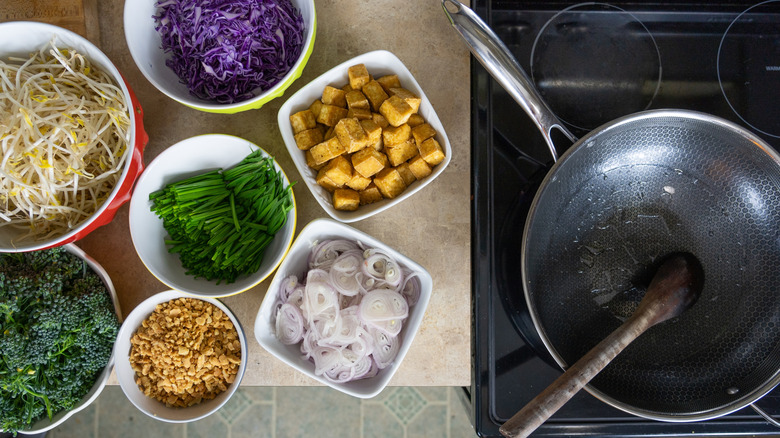
Let's take a moment to talk about how non-stick pans are made. Usually, the material is aluminum (which is lightweight and distributes heat beautifully), and the non-stick surface itself is some version of a compound with the tongue-twisting name polytetrafluoroethylene, or PTFE for short. Teflon is the best-known brand of PTFE. Some pans use ceramic coatings instead, but the basic manufacturing process is the same.
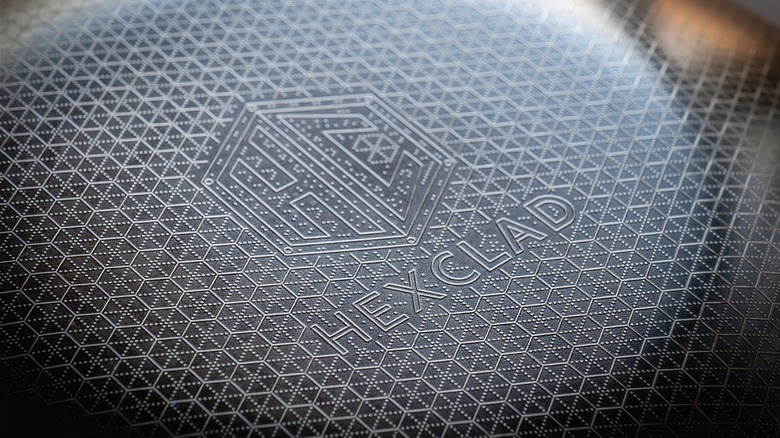
HexClad, like some other higher-grade pans, sandwiches its heat-distributing aluminum layer between layers of stainless steel, for durability and induction compatibility. The laser-etched steel honeycomb that gives the pans their distinct appearance is slightly raised, so theoretically, you can even use metal utensils without damaging the ceramic non-stick coating. In practice, that isn't necessarily the case. A number of HexClad customers have complained to the BBB or posted online, that their non-stick coating peeled away after minimal use (or even before the first use).
Obviously, this isn't a good thing. When the nonstick starts peeling, that's usually a sign that your pans are finished and should be discarded. That's fine if they're old and inexpensive, but not when they're new and you've paid a premium price. You certainly don't want to be eating the coating in your food, and discarding costly new pans is no fun either. To be clear, most buyers are happy with their pans (five-star reviews are overwhelmingly the rule on Amazon). Still, this problem recurs often enough to be a concern.
Non-stick surface doesn't stay non-stick
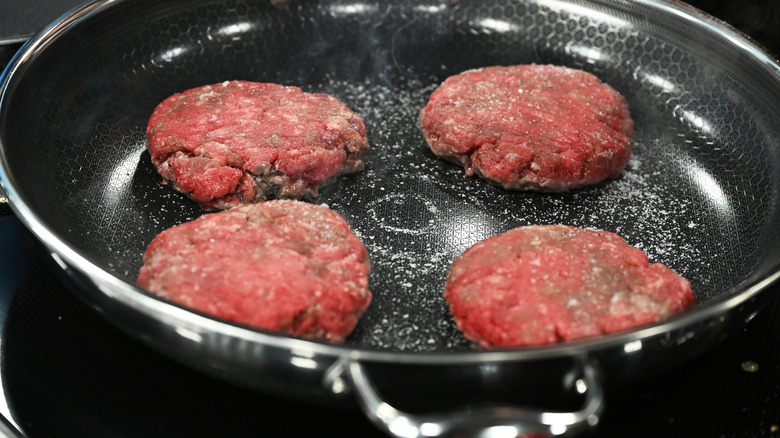
Non-stick surfaces have two failure modes. One is flaking and peeling, and the other is losing its non-stick functionality over time. To make a medical analogy, flaking is an acute failure, like a heart attack (stop what you're doing, now!), while losing functionality is like a chronic illness that slowly takes away your ability to work.
A slow loss of non-stick performance is normal, and it's an acceptable trade-off for the pans' convenience. People may grumble about it, but it's to be expected over time. One surprising problem that crops up with HexClad is that customers report the pans not being functionally non-stick from the start, sometimes from the first few uses. Now, it's true that how you use your pan plays a big role; you need to add your oil or other fat while the pan is warming up. But having your pricey non-stick pans stick, especially when they're brand new and should be at their best, is disconcerting,
Again, to be clear, most users give the product high ratings, but you might want to take a moment to compare the differences between Hexclad and Caraway, or Hexclad and GreenPan, which are of comparable quality. None of them is hands-down better than the others, but Caraway arguably has an edge in aesthetics, and GreenPan's non-stick surface seems to outlast others in independent testing. You'll need to decide for yourself which one has the combination of features that's right for you.
Hexclad pans need babying, which isn't clear from their marketing materials

Seeing HexClad's advertising might lead you to think that these are non-stick pans for people who hate having to baby their non-stick. That's not actually the case, though, and that misunderstanding has prompted some complaints. The pans ship with an insert containing use and care guidelines, which customers sometimes miss when unboxing their new pots (though it's worth mentioning that the guidelines are also posted on the company's website).
One important detail is that while HexClad pans will stand up to higher heat occasionally, they should typically be used at medium-low to medium heat. That tracks, because overheating is the worst mistake you can make with non-stick pans, as a rule. The same goes for metal utensils — you can use them occasionally, but HexClad is scratch-resistant, not scratch-proof, so you shouldn't make a habit of it.
The other detail about HexClad that's slightly odd is that you'll need to season the pan before your first use, and occasionally afterward. Conventional non-stick pans don't need seasoning, though you can season them as their non-stick capability declines. HexClad is different, because the hexagonal stainless steel is slightly raised. It's this steel you're actually seasoning, because otherwise food will stick to it just as it does to uncoated stainless steel pans.
Hexclad is firm on refusing to provide refunds after 30 days
One thing any potential buyer should be aware of, when considering HexClad, is that the product's limited lifetime warranty does not involve giving you back your money. That's one of the "limits" that's right there in the warranty's language.
The warranty says that HexClad will replace the product for its original purchaser (or in the case of a gift, the original recipient), with proof of purchase. It explicitly excludes claims resulting from misuse in the form of excess heat, rough handling, and lack of seasoning, among others. If you've had warranty issues with other companies before, you'll recognize that those exceptions are pretty typical.
The bigger issue is that no matter how unhappy you are with a product, you're not likely to get your money back unless you're covered by the company's return policy. If you find an issue with your product, or just have second thoughts, you can return it within 30 days (ideally in its original packaging, but that's not a deal-breaker). Otherwise, even if you have issues with multiple items in your set, your only redress will be repeated replacement of items as they fail. As far as refunds go, it's 30 days or nothing.
Frustratingly erratic customer service

One recurring theme in many of these complaints is the sometimes-erratic performance of HexClad's customer service department. Consider the company's performance on TrustPilot, for example, where HexClad has an overall rating of 4.6 stars out of five in thousands of reviews, and many of those five-star reviews explicitly mention the quality of HexClad's customer service.
On the other hand, there are also reviews across many sites voicing the same handful of complaints: Warranty and service issues seem to get shunted through multiple reps, each one seems to start over from scratch by asking the same questions, customers are asked to submit the same supporting information over and over again, and customers who are told their case has been escalated find themselves soon afterwards back to square one with another customer service rep.
To put this into perspective, one-star reviews represent about 10% of the total on TrustPilot, or one in 10. Amazon doesn't have a rating for HexClad as a whole, but clicking on pans in a few sizes showed one-star reviews coming in even higher, ranging from at 13% to 16% of total reviews. Obviously not all of those complaints were about customer service, and inevitably some are the customer's fault. It seems HexClad's service is either really great or really maddening, with little in between, so concern is legitimate. Realistically, it's always worth reading both positive and negative reviews before making any significant purchase.
Misleading marketing claims about their first-generation pans
We're going to change direction here just a little bit, because up until now we've focused on "things you need to know about the pans before you buy." This one actually describes a problem that no longer exists, but you'll see it referenced frequently in a lot of negative reviews just the same.
The current generation of HexClad pans uses a ceramic non-stick coating, which is mostly considered safe by test organizations like Consumer Reports. That wasn't the case with first-generation HexClad pans, which resulted in a class-action lawsuit and a settlement with the company. The suit claimed that HexClad's marketing materials were inaccurate or misleading in describing the coating as "non-toxic," "PFAS Free", and "PFOA Free." Those pans were coated with PTFE, which (like PFOA) is broadly considered to be part of the group of substances classed as PFAS, or "forever chemicals." So while manufacturers consider PTFE to be a safe and non-toxic option, many people buying the pans didn't agree.
The company settled the case without any admission of wrongdoing, rather than go to trial and risk additional damage to its reputation. The original PTFE-clad pans are no longer on the market, having been replaced by the second-generation enamel-coated pans. But you'll still see complaints from people who've read about the lawsuit and want to return their second-generation pans. In this case, we can tell you that the company's in the right, and that their new ceramic (TerraBond) pans are indeed non-toxic by current standards.
Refunds won't include the cost of shipping

We've already looked at HexClad's rigid enforcement of its 30-day policy for returns and refunds. There's another refund-related complaint that also crops up periodically, though, and it's worth mentioning separately. If you do opt to return your cookware within the 30-day period, and follow the procedure exactly as instructed — reach out to customer service, provide the necessary evidence to back your claim, and get a return shipping label from HexClad — you still won't get all of your money back.
HexClad's position is that the pots are theirs to refund, but the shipping is not. You paid the courier company, a third party, to deliver your pots or pans, and you wouldn't be returning your pans if you hadn't got them. In short, you got what you paid for. In fairness, HexClad doesn't charge a hefty restocking fee, as many companies do, so you're probably still coming out ahead. Still, it's a factor to be aware of.
Beware of buying from resellers

One more thing to be aware of with HexClad is that it really matters who you buy your pans from. Purchasing directly from HexClad always puts you in the strongest position, of course, or "an authorized selling channel within the United States," to quote the HexClad warranty page.
So buying from a HexClad authorized retailer is fine, but you really need to know that your seller is on the official authorized list. If they're a reseller, like eBay or a non-authorized online vendor, you'll have no warranty — the company's warranty language is very explicit in saying that the lifetime warranty is not transferable. It's for the original buyer only, or the original recipient if it's a gift. Buyers have been shocked to discover that the never-opened, never-used pans they'd bought online were not covered, for this exact reason.
You may also find that you can't get a refund through HexClad unless you've purchased your pans directly. In the company's reply to one complaint on the BBB site, the rep explained that if you bought your pans through another retailer, like Costco, your refund will need to come from that retailer and follow its policies and procedures. This may or may not be a bad thing, depending on the other retailer's policies (they might potentially be more generous than HexClad's own), but once again it's an important detail to be aware of.