

15 Foods Latchkey Kids Ate In The '70s And '80s
In the 1970s and 1980s, more women were entering the American workforce than ever before. And in many ways, that was a good thing; women could embrace career ambitions, and they had more financial independence (although they were still paid significantly less than men). But it also meant that things had to change at home. Many families couldn't afford childcare, and so their children, nicknamed "latchkey kids," had to look after themselves when they arrived home after school, and that included making their own snacks.
While some adults were concerned about the prevalence of latchkey kids, many children really weren't all that bothered. "It's probably why I love being alone so much," said one former latchkey kid in the r/Xennials subreddit. "The only time I had any peace was when no one was home after school. Snacks and total control of the remote." With no parents around, latchkey kids could eat what they wanted. Ketchup sandwiches and cake mix directly from the box? Yes, and yes. Find out more about the foods latchkey kids ate below (some of which are more bizarre than others).
Government cheese
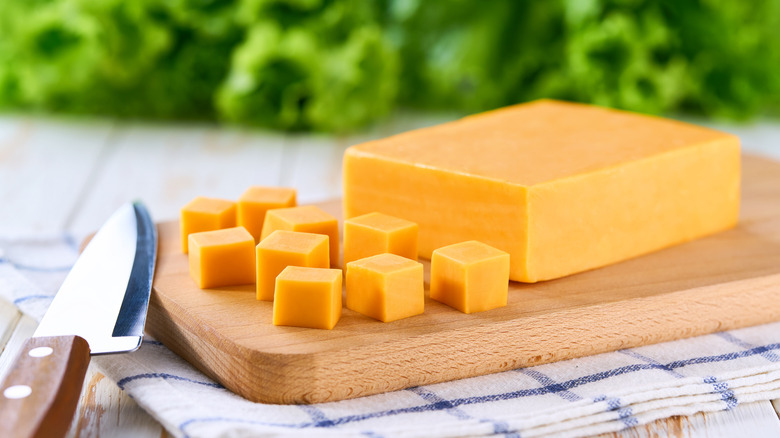
If you're not familiar with government cheese, we'll give you a (very brief) history lesson: During the Great Depression, dairy farmers were struggling. They had milk, but people simply couldn't afford to buy it. So, the government stepped in and started buying up dairy products to keep the industry afloat. This practice carried on for the rest of the 20th century, but there was a slight issue — namely, what to do with all the cheese? In the 1980s, the Reagan administration had an idea: start distributing it to the people. So, government cheese became accessible to the general public through schools, food pantries, and welfare programs. That's how, for many latchkey kids, government cheese became a go-to after-school snack.
The name doesn't sound that appealing, but many who remember eating government cheese throughout the 1980s say that, actually, it tasted pretty good. "Melted like velveeta but had a sharper taste like a mild cheddar," said one Redditor in r/AskOldPeople. For some latchkey kids, government cheese was a snack in its own right, but others liked to get creative. Some remember dipping cold hot dogs into melted government cheese, for example, while others paired it with fried bologna or made grilled cheese.
Cinnamon sugar toast
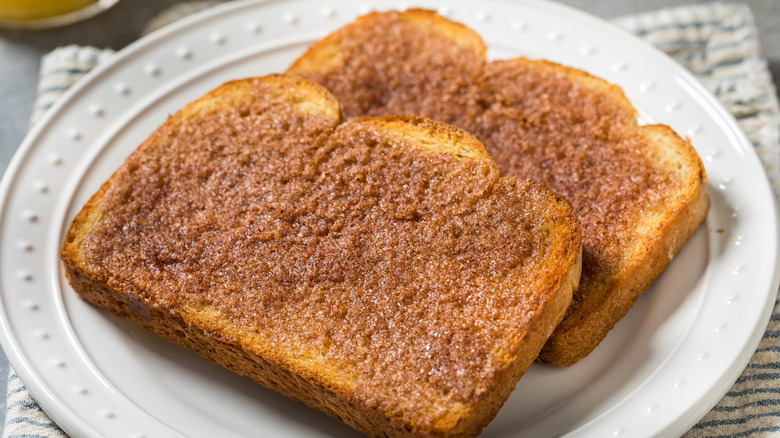
For many latchkey kids, cinnamon sugar toast was the go-to. It makes sense, really, as it's incredibly easy for a child to make without adult supervision; in its simplest form, it's just buttered toast sprinkled with sugar and cinnamon. "Cinnamon toast was the best," wrote one Facebook user in a Gen X group. Another added: "Sugar and cinnamon toast...there must have been a blueprint for this somewhere cuz kids our age were making that on the regular...also why I had so many cavities."
In fact, this simple snack was so popular with the kids of the 1970s and 1980s, it even inspired a breakfast cereal. Yep, in 1984, General Mills came out with Cinnamon Toast Crunch for the very first time, and unsurprisingly, kids loved that, too (but you already know that, considering it's still on the shelves today). "This is still my favorite cereal ever," said one Redditor in r/Xennials. "I hardly have it now because it's basically pure sugar. But whenever I do let myself have a cheat day, I start with some Cinnamon Toast Crunch."
Microwave hot dogs
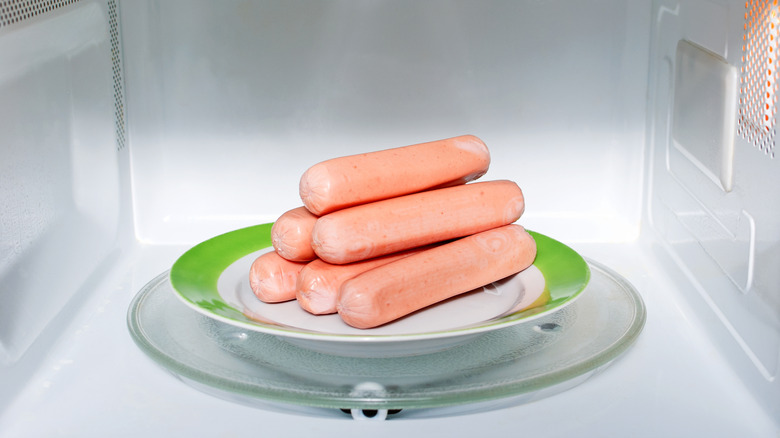
Microwaves were invented in the 1940s, but they took several decades to actually take over American kitchens. In the 1970s and 1980s, though, this convenient appliance really hit its stride. In fact, in 1987, a survey by the Campbell Soup Company found that more than 40% of consumers thought of their microwave as a friend. Sweet, right? Arguably, no one was more chummy with this appliance than latchkey kids. It was the gateway to one of their favorite after-school snacks, after all: the microwave hot dog.
"I had no idea there was a better way to cook hot dogs outside the microwave until my 20s," said one Redditor in an r/GenX about weird latchkey kid snacks. Everyone had their own signature spin on microwave hot dogs. Some liked to wrap them in Pillsbury crescent rolls, for example, while others would slather them in caramel sauce. Yes, not mustard or ketchup, but caramel. These kids really were living by their own set of rules.
Others preferred their hot dogs cold ("I used to eat cold hot dogs dipped in miracle whip," said another Redditor), while others cooked them using more unconventional methods. "I would roast hotdogs on a fork over the gas stove," said one Facebook user in a Gen X group, but they added, "I don't eat hotdogs anymore."
French fries
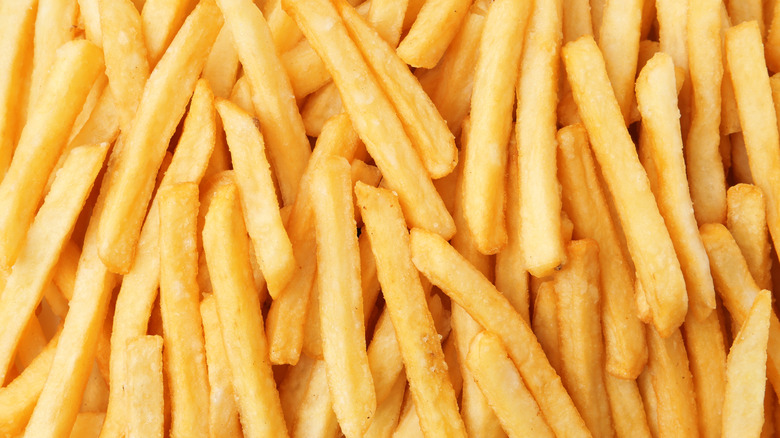
The popularity of microwaves led to new innovations in the snack category. In the 1980s, for example, Micro Magic introduced everyone to a new phenomenon: microwaveable french fries. For many latchkey kids, they were a big deal.
Microwavable fries meant that you didn't have to beg your mom to make you fries after she finished work, because you could make them all by yourself in a matter of minutes, alongside your microwave hot dogs, of course. One Redditor shared in r/nostalgia that they enjoyed this combination "all the time," adding, "I remember half days of school as a Gen X latchkey kid, settling down in front of the TV to watch 'The Price is Right' with my hot dogs and Micro Magic fries." Others combined these microwaveable fries with melted American cheese for a little extra flair.
Not everyone relied on the microwave for their after-school french fry fix, though. Some actually made their own by slicing up potatoes and frying them, while others treated themselves to an afternoon trip to their local fast food joint. "If my friends and I went to Dairy Queen after school it would be French fries dipped in an M&M blizzard," said one Redditor in r/GenX. Another added: "I stopped at Burger King and got two large chocolate shakes, two whoppers, 2 large onion rings, and two large fries. That's if I had cash."
Instant Jell-O
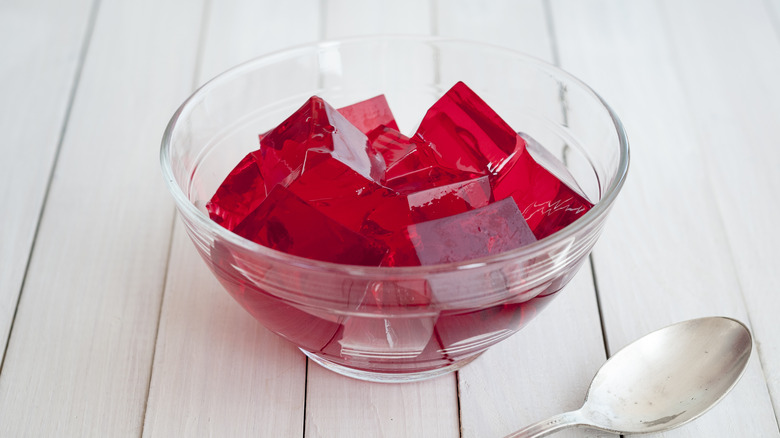
Throughout the 20th century, Jell-O was a household staple. Housewives used it to make salads (yes, Jell-O salad was very much a thing) or served it to their families as dessert. By the 1970s and 1980s, sales of Jell-O had dipped, but you could still find packets lurking at the back of many American kitchen cupboards. After rifling around in the cupboards after school, many latchkey kids found themselves making do with one of those packets. But often, they wouldn't actually make the Jell-O. Oh no, that was too much effort. "We'd straight up eat the jello powder," recalled one Redditor in r/GenX.
It was the same with Tang, a powdered orange drink that was supposed to be mixed with water. "We used to dump powdered tang in a plastic sandwich bag (the fold over kind not ziplock — those were for rich people)," said another Redditor. "And then twist the bag to funnel the dry tang to one of the corners, bite a hole and suck the tang out." They would do the same thing with instant Jell-O, but also admitted their mother wasn't too pleased about either of these snacks.
Bologna sandwiches
Largely thanks to Oscar Mayer, bologna was a big feature in many latchkey kids' childhoods. In 1974, the processed meat giant released a commercial with a child singing one of the catchiest jingles of the decade. It was, of course, called "The Bologna Song," and it started like this: "My bologna has a first name, it's O-S-C-A-R." We apologize if you find yourself singing that 1970s smash hit for the rest of the day. "Bored. watching tv, eating my favorite sandwich (bologna and cheese of course) and my favorite commercial comes on," read one Facebook post with more than 220 likes in a 1970s memories group. "Let the singing begin."
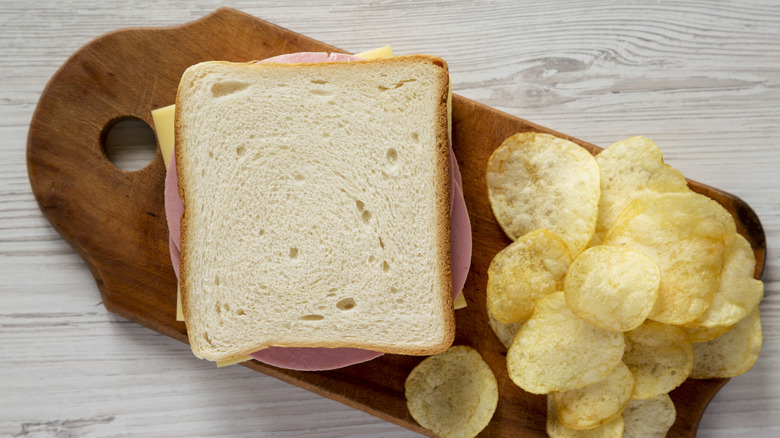
While many latchkey kids liked to keep their after-school bologna sandwiches simple, opting for simple fried bologna on white bread, others liked to add a little more pizzazz. Some threw in some pickles, others added American cheese and crushed potato chips, and a few decided to combine the processed meat with peanut butter. It's an arguably odd choice, but many former latchkey kids maintain it still holds up.
Mustard sandwiches
For some latchkey kids, the bologna wasn't necessary. All they needed was two slices of bread and a jar of mustard, and they were content. "I don't find it weird but I sliced white bread slathered with French's mustard," said one Redditor in r/GenX. Others liked to take the whole snack to the next level by toasting it in the toaster oven, while some liked to add in a slather of mayonnaise or ketchup and relish for a little more je ne sais quoi. In a more unique concoction, some even combined the mustard with sliced onions and salt.
And look, while it sounds a little strange, it actually kind of makes sense. Mustard improves a lot of sandwiches, largely thanks to its signature tangy flavor and creamy texture, so why not just have it on its own? Some still enjoy this simple snack today, both because they like the flavor of mustard and it makes them feel nostalgic.
Kraft Mac & Cheese
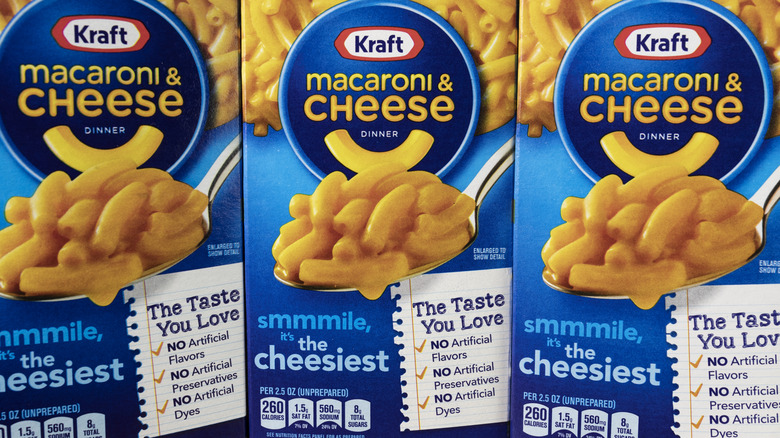
Kraft introduced America to its iconic boxed mac and cheese in the 1930s, and the country never looked back. In the 2020s, nearly a century later, Kraft Heinz still shifts more than one million boxes a day. People love the taste, of course, but another key element of the boxed pasta's success is its convenience. That's why latchkey kids loved it back in the 1970s and 1980s, anyway. All they had to do when they got home from school was add the macaroni to a pan of boiling water, and then stir and drain after a few minutes. Easy.
Many former latchkey kids still enjoy the odd box of Kraft mac and cheese, because (some say) it still tastes the same as it always did. "I grew up eating Campbell's, chef boyardee, lean cuisine, Swanson's, Franco-American spaghettiOs and hungry man tv dinners," read one post in r/GenX. "The only thing that tastes exactly the same as it did 40 years ago is Kraft Mac & cheese." Of course, not everyone agrees. "It is much much worse now than it used to be," claimed another Redditor. "It doesn't even taste like fake cheese anymore. It's so bland."
Ketchup sandwiches
America's love affair with ketchup began in the late 19th century. Sure, the sauce had been around for centuries before (it was invented in China but didn't contain tomatoes back then), but it was U.S. companies that bottled bright red versions en masse in the late 1900s, thus turning it into the beloved condiment it is today. Just like the kids before them and those who would come after, latchkey kids adored ketchup. It helped that it was somewhat actively encouraged; in the early 1980s, the wording about tomato concentrates and condiments like relish in new school lunch regulations proposed by the USDA (which were quickly dropped following swift public backlash) would have actually classified ketchup as a vegetable (primarily due to the Reagan administration's goal to cut costs on school meals, which required two vegetables).
Some latchkey kids loved ketchup so much, it became the standout star of their after-school snacks. "White bread, thick layer of margarine topped off with a huge amount of ketchup," recalled one Redditor in r/GenX. Another added: "White bread, ketchup (oregano on top if feeling posh) topped with cheese and put in [the] oven under the grill to melt the cheese."
Cake mix or frosting
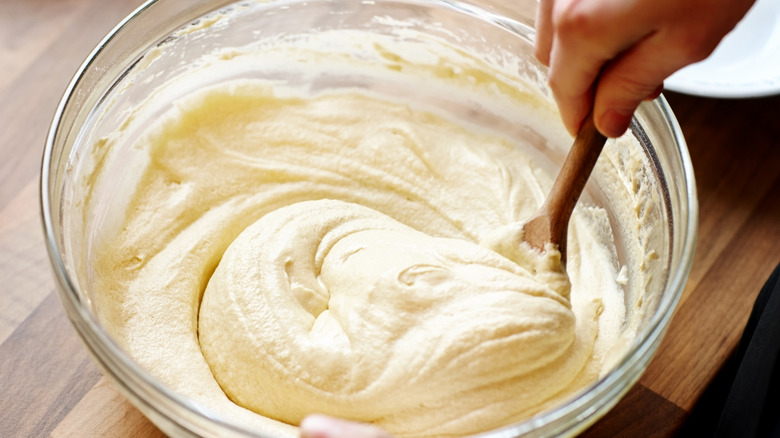
While some latchkey kids took pride in making pretty elevated after-school snacks (we're thinking of ketchup sprinkled with oregano or homemade fries), others weren't quite as, ahem, sophisticated. In fact, some would eat instant cake mix. No, not the cake, the cake mix — from the box. "My brother would make what he would call 'gobbledygook,'" remembered one Redditor in r/GenX. "[He would] mix up whatever cake mix was in the cabinet, pour in Cap'n Crunch cereal, and eat raw."
Others were all about the cake frosting, and would spread it on crackers or toast or mix it with M&Ms. "We made frosting with powdered sugar and milk (a scoop of Nestles Quik if we wanted chocolate) and smeared on graham crackers," recalled one Facebook user in a group for Gen X. Others didn't mess about, and simply ate pre-made frosting straight from the tub.
English muffin pizza
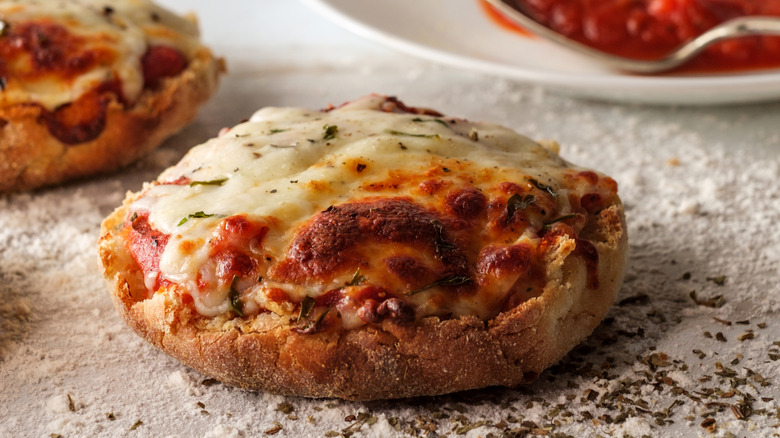
English muffins were first introduced to the U.S. in the late 19th century, when British immigrant Samuel Bath Thomas started selling them in his New York bakery (yes, English muffins were actually invented in America). Very quickly, they became a staple in households across the country, and by the 1970s — the decade when McDonald's added its beloved Egg McMuffin to its menu, and Thomas' launched several iconic English muffin commercials — sales were still strong. In the 1970s and 1980s, it was a common experience for latchkey kids to come home from school, grab a packet of English muffins from the pantry, and get creative.
While some liked their muffins plain, maybe with a generous slathering of butter, a particular favorite after-school snack for many was homemade English muffin pizza. It was usually just a toasted muffin topped with ketchup and cheese, but many kids adored them. "My English muffin pizzas were legendary," recalled one Redditor in r/GenX. "I miss them." Of course, there is no age limit on English muffin pizzas. Some still make them today, albeit some recipes would make many latchkey kids balk, like this one with mozzarella, spices, tomato sauce, and dry-cured charcuterie.
Instant ramen
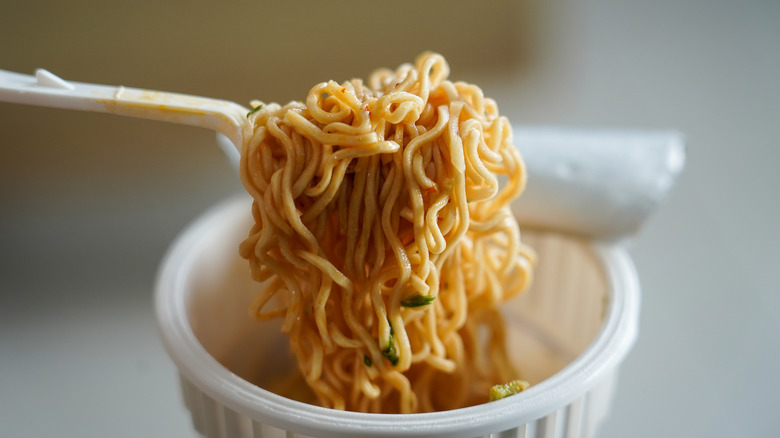
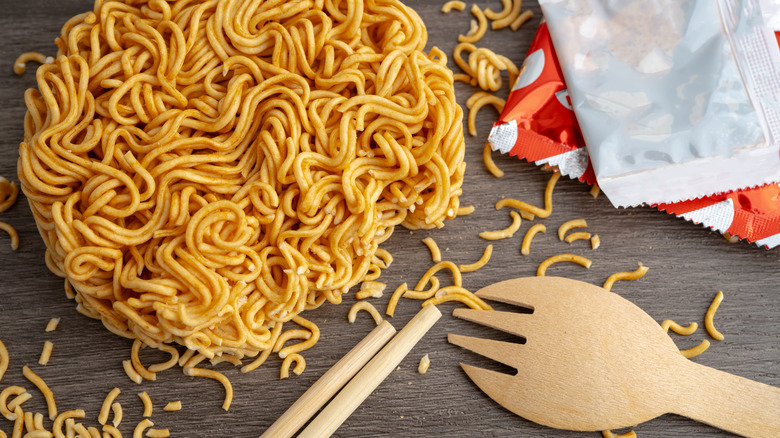
Instant ramen was invented in the late 1950s, but it was arguably in the 1970s, when Nissin's budget-friendly Top Ramen noodles hit the market, that Americans really took notice. These cheap noodles were, of course, beloved by college students, but they also had another fan base: latchkey kids. Yep, many people remember feasting on instant ramen after school throughout the 1970s and 1980s. In fact, some ate so much instant ramen as a kid that they couldn't even face it when they actually set foot in a college dorm.
Of course, many latchkey kids created their own strange recipes with instant ramen. Some combined it with instant mashed potatoes, for example, while others remember mixing it with Doritos and sausages. "Ramen noodles, cooked, drained, threw away the seasoning packet," recalled one Redditor in r/GenX. "I'd then mix butter, cheese (American or Velveeta!) and if we had it a can of cooked chicken. It was SO GOOD." Some kids didn't even bother to cook the ramen, and simply ate the crunchy dry noodles straight from the packet.
Cheese nachos
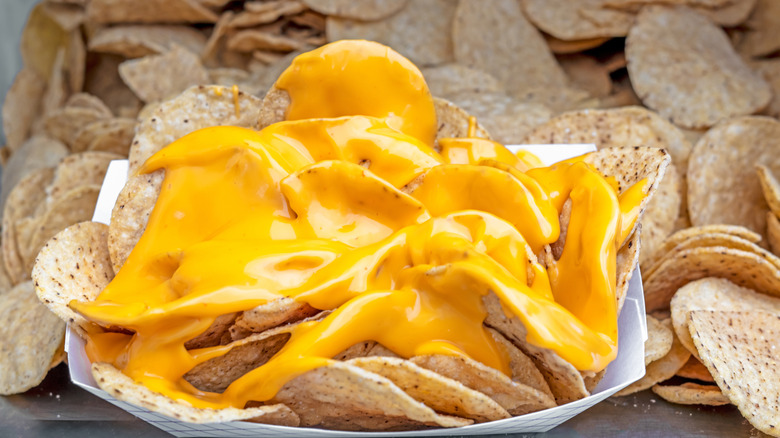
Nachos is a classic comfort meal. After all, who doesn't love tortilla chips slathered in melted cheese? Today, it's a Tex-Mex staple and a beloved movie night snack for Americans everywhere, but back in the 1970s, nachos were still pretty novel. While they were actually invented in the 1940s, it was in the mid-1970s that people started eating them with cheese sauce at sports games (thanks to their introduction at Texas' Arlington Stadium).
Nachos were an easy snack for most latchkey kids to make on their own, and so for many, DIY attempts became a fun after-school activity. Plenty would turn to their beloved microwave to melt shreds of American cheese over potato chips or Tostitos, and some would even go so far as to slather over some salsa, too. In fact, for some, it's a comfort food they still enjoy to this day. "I still eat this sometimes," said one Facebook user in a Gen X group. "Those microwave nachos just hit a little different."
Saltines and butter
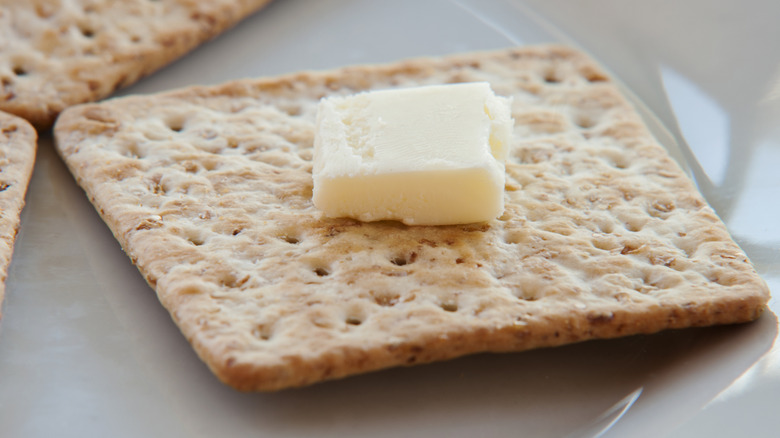
Snacking on saltine crackers certainly wasn't unique to latchkey kids. In fact, these crackers were actually invented in the middle of the 19th century. Originally, they were made with just water and flour, but baking soda was added in the 1870s, giving them that unique bubbly, thin, and crispy texture we all know and love today.
One of the best ways to enjoy saltines is, arguably, slathered with butter. For many kids in the 1970s and 1980s, this simple combination was enough to sustain them until dinnertime, while others would enjoy them in rotation with other favorite snacks, like cinnamon toast. Of course, some would jazz up their buttered saltine crackers with extra ingredients, like sugar, peanut butter, or cream cheese. "[I] would squish two crackers together until butter squeezed out of the cracker docks," wrote one Redditor in r/GenX. "Sigh. Yeah, I was a weird kid."
Chef Boyardee
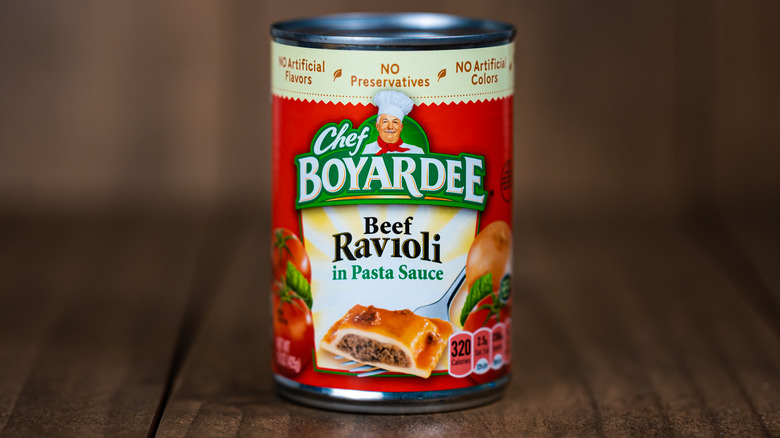
Founded in the 1920s by Italian immigrant Hector Boiardi, Chef Boyardee is still going strong. Much like Kraft with its boxed mac and cheese, the key to Chef Boyardee's success is not just its range of products, but its convenience; the brand's heat-and-eat cans have always been easy to prepare. In the 1970s and 1980s, they were perfectly suited to latchkey kids. Many remember getting home from school and grabbing a tin of Chef Boyardee Ravioli from the pantry, for example, or Beefaroni, which was (and still is) canned macaroni with a tomato-based meat sauce.
In the 1970s, print ads for Chef Boyardee (then stylized as Chef Boy-Ar-Dee) helped latchkey kids out by promoting the supposed nutritional benefits of its products to parents. Today, this isn't widely thought of as one of its selling points; most of its products fall into the ultra-processed food category, but, of course, nobody was talking about UPFs back then. One Redditor shared in r/GenX that they considered Chef Boyardee Ravioli to be a treat during their latchkey kid days, but added, "I loved it then, would never eat it now."