

These 8 Beers Defined The '80s
By and large, Americans love beer — and we always have. Even the Founding Fathers were known to brew beer in their spare time. The nation's fondness for the alcoholic beverage has endured for centuries (outlasting Prohibition in the process). Yet the precise types and brands of beer we consume have changed countless times through the years. And while the beers that defined the 1980s remain familiar to the modern drinker, they also present a fascinating insight into a world before the craft brewing boom.
The beer world was much smaller before the rise of craft breweries, so the beer selection was vastly limited during that decade. Interestingly enough, despite the plethora of craft and artisanal beer options on store shelves in the 2020s, each of the most popular beer brands from the '80s remain widely available as of 2026. The public perception and general reputation of some brands has drastically changed over time, but you can still kick it like it's 1984 (while listening to "1999" by Prince) with each of these beers if you so choose. Here are the beers you'd most often see if you were imbibing during the 1980s.
Miller High Life
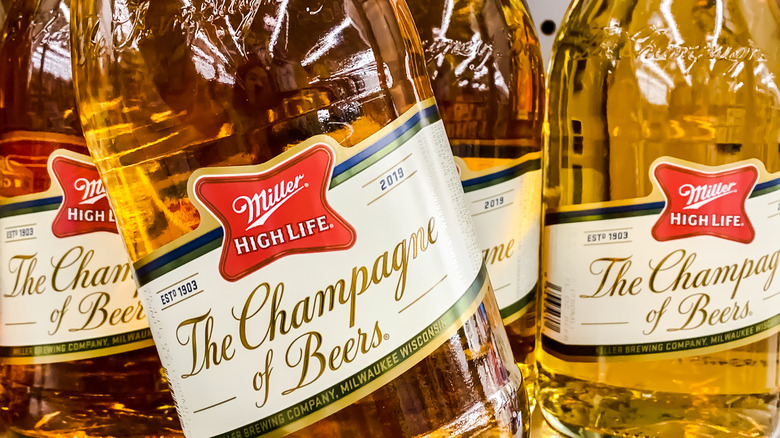
Anheuser-Busch may have been the top-selling beer brand during the 1980s, but Miller was right behind the brewery. In particular, Miller High Life — which is essentially an option for budget-minded beer drinkers in the 2020s — was nearly as popular as Budweiser at that time. Of course, as you'll see throughout this article, the reason why Miller High Life helped define the '80s was less about the product itself and more about the promotional push behind it.
Miller High Life's popularity during the decade was certainly boosted by the general lack of additional options. Yet the success of its various ad campaigns played a huge hand, as well. Being known as "The Champagne of Beers" was a big boost (regardless of the accuracy of that label), presenting itself as an elevated option among the handful of mass-produced beers of the day. And the introduction of the "It's Miller Time" catchphrase — which evolved into "Welcome to Miller Time" in the early '80s — ensured that it was on the minds of anyone ordering or buying beer during those years.
Pabst Blue Ribbon
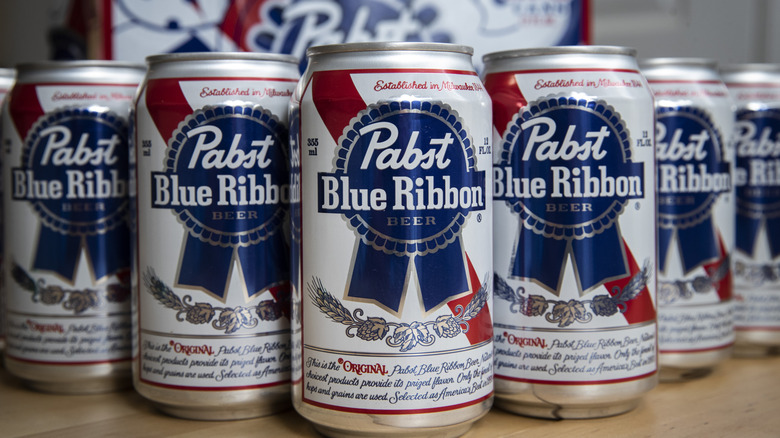
The reasons why people drink alcohol are numerous, but nothing may be more important than becoming intoxicated to some degree. Not everyone is interested in a delicious-tasting cocktail or a complexly flavored beer when they drink, after all, which is where a beer like Pabst Blue Ribbon comes into play. There's nothing fancy about PBR, and the easy-to-consume, cheap-to-buy beer was everywhere during the 1980s as a result.
Now, Pabst Blue Ribbon — so-named because the brewery did, in fact, earn a number of blue ribbons from various competitions ... in the 1880s — was undoubtedly big during the '80s. Part of the reason for its popularity at the time was its numerous advertisements, including a 1983 commercial starring a young Patricia Heaton and Jason Alexander (well before "Everybody Loves Raymond" and "Seinfeld" made either actor a star).
Unfortunately, the beer didn't end the decade in the same place as it began. Despite more than quadrupling its output from 1958 to 1977, the brewery endured a long and costly legal battle over its ownership that ended with a 1984 sale. And while it hasn't reached the same heights since then, it remains a solid and affordable option for many (plus it's the perfect beer to use in a fish fry batter).
Budweiser
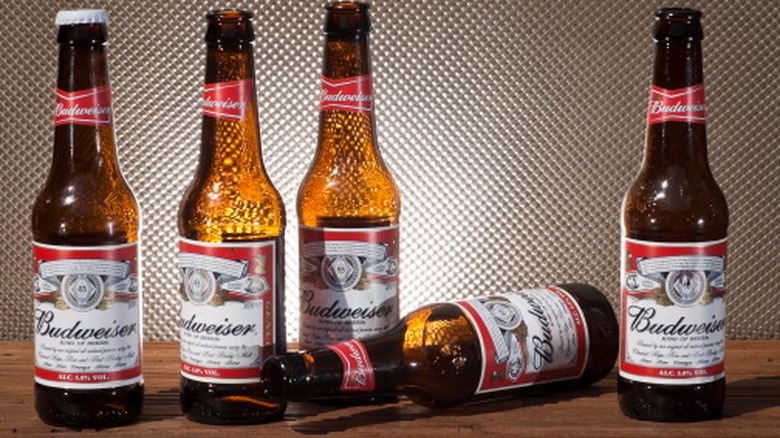
The cost of a 6-pack of beer may be different today compared to the 1980s, but one thing has remained the same: the broad popularity of Budweiser. To be clear, we're talking about the classic Bud heavy variety rather than Bud Light (which was also around during the decade). The self-declared "King of Beers" was the undisputed monarch of the '80s, outselling all other brands during the decade.
Now, if you're wondering why the signature flavor from Anheuser-Busch was the top-selling beer during that time period, it's not really a matter of quality or taste (the appeal of Bud never has been its flavor profile, after all). Rather, the near-ubiquitous nature of Budweiser resulted from a steady presence of advertisements on television, in print, and around the world, including the first Super Bowl commercial appearance of the famed Budweiser Clydesdales in 1986. There's not much to say about Budweiser that hasn't already been said or written. Love it or hate it (and there are plenty of people on both sides of that fence), it's helped define beer in the U.S. for decades, and that's unlikely to change any time soon.
Heineken
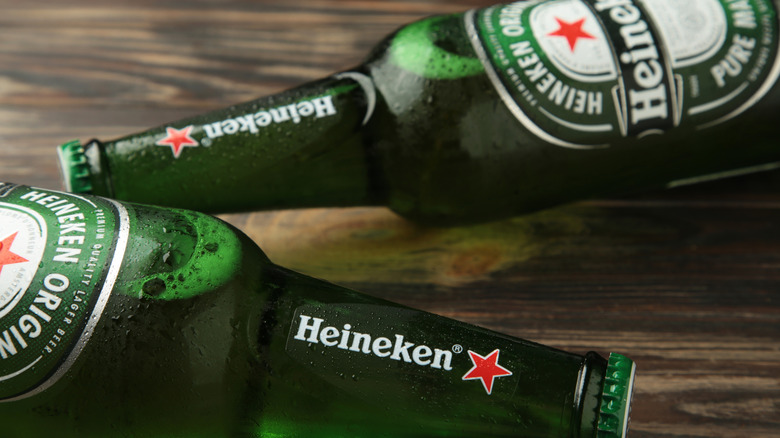
There's plenty of imported beer options on store shelves in the 2020s, but that wasn't always the case. In the 1980s, if you were looking for a beer brewed outside the U.S., then you likely reached for the distinctive green bottle sold by Heineken. After all, Heineken accounted for roughly 45% of all imported beer sales by 1980. Unsurprisingly, the beer's unique presentation likely boosted its stock among consumers at the time, allowing Heineken to stand out from the crowd as a fresh option beyond American-brewed bottles.
Now, Heineken wasn't a top-selling beer brand during the '80s solely because of the bottle's resemblance to Kermit the Frog. But it was hugely important in establishing the brand's identity during the decade. Heineken played up the unconventional bottle as a marker of sophistication for anyone seeking an elevated beer experience. If you wanted to view yourself as above the rabble drinking PBR or Miller Lite, grabbing a fancy-ish Heineken was seen as the way to that path in the '80s.
Coors Banquet
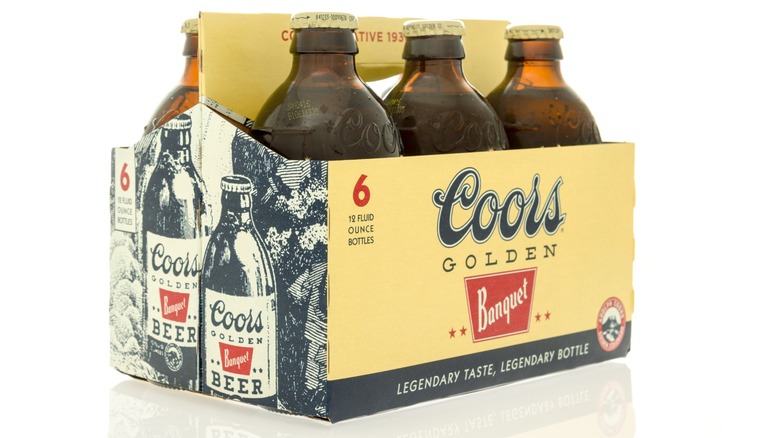
Plenty of folks were tapping the Rockies during the 1980s, but it was the classic Coors Banquet variety that held the hearts of millions. The beer was steadily popular throughout the decade, even if it wasn't actually available for purchase in every state when the '80s began. After all, as anyone who's seen "Smokey and the Bandit" can attest, Coors wasn't sold in most states through the 1970s (it was only available in 11 states as of 1976), and it wasn't actually offered in all 50 states until 1991.
Its lack of a nationwide footprint clearly didn't hurt Coors Banquet too much during the '80s, though. In fact, the novelty of its availability likely boosted its overall image among consumers, providing a mystique of sorts for those in areas where you couldn't regularly purchase it. Then again, Coors Banquet is an easy-drinking lager, too, which was precisely the type of beer folks gravitated towards in the '80s. It might not be as popular in the 2020s, but it remains a solidly affordable choice for anyone wondering what beer generally tasted like before the craft brewing boom.
Michelob
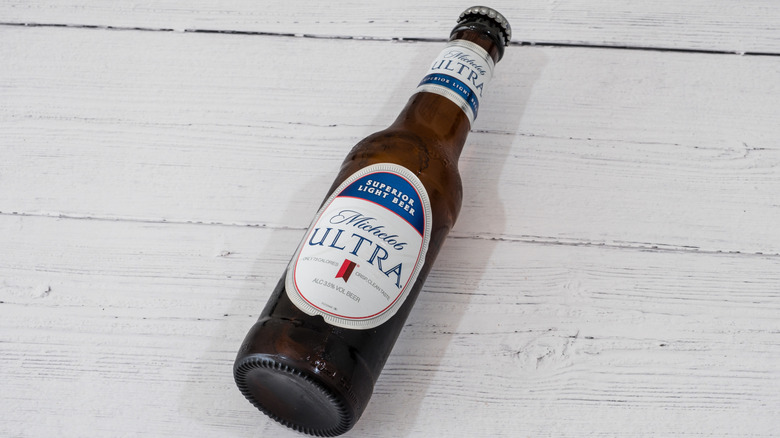
As we've noted several times already, the beers that staked their claim in the 1980s did so largely through a series of strong advertisements. In particular, Michelob was the beneficiary of a string of commercials starring some of the most popular musical acts of the day, imploring consumers to make it a "Michelob Night" during the decade.
The ads themselves are a distinct product of the time, particularly in regard to the musicians featured on screen. One ad stars Genesis during the band's 1980s heyday. Another memorable spot shows Eric Clapton performing a rendition of "After Midnight" at the Lone Star Cafe in New York city (where he randomly shows up after finishing a concert at another venue earlier in the night). Even if you weren't a yuppie living in Manhattan — and able to party at random with rock stars — the "Michelob Night" commercial spots were clear and effective: Your evening could only be bolstered by drinking Michelob.
Schlitz
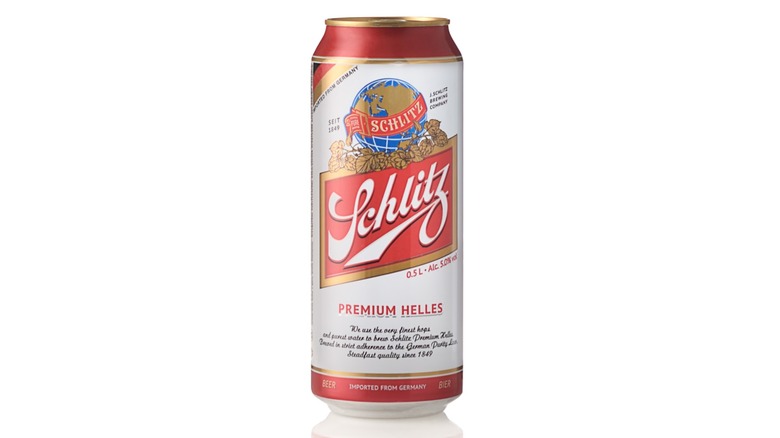
A decade is quite long, and a lot can happen over the course of 10 years. The presence of Schlitz on this list is a great example of how much the beer world changed from the end of the 1970s to the start of the 1990s — and how the limited selection of the time ensured a seemingly unsuccessful brand helped define the decade.
To be clear, the numbers don't lie. So, while Schlitz was on the decline by 1980, it hung around long enough to become one of the best-selling beers of the decade. But its downfall during the 1980s was undeniable, and it was spurred by some questionable decisions before the decade began. More than anything, the choice to change the beer's recipe during the '70s (hoping to decrease production costs) drove away many of its previously loyal fans. Schlitz remained prevalent throughout the '80s, but its precipitous decline couldn't be stopped over time. It hung around well into the 21st century as a vintage brand of sorts, before production of the iconic Midwestern beer was discontinued in May 2026 after 177 years.
Miller Lite
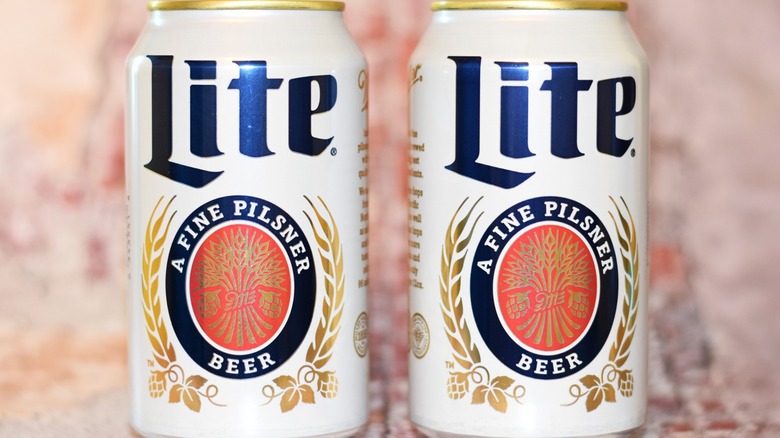
There's a relative lack of light beers featured on this list, though that hardly means they didn't exist or weren't popular during the 1980s. At the very least, one such beer was prevalent enough during the decade to warrant its inclusion — even if it's technically a lite option (per the brand's preferred spelling). Either way, Miller Lite was widely consumed by beer lovers during the '80s, thanks in large part to its top-tier advertising efforts.
The beer brand's commercials featured a steady stream of famous faces from the 1970s through the '80s, with numerous celebrities and professional athletes arguing over Miller Lite's main appeal. It seemed you either enjoyed the beer because it tasted great or because it was less filling (we're firmly in the latter camp). These spots were so effective that the light beer option even outsold heavy hitters like Coors Banquet and Pabst Blue Ribbon during the 1980s.
Like most of the beers that defined the '80s, this undeniably iconic American beer brand remains a mainstay of the beer-drinking world as of 2026. Thanks to a combination of brand loyalty, consistency, and cheap pricing, Miller Lite is apt to stay that way well into the future.