

What Makes St. Louis-Style Ribs Different From Baby Back?
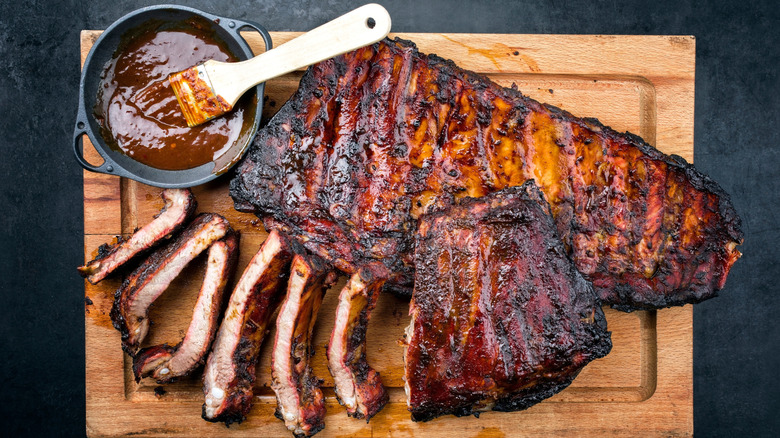
When you sit down to a delicious stack of succulent ribs, many questions may occur to you: Why do homemade BBQ ribs never taste as good as those at restaurants? Is there a surefire way of eating ribs without turning your face, fingers, and potentially clothes into a sticky mess of barbecue sauce? And what exactly is the difference between baby back and St. Louis-style ribs? Fortunately, for those curious about the last of these mysteries, Tasting Table has you covered. The answer includes where on the animal the ribs come from, the way they are cut, and the amount of meat and fat each type of ribs hold.
If you're not a butcher, it's understandable that you might feel some confusion on this matter. This is why, in order to understand the distinction between these two kinds of ribs, we must first consider the animal from which both often originate. Baby back ribs can come from pigs and cows, but St. Louis-style ribs are only ever pork. Baby back ribs come from the top of the animal's ribcage, between the spare ribs and the spine, whereas St. Louis-style ribs are taken from the belly portion of the ribcage, above the breast bone and below the back ribs.
Compared to St. Louis-style ribs, baby back ribs are shorter, smaller, and have a slight curve to them. "St. Louis-style" refers to the convention of cutting away the breast bone and cartilage, giving the slab of ribs a more rectangular, uniform look, which helps them to cook evenly. Because of the popularity of baby back ribs, you can expect to pay more for them than for St. Louis-style ribs.
Meat-packed baby back vs. flavorful fat-filled St. Louis-style
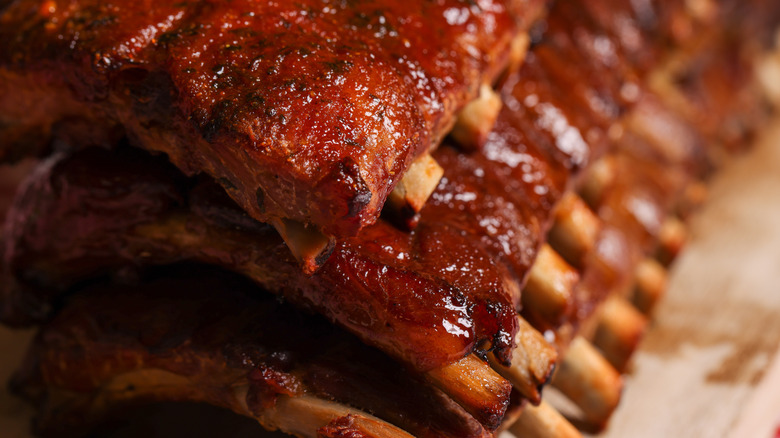
There is more that differentiates St. Louis-style and baby back ribs than size, cut, and where on the animal they come from, however. Out of the two, baby back ribs will typically have more meat on them, with meat both between and on top of the bones. However, they are usually leaner than St. Louis-style ribs, as the latter will have more fat on them, making them deliciously juicy. This means they are perfect for slow cooking, which allows the fat to enrich their flavor, whereas baby back ribs are an excellent choice for those who prefer a shorter cook-time, while still delivering tender results.
If you're mulling over which to choose, it's really a matter of personal preference. Some people prefer baby back ribs as they are easier to hold while eating, due to their smaller size. For those doing the cooking, the greater amount of meat on baby back ribs makes them good for marinades, while the shape of St. Louis-style ribs will help them brown more effectively.
Whichever you choose, be sure to consult a grillmaster's advice on how to grill ribs for perfect flavor and texture. Now that you know the difference between these two iconic rib varieties, you can spend more time pondering the truly important questions, like which is the best BBQ sauce for pork to opt for, and whether it is possible to have enough napkins to handle the inevitable stickiness to come.