

Why Homemade BBQ Ribs Never Taste As Good As At Restaurants
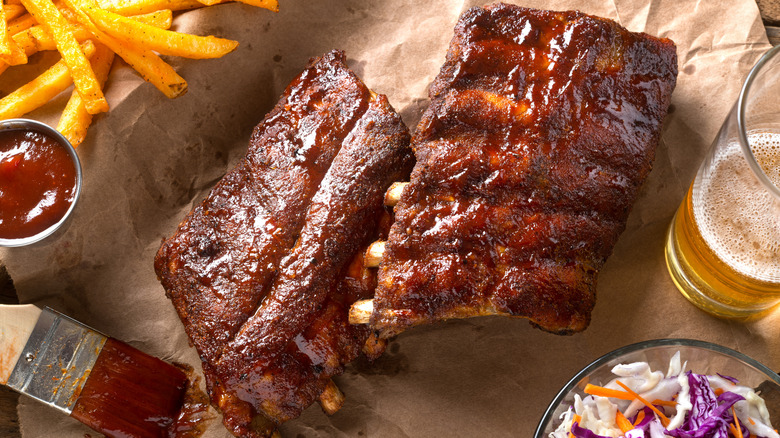
When tucking into an exquisitely tender, generously sauced stack of beef or pork ribs at your favorite barbecue spot, you may have found this joy accompanied by the frustration of wondering why you cannot replicate ribs of this quality at home. The reasons for this are "a mix of equipment, time, and a bit of technique" that are difficult for the home cook to pull off, according to pit boss Michael Conlon of Virgil's Real BBQ in New York City.
Speaking exclusively to Tasting Table, Conlon emphasized the importance of a smoker — which regrettably, many won't have access to — with restaurants often using "large offset smokers or commercial pits that burn real wood for hours." Superlative ribs are also a matter of "practice and consistency." Pitmasters like Conlon cook ribs daily, building enviable expertise over time, but "that kind of repetition is hard to match at home."
When asked what restaurant techniques a home cook might employ to amp up their ribs, Conlon says that restaurants will lightly mist their ribs every 30-60 minutes with a flavorful liquid such as apple cider vinegar and water, or apple juice (though if you're cooking at home, Conlon recommends spritzing every 45-60 minutes). Use a light touch, Conlon advised, as the moisture will keep the meat from drying out, "but overdoing it can wash off your seasoning."
One of the most common mistakes when preparing barbecue ribs is leaving the membrane, the thin silver skin on the back of the ribs. "Always remove the membrane," says Conlon, "no exceptions." This is because a still-attached membrane on the ribs will turn chewy during the cooking process, as well as blocking your seasoning. Fortunately, removing it is easy: "Paper towel and a firm pull does the trick."
Avoid these common mistakes for better BBQ ribs
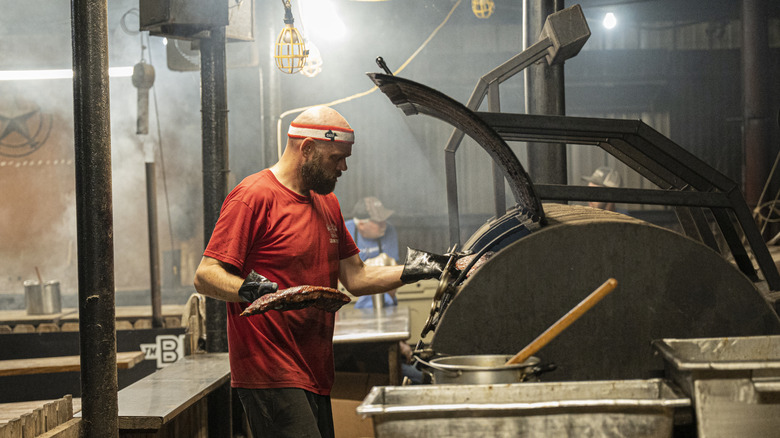
Other frequent errors Conlon highlighted are cooking too hot and too fast, utilizing either poor-quality smoke or no smoke at all, and opening the grill too frequently. Conlon encourages home cooks to start with a "solid prep routine", removing the membrane, then rubbing your ribs with BBQ seasoning, making sure the coating is "even and generous," and letting them sit refrigerated overnight if possible.
When cooking, Conlon instructs: "Keep your heat steady and indirect, around 225-275 degrees Fahrenheit. If you're using a grill, keep the ribs on the cool side, away from the direct flames." A thermometer is helpful, as "guessing is where things usually go wrong," and major fluctuations in temperature can result in inconsistent ribs. If you do have the option of a smoker, Conlon urges that you use only a few chunks of your preferred wood, as "you're looking for thin, light smoke — not thick, white clouds." If you lack a smoker, however, some of that flavor can still be introduced through smoked salt or paprika.
Conlon suggests staying simple with your cooking flow. Start the ribs off unwrapped "to build color and bark", then wrap the ribs (with either foil or butcher paper) with some liquid — "butter, honey, juice" — for tenderization. Finish cooking the ribs unwrapped, and sauce in the last 10-20 minutes. To know when you're done, "don't cook by the clock — cook by feel," Conlon told us. If your rack bends easily, the bones are starting to show, and a toothpick slides into the ribs with little resistance, your meat is ready to rest for 10-15 minutes before slicing. After that, all that's left is to eat — but we're guessing you don't need any tips on how to do that.