

Did You Know General Mills Removed Artificial Dye From Cereal In 2016? (It Backfired Horribly)
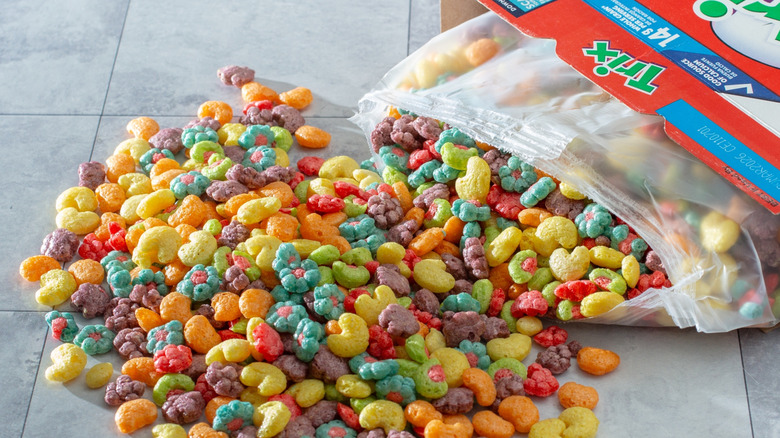
Since the Food and Drug Administration pulled synthetic food dyes from use in 2025, U.S. food manufacturers have had to find other ways to make their products more eye-catching — and that includes cereal makers. In August 2026, popular cereal brand General Mills announced that it removed "certified" (in other words, synthetic) colors from 90% of its U.S. retail portfolio. However, some consumers may remember that the brand tried to remove artificial dyes from Trix and six other cereals 10 years ago. It backfired horribly.
Trix is a legacy brand with decades of nostalgia behind it — one whose breakfast staples have been around since the '60s, so it has ample experience in cereal-making. However, in 2016, General Mills traded Trix cereal's cartoonish palette of bright reds, blues, and greens for muted shades of purple, orange, and yellow, which were derived from natural sources like fruit juices, vegetable juices, and spice extracts. Trix fans were not pleased with the resulting lack of color, with many complaining that the cereal also tasted different. Following the negative response to the naturally dyed and flavored cereal, General Mills announced in September 2017 that they'd reverse the effort, per CNBC, thus marking the return of the artificially dyed cereal.
General Mills also postponed shifting to natural-only ingredients in some of its other eye-catching cereals until it could improve the new recipes. However, cereals like Fruity Cheerios survived the move to becoming all-natural because, as General Mills representatives told The Wall Street Journal in 2017, customers didn't complain much about them. However, sales had risen that year for General Mills' still-artificially colored Lucky Charms and other sugary options, including Cinnamon Toast Crunch.
Customers were simply not happy with the new product
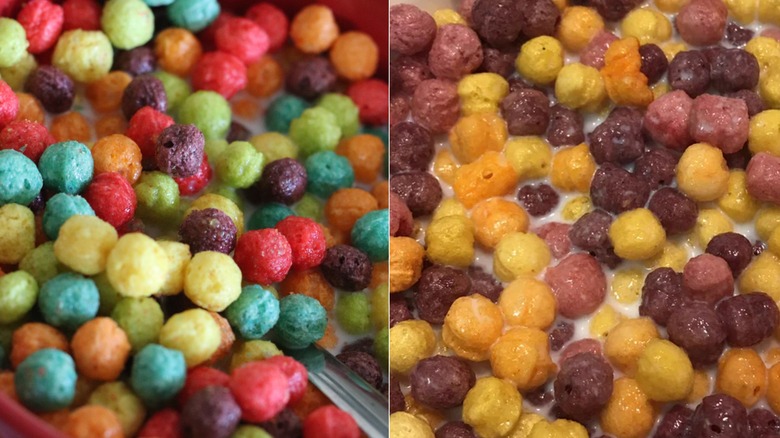
It's unclear whether the reviled color and flavor change of 2016 had a direct impact on Trix's sales. In fact, early discussions of sales around the shift were promising, but the social backlash appeared to be enough to make the brand reverse course. While the move to natural dyes was largely made to keep up with increasing consumer concerns over unhealthy ingredients, General Mills may not have considered what mattered most to a large segment of its consumership, and the company drew criticism from several commenters on social media.
One well-liked post on X from Trix's all-natural era underscored one general sentiment among Trix consumers: "Bruh I just poured a bowl of Trix and almost threw the whole box away. When the hell did they change the color?" Another commenter on Reddit illustrated another perspective surrounding artificial coloring in food, stating they weren't concerned about it. "The problem I have with most cereal is that a lot of it has a ridiculous amount of sugar," they continued. Additionally, per The Wall Street Journal, one Denver-area mother said that her children "[found] the color of the new Trix cereal quite depressing," explaining that she herself preferred the artificial dyes' appearance and flavor.
Trix cereal holds the number one spot in our list of fruity cereals, in part because of how colorful it is. However, it remains to be seen whether the switch back to that bright, artificial coloring will stick, given the remaining 10% of General Mills' lineup is slated to be free of certified colors entirely by the end of 2027.