

Say Goodbye To Bland Store-Bought Rotisserie Chicken By Stuffing It Before You Reheat It

It's hard to resist the allure of a rotisserie chicken when you're out shopping. They're often more affordable than buying a raw chicken you'd still have to cook yourself. Costco sold 157.4 million of its $5 rotisserie chickens in 2025 alone. They're a good value, and they serve as the foundation for a quick and easy meal. But have you ever brought one home and found yourself a little underwhelmed? Maybe the meat was too dry? Or it tasted underseasoned? Next time, try stuffing your store-bought rotisserie chicken to give it a boost of flavor.
You don't need to stuff your chicken like it's a Thanksgiving turkey, although that could work if you have some pre-cooked stuffing. When Tasting Table tried and ranked seven store-bought rotisserie chickens, we found several, including Costco's, underwhelming in terms of flavor or texture. If you buy an extra chicken and save it overnight in the fridge, it tends to dry out even more. In the past, we have recommended a lemon trick that fixes up dry rotisserie chicken in a flash. All you need to do is cut a lemon into wedges or slices, remove the seeds, and put a few in the cavity of the chicken before reheating it in the oven. The texture is improved, and the flavor will benefit as well.
In addition to lemon, fresh herbs like rosemary or thyme, along with garlic, add flavor that can make the chicken taste more homemade. Squeezing some of the lemon juice on top of the chicken or using a couple tablespoons of salted butter before reheating can also make it more flavorful and restore some crispness to the skin.
The stuffing's the stuff when it comes to store-bought rotisserie chicken
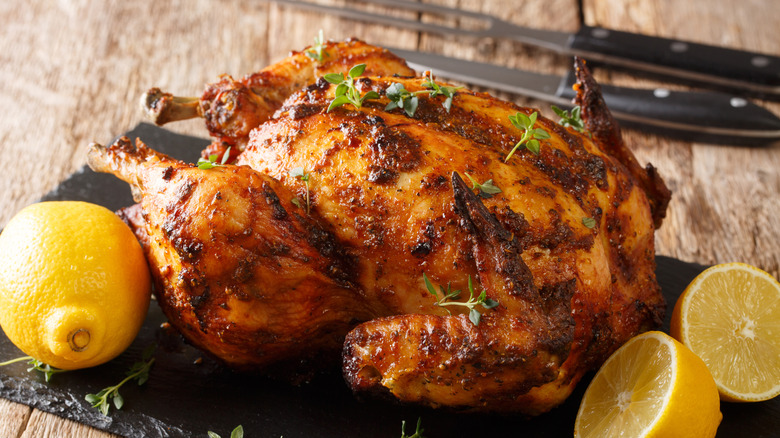
To get the best results, after stuffing the cavity, spread butter across the skin and bake at 375 degrees Fahrenheit until heated through, about 20 minutes. For a faster result when using herbs and lemon, put the stuffed chicken in a 500-degree oven for about 5 minutes. That high heat will release oils from the herbs while crisping up the exterior.
For a variation, you could use orange or even lime instead of lemon inside the chicken or as the juice drizzled on top. Orange would lean toward a sweeter and more aromatic result, while lime would be sharper. For something a little more unique, you could try stuffing the cavity with onion and sliced apple. As the apple heats, it can add a mild sweetness and aroma without the acidity of citrus. You could also add thinly sliced onions, shallots, or leeks alongside the garlic. Some sliced fennel would work similarly, adding a subtle anise fragrance to the reheated chicken.
You can also enhance the flavor of roast chicken with fresh herbs. Rosemary, sage, and thyme are very traditional choices, but you could also try tarragon, marjoram, dill, or oregano. You can even get creative with your butter usage. A compound, flavor-packed butter with chives would add even more flavor as it melts over the chicken. It doesn't take much to salvage a dry or flavorless rotisserie chicken and make it taste vibrant and fresh again.