

How To Keep Your Filet-O-Fish From Turning Soggy On The Drive Home
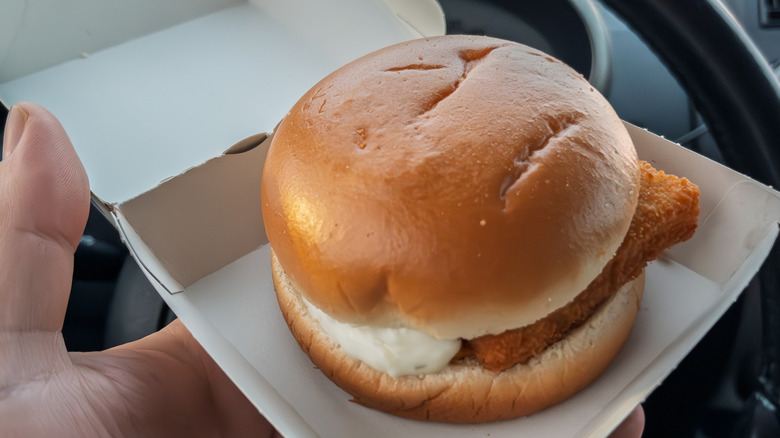
When it arrives, the Filet-O-Fish sandwich, tucked in its little cardboard carrying case, is a perfect combination of contrasting temperatures, textures, and flavors. The sandwich offers a hot, crisp fried Alaskan pollock patty in the center topped by a half slice of melty American cheese and a dollop of cool, creamy tartar sauce tucked inside a soft steamed bun. The contrasts that so delight the palate, however, also risk becoming its eventual ruin. If that sandwich needs to make it back home to the dinner table, it can end up a something of a mess by the time you dig in, with soggy fish and hot tartar sauce. Still, there are a few tricks that can extend the life of this signature seafood sandwich.
The first item on the list is to ensure that your meal is freshly made when you order it. The moment that the famous Filet-O-Fish sandwich is constructed, the clock starts. If you end up with a sandwich that has been sitting in the Universal Holding Cabinet (UHC) for 10 minutes, the sogginess battle may already be decided. The simplest way to ensure a fresh Filet-O-Fish is by making an alteration to your order. Whether it's asking for the sandwich without its signature cheese or swapping the standard Filet-O-Fish tartar for creamy chili sauce, personalizing the sandwich means that it has to be made fresh. This trick buys you time to get your meal home crisp, but it is only the beginning.
The Filet-O-Fish is an ephemeral collection of contrasts
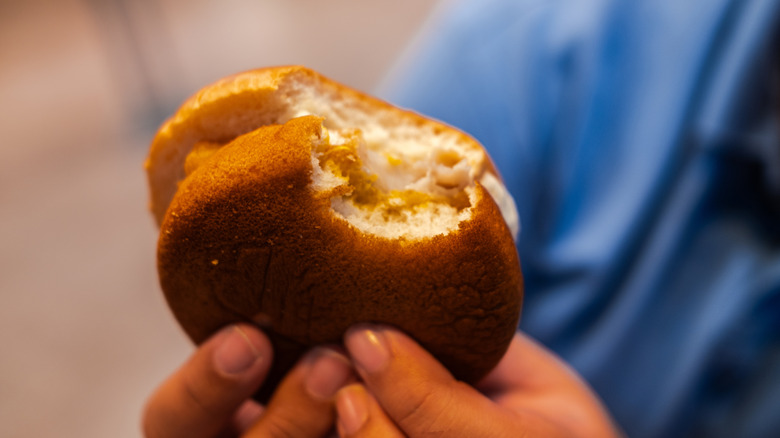
Once the sandwich is boxed and bagged, the next problem presents itself. The hot fish and steamy bun, locked in those two layers of containment, is a condensation nightmare. For the duration of the drive home, that tiny paper-and-cardboard sauna is steaming the crisp right out of that fried fish patty. To counteract this, open the bag and the box to let that steam flow free. This will keep the fish crisp, but it comes with its own downside: an increased rate of cooling.
Fortunately, of all the issues with transporting a Filet-O-Fish, temperature is the easiest to fix when you get home. The sandwich will cool more quickly in an open bag, but that's nothing that a quick trip to the air fryer or oven can't fix. It's generally best to avoid the microwave, as that will only exacerbate any sogginess. Another heating may slightly overdo the always-perfect golden-brown color of the Filet-O-Fish patty, but even if it gets a bit dark around the edges, it'll be a much better sandwich.
Of course, for the best results, you may want to disassemble the sandwich first. That way you can crisp up the fish without drying out the steamed bun — the bun could go in the microwave for a few seconds instead. For this, though, you don't want the tartar sauce in the mix, as hot mayo is never nice. To combat this, simply ask for that tartar sauce on the side, bringing the whole order full circle. With that simple request, you know that your sandwich will be made fresh, ready for reheating if necessary. It's either that or you make a copycat Filet-O-Fish at home.