

The Average Lifespan Of An Espresso Machine
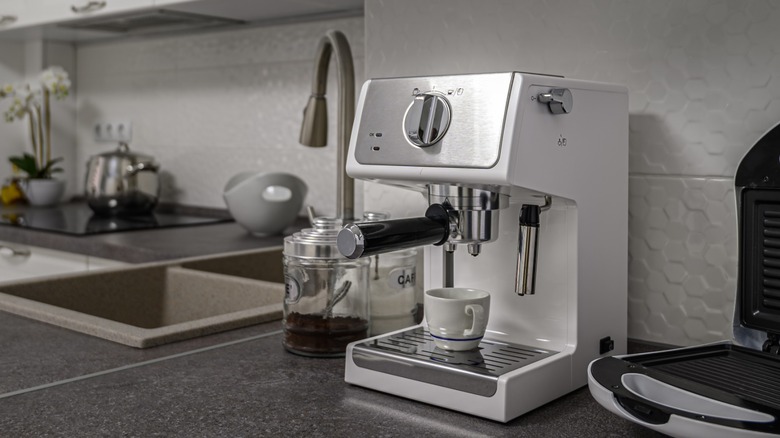
It's no secret that investing in an espresso machine for your home is a great way to save money. Daily trips to the coffee shop rack up quickly, to the tune of $3,000 to $5,000 (depending on prices in your area). Folks also love home espresso machines because they allow coffee enthusiasts greater control over the end result, ensuring their cup of Joe is exactly how they like it. But as the saying goes, all good things must come to an end, which begs the question: How long, on average, can you expect to reap the benefits of an espresso machine before it goes kaput? The short answer is five to fifteen years. The much longer answer — well, it depends.
As with any appliance, the type and quality of the machine you purchase factor into its lifespan, as does frequency of use, and how well you care for it. As a general rule of thumb, the more complicated the machine, in terms of parts and features, the more opportunities for something to break or wear out. That's why a fully automated machine that does all the work for you (from grinding to frothing) with just the push of a button will only yield from four to eight years. On the flip side, a simple, well-cared-for, manual (lever) espresso machine can give you over twenty years of good use. In the middle are the semi-automated ones. From these, you'll roughly get five to fifteen years of cranking out drinks — no matter which beans you use from our ranking of worst to best coffee brands.
Extending the longevity of your espresso machine
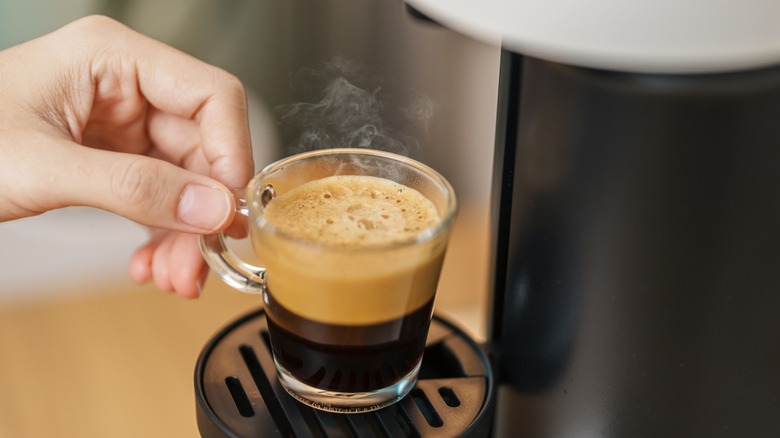
No matter what machine you have, there are simple actions you can take to get the most out of it. First of all, the water you use matters. Hard water, like some tap water, is heavy on minerals like calcium and magnesium that can leave a chalky residue in your machine called limescale. This can lead to blockages and even negatively affect flavor. For the average home coffee drinker, the overall best type of water to use is filtered water. Be sure to read your specific machine's manual for how and when to descale your machine, though preventing build-up in the first place is preferable to combating it after the fact.
Basic cleaning after each use also extends the life of your machine and keeps it in top working order. Be sure to wipe off the group head, portafilter, baskets, and drip tray, as well as clean and clear the steaming wand. Over time, milk residue and oil from coffee can gum up the works.
For those just getting started, the more you enjoy using your machine, the greater the chance you'll take good care of it — i.e., the quickest way to ruin your at-home barista game is picking the wrong espresso machine for you. Make sure you choose one that matches your specific brewing needs, skill level, and desire to learn. If you want to go simpler, start with a coffee maker. The average lifespan of a Keurig, for example, may not be nearly as long as a full-blown espresso machine, but the easy-peasy pod system might better suit your needs.