

The Quickest Way To Ruin Your At-Home Barista Game (And How To Prevent It)
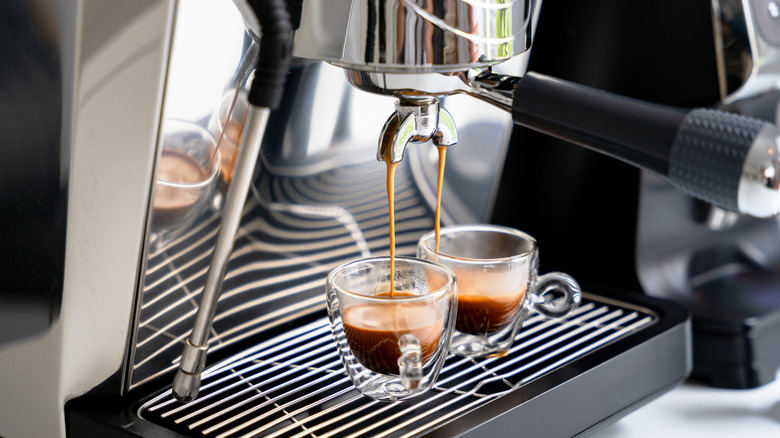
Most coffee drinkers would agree that espresso tastes different at a coffee shop compared to a home-brewed one, especially when compared to an espresso from a pod-based machine. While there's something special about having a perfect cup at your local spot, there's also nothing quite like brewing a perfect espresso at home, but it can be difficult to know where to start and what equipment is worth the investment. We spoke with Matt Woodburn-Simmonds, ex-barista and founder of Home Coffee Expert, for advice on becoming a stellar at-home barista and what pitfalls to avoid.
Our favorite tip you need to be the ultimate at-home barista begins with choosing the correct machine to fit your lifestyle and skill level. When searching for an espresso machine to bring home, it can be easy to be tempted by top-of-the-line, yet complicated, espresso machines. Yet some of these high-end espresso machines can often lead to more frustration than they're worth. "There are lots of variables that go into pulling perfect espresso shots: grind size, dose, distribution, tamping, pre-infusion, extraction time, water temperature, and pressure," Woodburn-Simmonds notes. "This is A LOT to think about so when starting out, its best to keep as many of those things constant as possible and work on nailing your dose, grind, and extraction." With so much to focus on at once, it's easy to be confused by so many variables.
Stick to the basics when learning
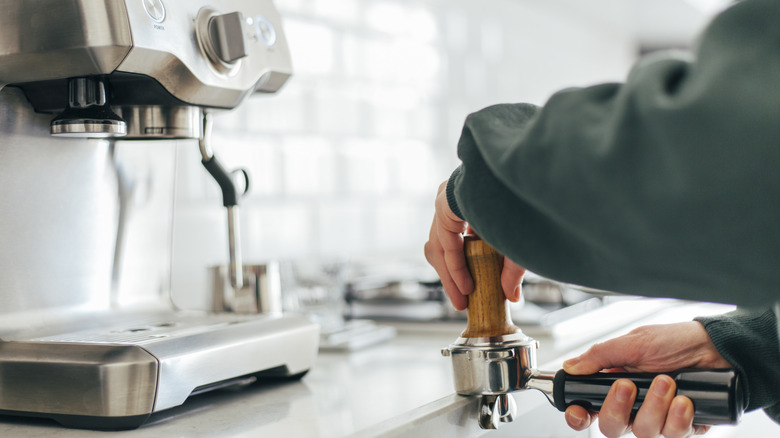
"If you have a complex machine that finely adjusts temperature and pre-infusion time on top of everything else," Woodburn-Simmonds explains, "then it can be hard to nail down what you need to change to improve your shot." There are already enough complicated aspects to a standard espresso machine, so as a beginner, don't be fooled by the siren song of trendy manual machines before you understand all the complexities of the espresso-making process. "If you're going really hardcore and using a manual espresso machine then you have even more to worry about," Woodburn-Simmonds tells us, especially "human error."
So what type of machine should you get? We wanted to avoid pod-based machines as they don't have any wiggle room for learning, but we didn't want one that would overwhelm a beginner and Woodburn-Simmonds found that sweet spot. "I think Breville does a superb job of making espresso machines that can hold your hand in the initial phases of learning to pull shots," he explains, "but still give you a lot of autonomy as you get your workflow nailed down and gain confidence."
Woodburn-Simmonds notes that Breville's espresso machines are mostly automatic, but also offer "more scope for manual use than many machines from other manufacturers," meaning that once you really nail down the basics, there are options to manually play around with Breville machines to your liking as well. When you're ready to begin your search, start with our best espresso machines for beginner enthusiasts, including a few amazing entry-level Breville machines.