

How To Tell If The Meat You're Buying Is From The USA
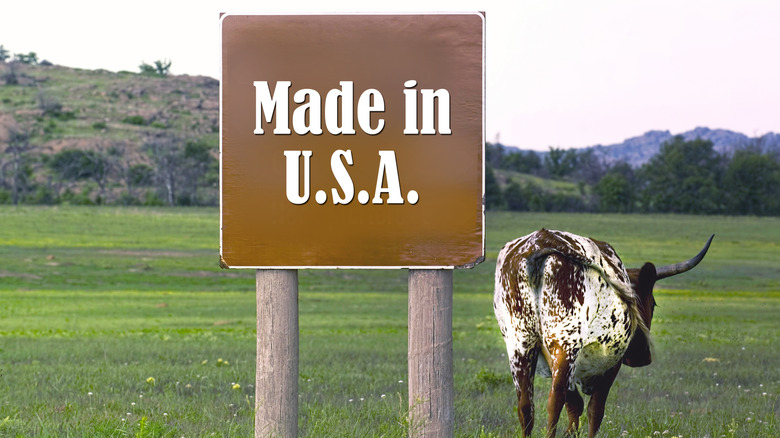
Americans are becoming more discerning when it comes to taking food labels at their word, and with good reason. Health claims like "good source of" or sourcing claims like "locally made" are too often based on marketing gimmicks rather than reputable, regulated labeling practices. Such is the case with your meat. Figuring out whether that package of ground beef you picked up at the grocery store originally mooed in America or was imported from another country takes knowing some tricks of the trade.
First, look at the semantics. "Packed in the USA" or "processed in the USA" isn't going to cut it. That means the meat may have been packaged domestically, but that label does not guarantee the animal was raised in America. Next, know the sequence of events. "Made in the USA" became a labeling standard enforced by a 1997 Federal Trade Commission (FTC) policy statement, which said "all or virtually all" of a product must originate in the United States. However, a 2015 rollback of a Country of Origin Labeling rule made it harder to determine where meat and poultry actually came from. That was the case until early 2026, when the USDA outlined stricter standards. Under the updated "Product of USA" label, meat must come from an animal that was born, raised, harvested, and processed in the United States.
The history of confusing food labels — and how to tell if your meat is imported
The quandary over food origin labeling actually started almost a century ago. America imposed tariffs on international goods to protect domestic farmers as the Great Depression deepened in 1930. Canada, Cuba, Mexico, France, Italy, and Spain soon responded with higher duties in retaliation, and by 1932, Democratic presidential candidate Franklin D. Roosevelt was calling for lower tariffs. These trade tensions helped set the stage for country of origin labeling requirements.
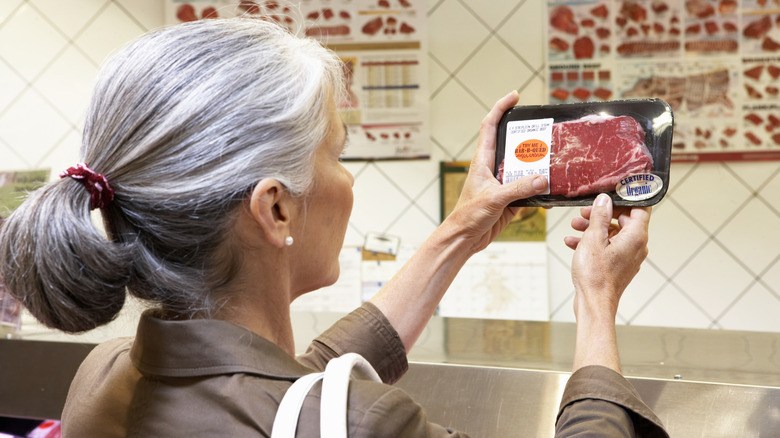
Now "Product of USA" stickers are carrying more clout, given the USDA'S recently passed, more precise governance over origin claims on your meat, but there is another handy double-check that doesn't require a sticker to tell you whether the package of meat in your hand is imported. Just check the back of your meat package. If it was imported, you can find the country of origin in the fine print by the nutrition label.
If you're still feeling unsure about where the meat you want to buy came from, consider asking your grocery store's butcher, if it has one. They're a wonderful resource beyond helping you find meat cuts you may be overlooking for your next dinner party. They can also explain beef labels and ease your mind about whether your package of meat is imported or entirely domestic.