

The US Imports Most Of Its Foreign Meat From This Country (Not Mexico Or Australia)
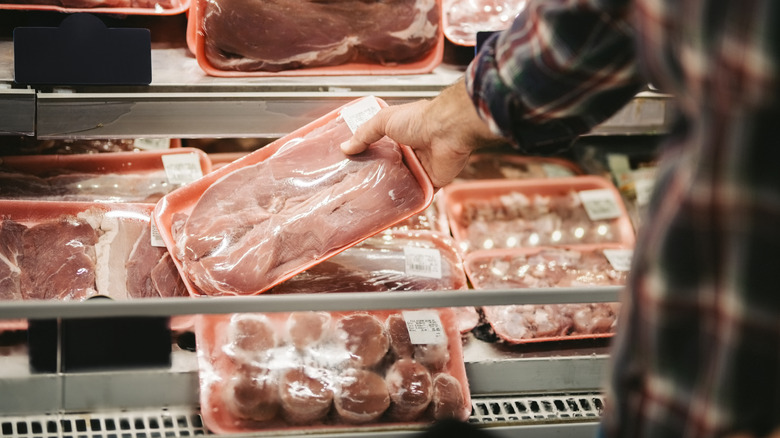
Many Americans assume most of our imported meat comes from faraway agricultural giants like Australia or Brazil. But in reality, one of the United States' most important meat partners is sitting directly across our northern border: Canada. Yes, Canada. Our friendly neighbor to the north has consistently ranked among the largest foreign suppliers of meat, and in several categories, especially fresh beef imports, it's the leading source.
According to the USDA Foreign Agricultural Service, Canada has been one of the top suppliers of U.S. beef imports since 2017, along with Australia, New Zealand, and Mexico. This special relationship exists because the U.S. and Canada operate as a highly interconnected livestock market. The two countries share a border (obviously), along with similar food safety standards, integrated supply chains, and the free trade agreement, USMCA (the United States–Mexico–Canada Agreement). This all allows for livestock, meat products, and processing operations to move across the border much more efficiently than with other countries.
This may be surprising, especially when you consider that the U.S. actually produces more beef than any other country in the world. But American beef production is all about grain-fed cattle, the kind that gives you richly marbled steaks. A lot of those steaks are sold domestically or to other countries, which means lean imported beef is especially valuable when it comes to processed beef products. Blending the two kinds helps manufacturers achieve the fat ratios needed for ground beef. In other words, we actually need foreign beef to make the all-American burger.
Canadian meat is embedded in the American food system

If you're wondering if you can taste the difference between the two, it's highly unlikely. Unlike grass-fed Australian steaks, which taste noticeably different, Canadian beef blends right in (pun intended). That being said, if you're looking for moose bologna, you can rest assured it's coming straight from the Great White North.
It's also not just processed meat. Live animal trade also keeps the border busy. Canadian cattle are regularly sent to American feedlots or slaughter facilities, while a large amount of live hogs are also imported from the north. This frequent back-and-forth allows for the industry to respond quickly to market demand or supply disruptions, which is why U.S. beef could be harder to find in grocery stores these days.
The two countries' pork relationship is equally intertwined. Canada is one of the world's largest pork exporters, and Canadian pork products pop up everywhere, from grocery meat counters to restaurants. Chicken, on the other hand, almost always comes from home. But when it doesn't, about 1% of the birds we eat come from Canada. As for fish, Canada also leads as our biggest supplier of seafood, followed by Chile.
Of course, this meaty relationship isn't always harmonious. Disease outbreaks, trade disputes, and random tariffs slapped on Canada have occasionally strained the friendship. But the partnership endures because it's economically essential to both countries. No matter what you grill, Canada is quite possibly supplementing it, so you might wanna whistle a little "O Canada" tune before your next barbecue.