

How To Tell Bottled Beer Has Been Sitting On The Shelf Too Long
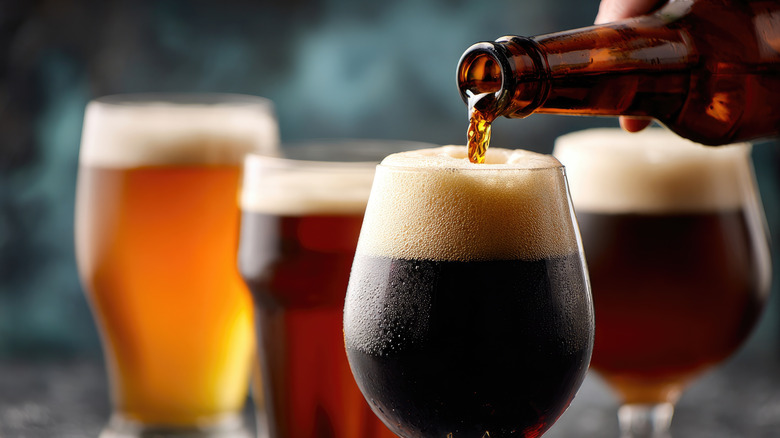
It's not uncommon for people to keep beer on hand for guests or simply for drinking when the mood strikes. However, beer's shelf life is probably shorter than you think. Beer doesn't tend to "spoil," but its flavor can change or degrade over time. Knowing what to look out for could save you from an unpleasant drinking experience. If your beer's best-before date has passed, that doesn't necessarily mean it's not still fresh — but if it's well past the date on the packaging, you'll need to check a couple things.
If your beer is in a clear bottle, inspect it for unusual cloudiness, which can be a sign that the beer is past its prime. Otherwise, you'll have to open the bottle to check whether your beer's still good for drinking. One useful cue is whether you hear a hissing sound when you crack the seal; if you don't, that may suggest your beer has lost its carbonation (i.e., gone flat). Before you take a swig of your beer, take a moment to smell it. Stale beer, if it's been oxidized, will often smell of wet cardboard, paper, or even cucumber; if it's been lightstruck, meaning it's been overexposed to light, it might smell like sulfur or skunk spray. If you note an odor of mold or vinegar, on the other hand, that's a sign of microbial contamination, in which case it's best to discard the beer.
Give your old beer a taste test only once you've determined it both looks and smells fine. Beer that's been sitting too long might be stale, papery, or generally lacking in flavor. One sign of staleness is an overly sweet taste, which can happen when the bitterness of the hops fades and changes the beer's flavor balance.
Buying and storing bottled beer
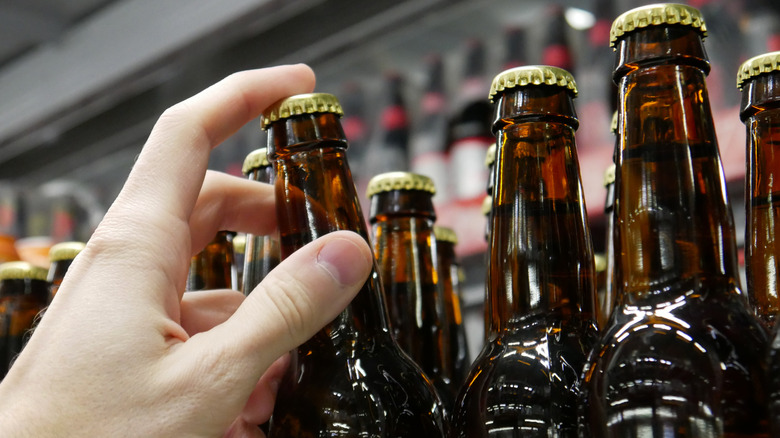
Avoiding a second-rate beer experience entails being discerning about where you buy your beer, the type of beer you're buying, and how you store your beer. Even if you plan to drink it soon after your purchase, consider how long the bottles may have been sitting on the shelf for. Opt to buy beer at supermarkets with high turnover, or from local breweries that typically sell their products soon after bottling. Pay attention to how the beer has been shelved in a store, and never buy beer that's clearly been stored in direct sunlight.
Not all beers are created equal when it comes to shelf life, though. IPAs and wheat beers are best consumed within three to six months, if you want the best flavor out of them. Lager has about a 6- to 12-month shelf life, while stouts can keep for as long as two years. Canned beer, if stored right, tends to last longer than bottled beer, which is more susceptible to the ill effects of sunlight and oxidation.
Beer is best kept refrigerated, and it's not advisable to store beer at room temperature for too long. That said, if you need to save on fridge space, you could simply stash your beer in a cool and dark place without fluctuating temperatures. Unless your pantry gets considerably warm or has windowed cabinets that let in direct sunlight, it's not a bad alternative for storing your beer.