

IPA Vs Pale Ale Beer: What's The Big Difference?
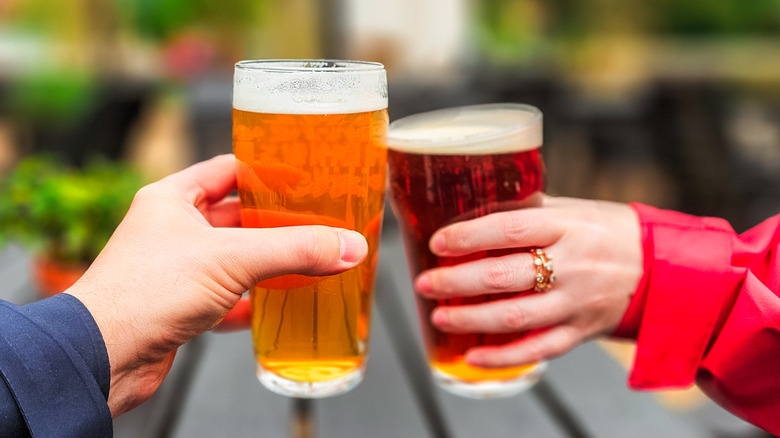
If you often get confused between a pale ale and an India Pale Ale, you are not alone. Apart from sounding like they are interchangeable, pale ales and IPAs have a few overlapping characteristics, from visual similarities to the dominant hop flavors. However, key differences in strength, taste, and aroma set the two apart. Not only do IPAs tend to be stronger than American Pale Ales (APAs), with 5 to 7.5% ABV compared to 4.5 to 6.2% ABV, but they're also more bitter. Both APAs and American IPAs have bitter notes, but where most pale ales strive for balance, IPAs are likelier to lean into big, bold flavors.
This difference is driven primarily by the intensity of hops. Hops are the flowers of the Humulus lupulus plant, and the key ingredient in terms of defining a beer's flavor profile. Not only do hops help give beer its head of foam, they also add bitterness and aroma. The notes of citrus, pine, or mango, for example, come from essential oils in the flower, and at what point of the brewing process they're added impacts the hoppiness of the beer. As a general rule, IPAs tend to accentuate the hops, while APAs tend to balance them out.
None of this is set in stone, of course. You could very well find an IPA that's so beautifully balanced you don't feel the intensity of the hops (one of them made it to our list of best beers for newbies, according to experts). At the same time, you could run into a hop-heavy APA that's more bitter than balanced. To get a deeper understanding of the differences, let's get into their origin stories. Because even though more than two centuries have passed since these styles of beers were first brewed, their core characteristics remain deeply linked to how they were first made.
What are pale ale beers?
In the 1700s in England, the beer market was overflowing with porters and stouts. The discovery of a new type of fuel derived from carbonized coal — called coke — allowed brewers to gently roast the malts. This gave the beers a lighter tint and malt-forward flavors, delivering brews that were exceptionally easy to drink. These were labeled pale ales for their color, and their popularity increased in late 18th-century England via brands such as Bass Brewery, Fuller's London Pride, and Timothy Taylor's Landlord.
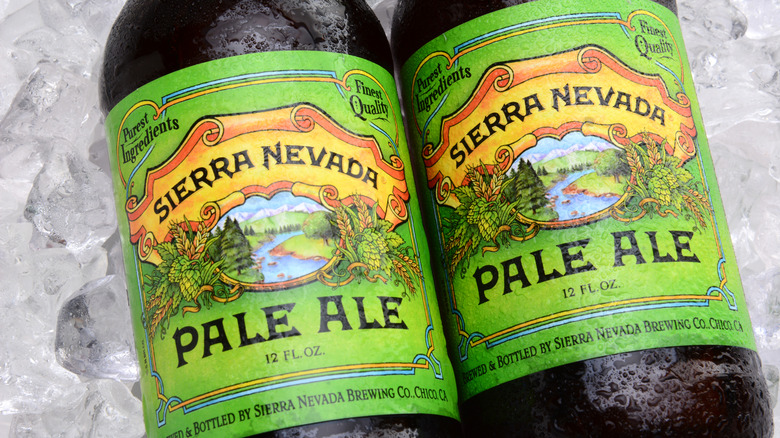
The pale ale revolution arrived in America much later. In 1978, President Jimmy Carter signed a bill legalizing home brewing, thus laying the foundation for the American craft beer revolution. Two years after, Sierra Nevada launched the first famous American Pale Ale. It delivered a distinct pine and citrus aroma due to the use of Cascade hops, and it was balanced out by a caramel-like malt foundation. A beer expert included the Sierra Nevada APA in a list of must-have summer brews.
American pale ale had a much stronger hop flavor when compared to the English version, but it retained enough of that distinct lightness to deliver a balanced brew. American versions were also stronger. While English pale ales were around 4.5 to 5.5% ABV, American pale ales could often go over 6% ABV. One fan on Reddit described APAs as "a balanced beer that is refreshing without being overly bitter, hoppy without feeling like you're in some kind of IBU-tolerance challenge. It's more subtle than most IPAs and lends itself to drinking several without being a watered-down lager."
What makes the IPA so different?
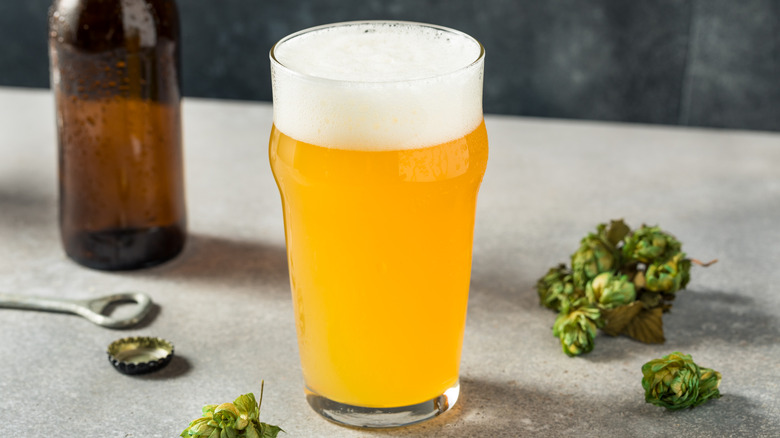
The biggest difference between pale ales and IPAs is the latter's bold, bitter edge that comes from the extra hops. While pale ales are about striking a balance between the maltiness and hop profile, IPAs are all about the hops, from the bitterness to the aroma.
Although the popular origin story is an oversimplification, there's a reason for all those extra hops. The oft-repeated version goes that brewers invented IPA specifically for the East India Company, adding extra hops — a natural preservative — to help beer survive the six-month sea journey to India. In reality, it's more likely that the British brewers had been using extra hops to extend the shelf life of beer since at least the 1700s, and the hop-heavy pale ale probably evolved gradually over several decades before becoming hugely popular in India. It was this association with India that eventually gave the beer its India Pale Ale moniker.
Today, the IPA is the most popular style of craft beer in America. One IPA aficionado responded to a Reddit query about why millennials love IPAs: "I've tasted plenty of different lagers, ales, reds, stouts, etc. But there's just not as much spectrum with those styles. IPAs range from bitter to sweet, light to dark, and clear to hazy." It is so popular that it has spawned various different styles of IPAs, from New England and West Coast IPAs to Milkshake and Black IPAs.